Málaga food guide: how to eat the city by neighbourhood and time of day
A practical food guide to Málaga city: breakfast, Atarazanas, centre tapas, Pedregalejo seafood, espetos and the timing choices that make each meal better.
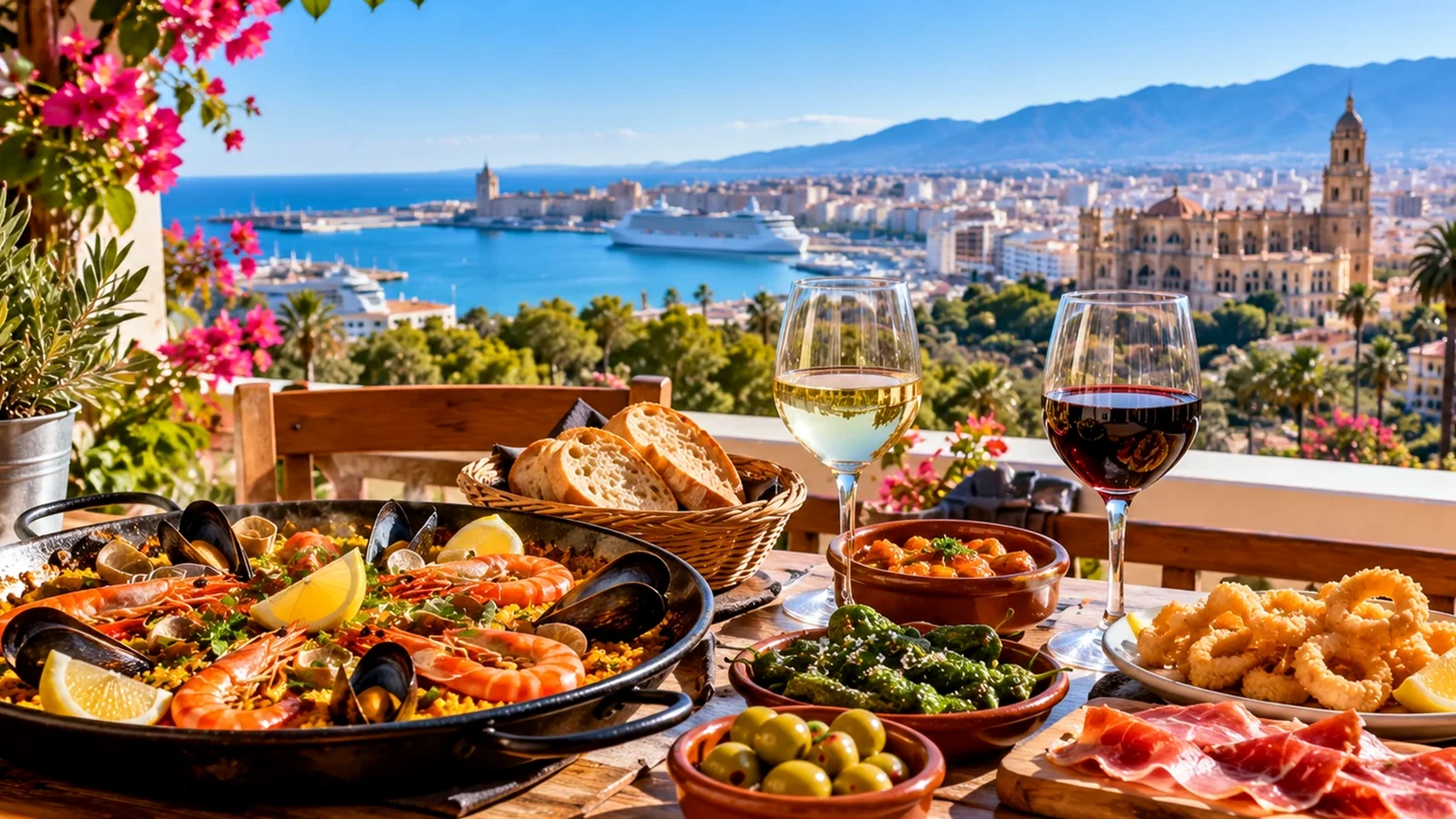
Eating well in Málaga is less about chasing a definitive restaurant list and more about matching the meal to the part of the city you are already in. Breakfast in the centre, a morning at Atarazanas, tapas around the historic core and a fish meal in Pedregalejo or El Palo are different experiences. They work best when you stop treating them as interchangeable.
The city is compact enough to eat very well without travelling far, but one important distinction remains: central Málaga and the eastern seafront have different food rhythms. Use that difference rather than fighting it.
Start with breakfast, not brunch logistics
Málaga has its own everyday breakfast vocabulary. Official tourism material points to the pitufo, a small bread roll often ordered with tomato and olive oil or other fillings, and tejeringos, the local style of handmade churro.
You do not need a famous café to understand this part of the city. A simple neighbourhood breakfast can be more representative than a photogenic brunch that could exist anywhere. If you have a full sightseeing day ahead, eat where it is convenient to your first stop rather than crossing town for a single breakfast address.
The useful habit is to look at what the surrounding tables are ordering and ask if you are unsure about local names or portion sizes.
Visit Atarazanas in the morning
Mercado de Atarazanas is one of the strongest food stops in central Málaga, but timing matters. The municipal listing gives regular opening from 08:00 to 15:00 Monday to Saturday. That means it belongs in the morning or around lunchtime, not in an evening food crawl.
It is also a working municipal market, not a theme attraction. The city introduced visitor-flow signage in 2026 after requests from stallholders, a useful reminder that people are there to buy food and work. Keep passages clear, do not turn a busy stall into a photo set and avoid blocking shoppers while deciding what to order.
For a visitor, the value of Atarazanas is not simply “eat here”. Walk the fish, meat, produce and prepared-food areas and use the market to understand what appears later on menus around the city. If you eat there, keep it proportional to the rest of your day. A large market lunch followed immediately by a full tapas route rarely improves either experience.
The centre is best for flexible tapas rather than a rigid crawl
The historic centre gives you density. You can move between Calle Larios, Plaza de la Constitución, the cathedral area, Plaza de la Merced and surrounding streets without needing transport. That makes it ideal for a meal where the group wants different things or where you are not sure how hungry you will be.
Do not feel obliged to visit five bars because a guide calls it a tapas crawl. One good first stop and one second stop can be enough. Order fewer plates than you think you need, see the portion size and add more if the table still wants them.
This is especially useful with fried fish and shared dishes. A table full of food that cools before anyone reaches it is not a better Málaga experience than ordering in two rounds.
Understand what “tapa”, “media ración” and “ración” can mean
Portion language varies by venue. A tapa may be a small individual portion, while a media ración or ración is intended for sharing, but the actual size is not standardised across the city.
Ask before ordering several large portions. If you want to taste different things, say so. Staff can usually tell you whether two people are about to order far too much food.
This simple conversation is more useful than assuming every menu follows the same format.
What to look for in central Málaga
The city centre is a good place to explore dishes that do not depend on sitting beside the sea. Official tourism material regularly highlights ajoblanco, boquerones, tapas and other traditional preparations alongside Málaga’s more modern restaurant scene.
Ajoblanco is particularly useful on a warm day: it is a cold almond-based soup with a very different profile from gazpacho. Boquerones may appear fresh, fried or marinated depending on the preparation. If you see something unfamiliar, ask how it is served rather than assuming from the name.
The best rule for a first food-focused visit is variety. Combine fish or seafood with a vegetable, salad, cold soup or another contrasting dish. Ordering six similar fried plates may be authentic in ingredients but monotonous as a meal.
Espetos belong naturally to the eastern seafront
The espeto is one of the clearest symbols of Málaga food. Sardines are threaded onto long canes and cooked over a wood fire, traditionally in boats filled with sand beside the beach. Spain’s official tourism material specifically points visitors towards Pedregalejo for this style of eating.
That geography matters. You can find grilled fish elsewhere, but Pedregalejo and nearby El Palo give the meal a context that central Málaga cannot reproduce: old fishing-neighbourhood identity, beach, promenade and restaurants built around the sea.
If an espeto meal is important to you, make it a deliberate lunch or early dinner outing instead of trying to squeeze it between museum visits in the centre.
Pedregalejo and El Palo are meal destinations, not quick food stops
The eastern seafront sits outside the compact historic-centre walking loop. Urban buses connect it with the centre, but once you go east, let the trip breathe.
Walk part of the promenade, look at the beach, then eat. A rushed forty-minute detour purely to photograph an espeto misses most of the value of the area.
Pedregalejo is the easier first choice for many visitors because the promenade has a dense concentration of restaurants and remains straightforward to combine with a coastal walk. El Palo continues the fishing-neighbourhood rhythm farther east and can feel more local and residential in parts.
Choose one area; you do not need to “complete” both in the same meal.
How to order fish without overcomplicating it
If you do not know the fish names, ask what is good that day and how it is prepared. Some choices make more sense grilled, others fried. Season and supply matter.
For a table of two, start with fewer things: perhaps an espeto and one shared plate, then add if needed. For a larger table, sharing becomes easier, but it still helps to mix preparations instead of ordering everything fried.
Look at the way the kitchen and grill are working. A menu with fifty unrelated international dishes is not automatically bad, but if you came specifically for Málaga seafood, a place visibly focused on fish usually gives you a clearer experience.
Lunch and dinner do not need to be equally ambitious
A common mistake on food trips is treating every meal as the main event. Málaga works better if one meal carries more weight and the other remains flexible.
If you have a substantial seafood lunch in Pedregalejo, dinner can be a light central meal or a couple of shared plates. If your priority is a longer evening dinner in the centre, keep lunch simple at Atarazanas or around your sightseeing route.
This balance also helps in warm weather. A long lunch during the hottest part of the day can be pleasant, while a heavy lunch plus a fixed tasting dinner may leave little room to enjoy either.
Do not build the day around restaurant fame alone
Málaga has traditional bars, modern restaurants and high-end dining. They are different categories, not a ladder where one is automatically better.
For a short visit, geography should carry real weight. A very good restaurant twenty-five minutes away in the wrong direction can cost more enjoyment than a good restaurant that fits naturally between the Alcazaba and your evening plan.
If you are travelling specifically for a particular chef or restaurant, of course book around it. Otherwise, use neighbourhood first and reputation second.
When reservations matter
Book when the meal is genuinely important: a small dining room, a special-occasion dinner, a tasting menu or a weekend slot at a place you specifically want.
For casual tapas and many beach meals, flexibility can be more useful. Going slightly earlier than peak time can make the experience calmer, particularly with children.
Do not assume opening days from an old article. Restaurants change schedules seasonally and may close one or more days each week. Check the current venue information directly before making a plan around a specific place.
Eating with children
Málaga is comparatively easy for families because you can keep meals informal. The centre allows quick changes of plan, while Pedregalejo gives children a promenade and beach context before or after eating.
The main family mistake is waiting too long. A hungry child at 15:00 does not care that the restaurant has the perfect local reputation. Eat earlier if that matches your family rhythm.
Shared plates also make it easier to test unfamiliar food without committing each child to a full dish.
Vegetarian, allergy and dietary needs
Do not assume a traditional menu means there will be nothing suitable, but do ask clearly. Many central restaurants have broader menus than a dedicated seafood venue, while a fish-focused beach restaurant may naturally have fewer non-seafood choices.
For allergies, communicate the specific allergen rather than only saying “I cannot eat this dish”. Cross-contact can matter, especially with fried foods prepared in shared oil or kitchens handling shellfish.
When dietary requirements are important, choose the restaurant before you are already hungry and confirm directly what the kitchen can safely provide.
A practical food day in Málaga
A useful first food-focused day could look like this:
Breakfast — pitufo or tejeringos near your first central stop.
Late morning — Atarazanas while the market is operating normally. Browse first; eat lightly if you plan a larger lunch.
Lunch — either stay central for tapas or travel east to Pedregalejo for fish and espetos. Do not try to make both substantial meals.
Afternoon — sightseeing, beach or a long walk rather than another forced food stop.
Dinner — use the area where you finish the day. If lunch was seafood-heavy, keep dinner lighter. If lunch was simple, make dinner the larger meal.
This structure is intentionally loose. Food should support the day rather than turn the whole city into a sequence of bookings.
The biggest mistakes to avoid
Do not visit Atarazanas late and then complain that the market atmosphere has disappeared. Do not order multiple full portions before seeing their size. Do not go all the way to Pedregalejo for ten minutes. Do not assume every restaurant on the beach specialises equally in fish. And do not let a “top ten” list force you across the city when a better meal for that moment is already nearby.
Málaga’s food identity is strongest when you match place, timing and appetite: market in the morning, centre when you want variety, and the eastern seafront when the sea itself is part of the meal.
Continue your Costa del Sol planning
Other published guides for the same destination or a closely related topic.