One day in Málaga: a first-visit route that actually fits
A realistic Málaga day from Atarazanas and the Alcazaba to the port and La Malagueta, with heat, rain and mobility alternatives.
One day in Málaga works best when you stop trying to see all of Málaga. The city is compact enough to combine market, historic centre, Alcazaba, port and beach on foot, but it is not compact enough to add Gibralfaro, several museums, Pedregalejo and a long lunch without turning the day into a race.
This plan is built for a first visit with roughly a full day available. It keeps the main route coherent and gives you clear places to shorten it if heat, mobility or simple enjoyment tells you to slow down.
Who this plan suits
Use this route if you want a first taste of Málaga rather than a specialist museum day. It works particularly well for visitors arriving by train, staying centrally or coming from the western Costa del Sol on the C1 line.
It is less suitable if your main goal is Gibralfaro, a major temporary exhibition or a long beach day. In those cases, make that interest the centre of the day and remove something else.
The core principle is simple: one major monument, one food stop, one compact historic walk and one coastal section.
Before you go
Check the Alcazaba’s official opening hours before the day. The monument currently has seasonal hours: winter and summer schedules differ, and last admission is one hour before closing. Sundays currently include a free-admission period from 14:00, which can affect visitor numbers as well as price.
Do not build the plan around an old screenshot of opening times. Markets, museums and seasonal services can also change. If a specific museum or restaurant is important to you, verify it separately.
Wear shoes that make sense for stone surfaces and some climbing. The Alcazaba is a fortified complex on a slope, not a flat gallery.
Morning: start at Atarazanas and use the centre as a route
Begin around Mercado de Atarazanas. The municipal market service describes it as one of Málaga’s principal markets and an important fresh-food and commercial centre, housed in a protected historic building with 260 stalls.
Treat it as a real market rather than a box to tick. If it is operating when you arrive, spend enough time to look at the produce, fish and food counters, but do not let breakfast turn into a two-hour stop when the main historical visit still lies ahead.
From Atarazanas, move through the pedestrian centre rather than jumping directly to the next pin. Calle Larios and Plaza de la Constitución give you the city’s central axis. Continue towards the cathedral area and Calle Alcazabilla. This is the part of Málaga where walking is the itinerary: the value comes from seeing how streets, squares and monuments connect.
If you arrive very early and the market is not yet useful to you, reverse the first part: walk the centre first and return to Atarazanas later in the morning.
Late morning: make the Alcazaba the main monument
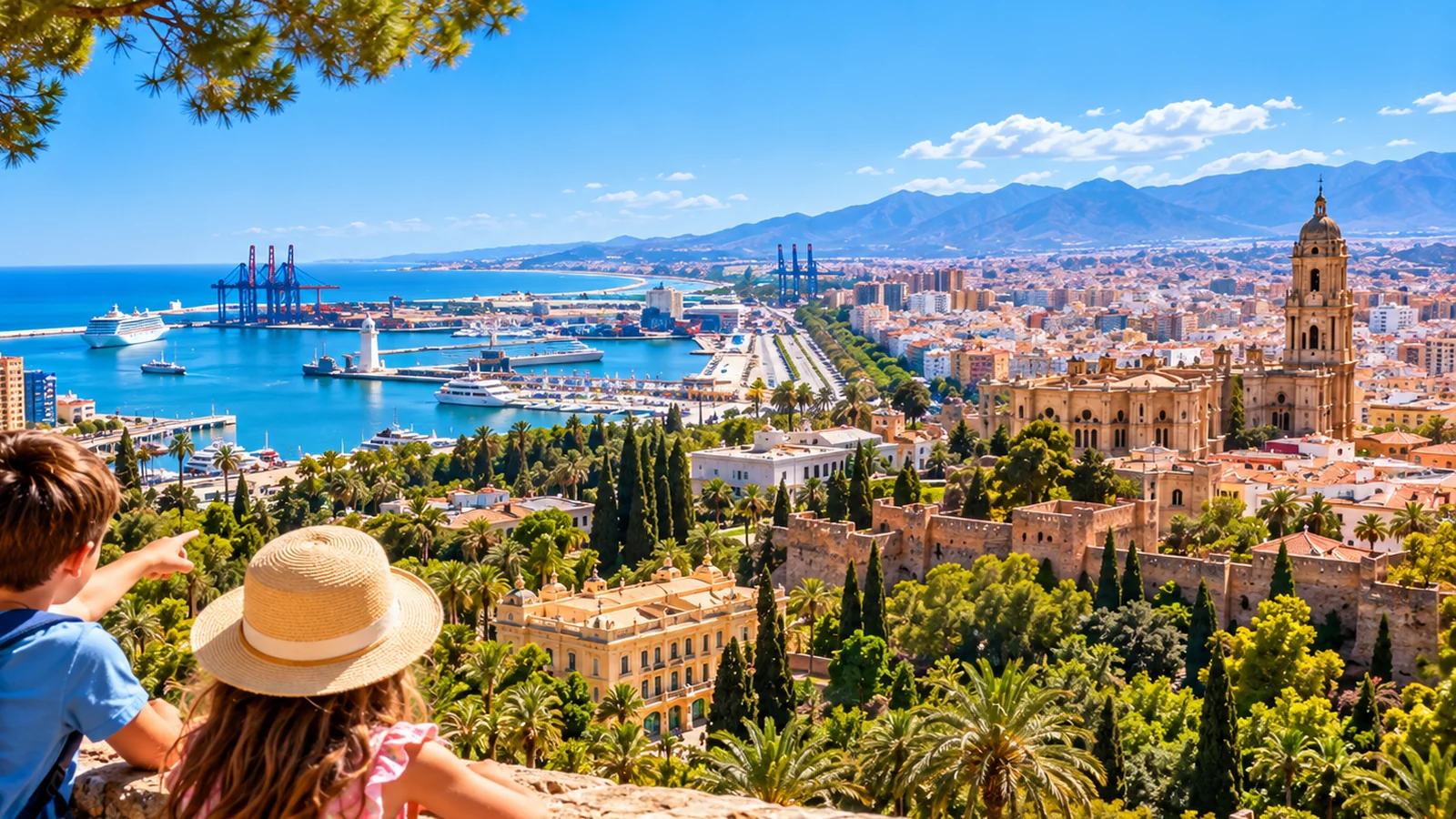
For a first day, choose the Alcazaba as the main paid historical visit. The official monument site describes a visit through two walled precincts and the defensive entrances of the palace-fortress. That is enough depth for a first day without automatically adding the higher Gibralfaro Castle.
The Roman Theatre sits directly below the complex, so this part of the route is unusually efficient. You can see the theatre area and enter the Alcazaba without crossing the city.
Give the Alcazaba real time. If you rush it in thirty minutes simply because a museum reservation is waiting, the itinerary has become the problem. For most first-time visitors, the views, courtyards and defensive layout provide more sense of Málaga than squeezing in another distant attraction.
Gibralfaro is worth visiting, but adding it changes the physical and time budget. If viewpoints and military history are your priority, combine Alcazaba and Gibralfaro and remove the beach or most of the afternoon. If not, save Gibralfaro for another visit.
Lunch: stay in the centre
After the Alcazaba, keep lunch in or near the historic centre. The point is not to identify one supposedly perfect restaurant; it is to avoid spending forty minutes travelling to lunch and another forty minutes returning.
If you want a quick day, eat simply and continue. If food is one of the main reasons you travel, take a proper lunch and shorten the afternoon. Málaga works better when you consciously trade one activity for another instead of pretending that meals consume no time.
The area between Calle Alcazabilla, Plaza de la Merced, the cathedral and the western side of the centre gives enough choice that you do not need to cross town for a good meal.
Early afternoon: choose one museum or choose more city
This is the decision point that keeps the itinerary realistic.
If a museum matters to you, choose one. Do not try to collect Picasso-related sites, Carmen Thyssen, Centre Pompidou and smaller museums in the same day. One focused visit gives you a better experience and leaves the rest of the route intact.
If no museum is essential, use the time for the streets themselves. Walk through the centre, stop for coffee, return briefly to the market area if you skipped it in the morning, or simply slow the pace. A first day does not become better because every ninety minutes contains a ticketed attraction.
On very hot days, this indoor block becomes more valuable. Shift the port and beach later rather than walking exposed routes during the strongest afternoon heat.
Mid-afternoon: walk to the port and Muelle Uno
From the centre, head south towards the port. Muelle Uno sits on Paseo de la Farola and the municipal facility listing marks the site as accessible for people with reduced mobility.
Use Muelle Uno primarily as a transition between city and sea. You can stop for a drink, browse shops or eat if that suits you, but the route still works if you simply walk the waterfront.
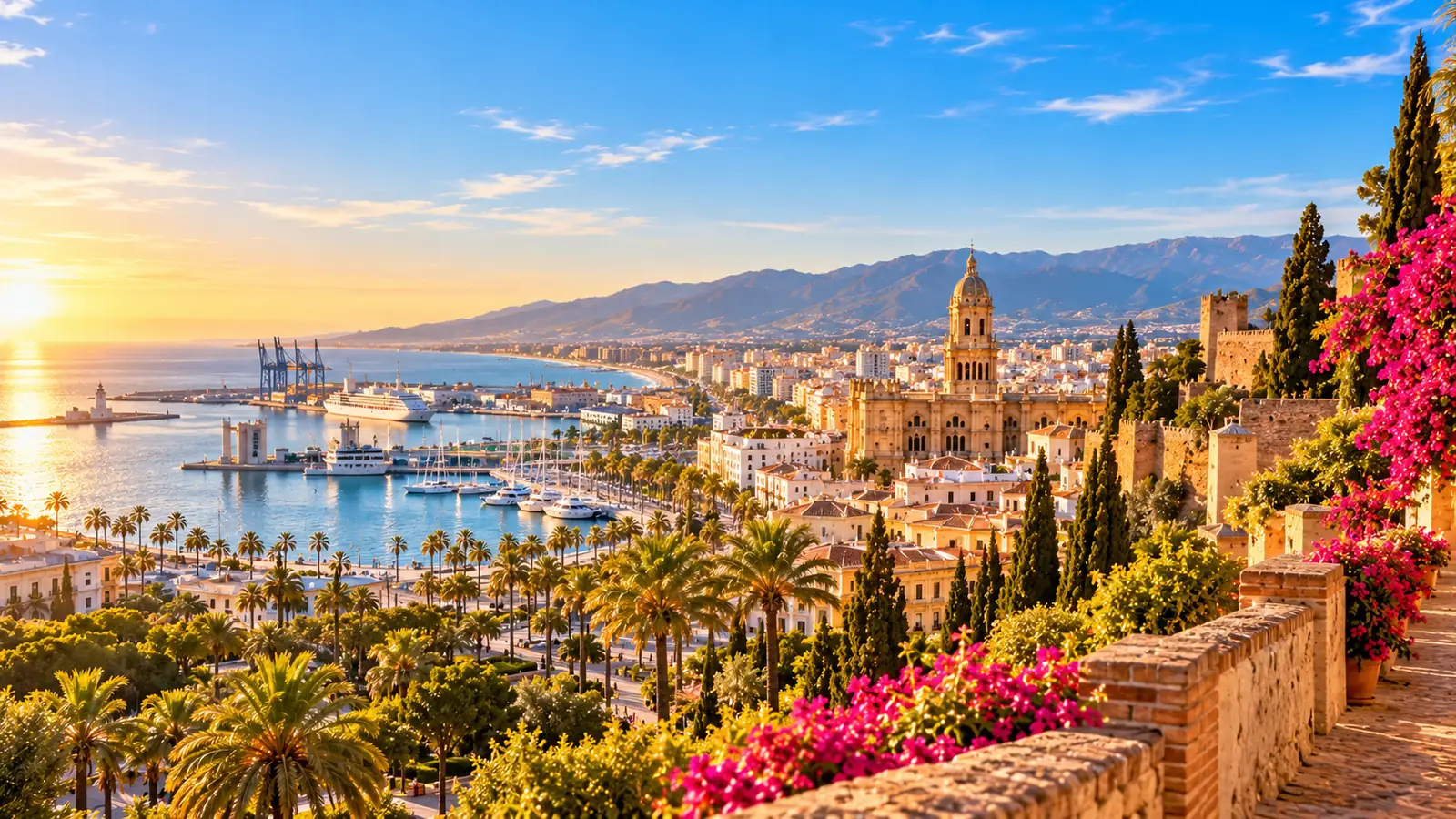
This part of the day changes the feel of Málaga without requiring transport. In the morning you were among market halls, narrow streets and fortress walls; by afternoon the city opens towards the harbour and Mediterranean.
If you chose a long museum visit, this is a good place to simplify. Walk the port and then decide whether the beach still adds something. There is no requirement to reach every endpoint.
Late afternoon: La Malagueta if you still want the sea
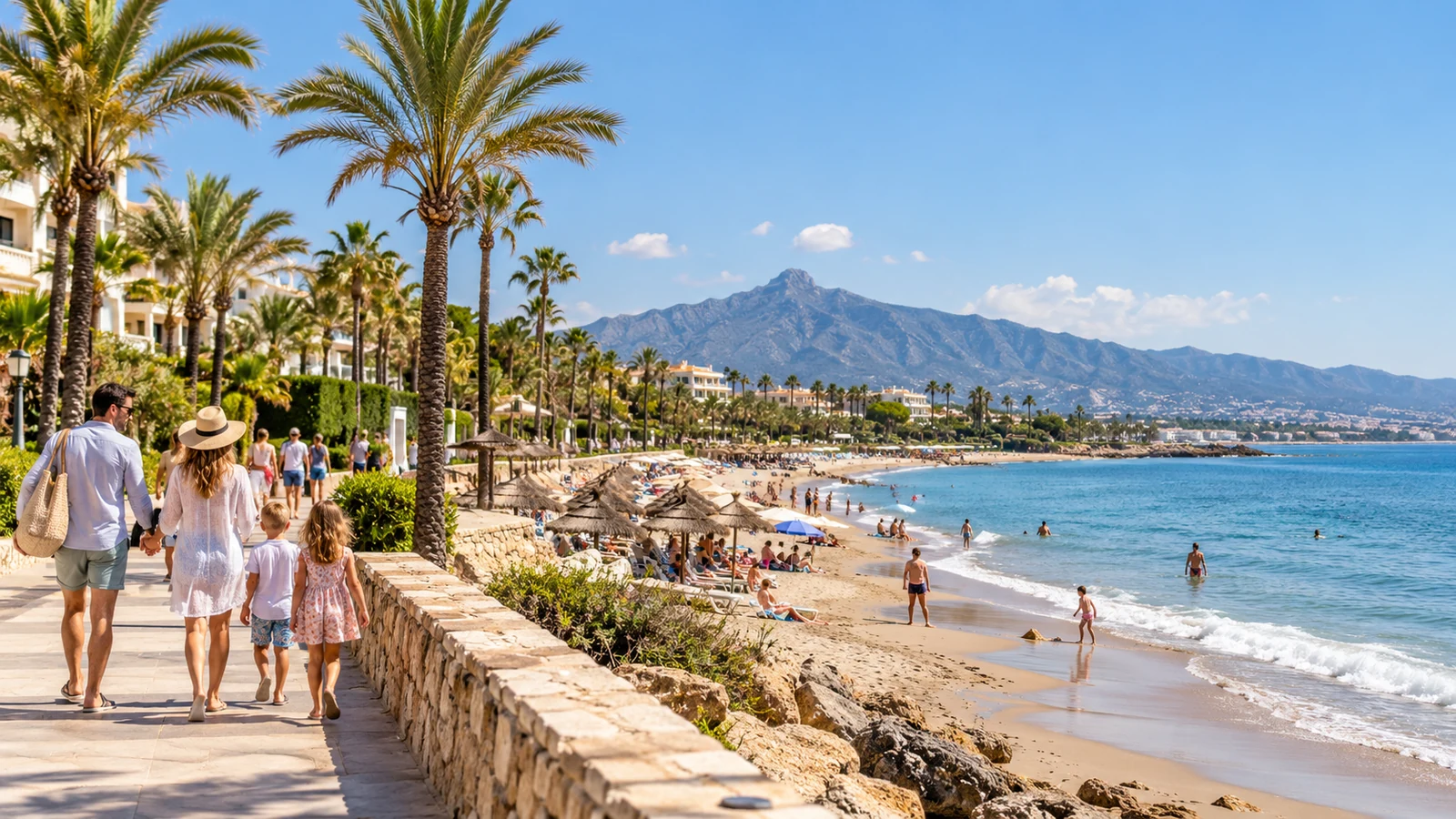
La Malagueta is the easiest beach to add to a first-day city itinerary. The municipality describes it as a central urban beach of roughly 1.2 kilometres, with promenade and services, and it lies close to the historic centre. That makes it fundamentally different from planning a separate eastern-coast excursion.
Use it according to the season and your energy. In warm weather, an hour by the sea can be an excellent contrast after stone streets and monuments. In cooler weather, walking the promenade may be enough. You do not need to turn the stop into a full beach afternoon.
If you are already tired, skip the sand and remain around the port. The route has already delivered the core of the city.
Evening: return to the centre rather than inventing another destination
For a one-day visit, the easiest evening is back in the central area. Walk from the port towards the historic centre, have dinner and let the final part of the day be unstructured.
This is where many itineraries become unnecessarily ambitious by proposing Pedregalejo for sunset and then another neighbourhood for drinks. Pedregalejo is worth its own evening, but after a full first day it creates another transport decision exactly when most people want less logistics.
If you are staying overnight and still have energy, you can extend the evening naturally in the centre. If you are returning to another Costa del Sol town, leave enough margin for your train, bus or other transport.
If you arrive from Málaga Airport
Aena lists the C1 suburban train between the airport and Málaga, with approximate times of eight minutes to María Zambrano and twelve minutes to Málaga Centro Alameda. That makes a car unnecessary for this particular one-day route if the train suits your arrival.
Centro Alameda puts you on the western side of the central walking area, making Atarazanas a logical first stop. If you arrive at María Zambrano instead, you can walk, take local transport or adjust the order according to luggage and weather.
Do not rent a car only for this itinerary. Central parking and city traffic add complexity without helping the core route.
Heat alternative
In hot weather, start earlier and protect the middle of the afternoon. Put Atarazanas and the Alcazaba first, take a longer lunch, add one indoor museum or rest period, and move the port and La Malagueta towards late afternoon.
Do not add Gibralfaro simply because the sky is clear. The exposed climb and elevated position can make it the wrong choice during the hottest hours.
Carry water and treat shade as part of the route, not as an accidental bonus.
Reduced-mobility alternative
If slopes or uneven surfaces are a concern, make the route flatter. The Alcazaba remains the most physically demanding part of the core plan, while the central streets, port and Muelle Uno provide a more level sequence.
You can replace the fortress visit with a museum or a longer historic-centre route and still get a coherent first day. Muelle Uno’s municipal listing explicitly identifies accessible circulation, which makes the port section useful in a lower-effort version.
Do not judge the day by whether you reached the highest viewpoint. The objective is to understand Málaga, not to maximise elevation.
Rain alternative
If rain is intermittent, keep the centre as your anchor. Atarazanas, one museum, food and short outdoor transitions work better than a beach-led plan.
If rain is persistent, drop La Malagueta entirely and spend the afternoon between museums and the central streets when conditions allow. The port can be added only if the weather improves.
A rainy first day can still work because Málaga’s cultural core is compact; the mistake is trying to preserve a sunny-weather route at all costs.
What not to add
Do not add Nerja, Mijas, Marbella or another Costa del Sol town to this same day. Do not add both Gibralfaro and several museums unless you consciously remove the beach and reduce lunch. Do not travel east to Pedregalejo for one quick photo if you have no time to enjoy the neighbourhood.
A good one-day Málaga plan is successful because the transitions are short and the places relate to one another.
The final route
A practical default is: Atarazanas → pedestrian centre → Roman Theatre and Alcazaba → lunch in the centre → one museum or free time → port and Muelle Uno → La Malagueta if wanted → dinner back in the centre.
It is not the maximum possible list. That is precisely why it works.
Continue your Costa del Sol planning
Other published guides for the same destination or a closely related topic.