Costa del Sol food guide: what to eat, where the styles change and how to choose well
Eating well on the Costa del Sol is not about chasing one restaurant list. Coastal fish, espetos, tapas, old fishing districts, markets and modern dining all belong to the region. This guide helps you understand what to look for and where each style fits naturally.
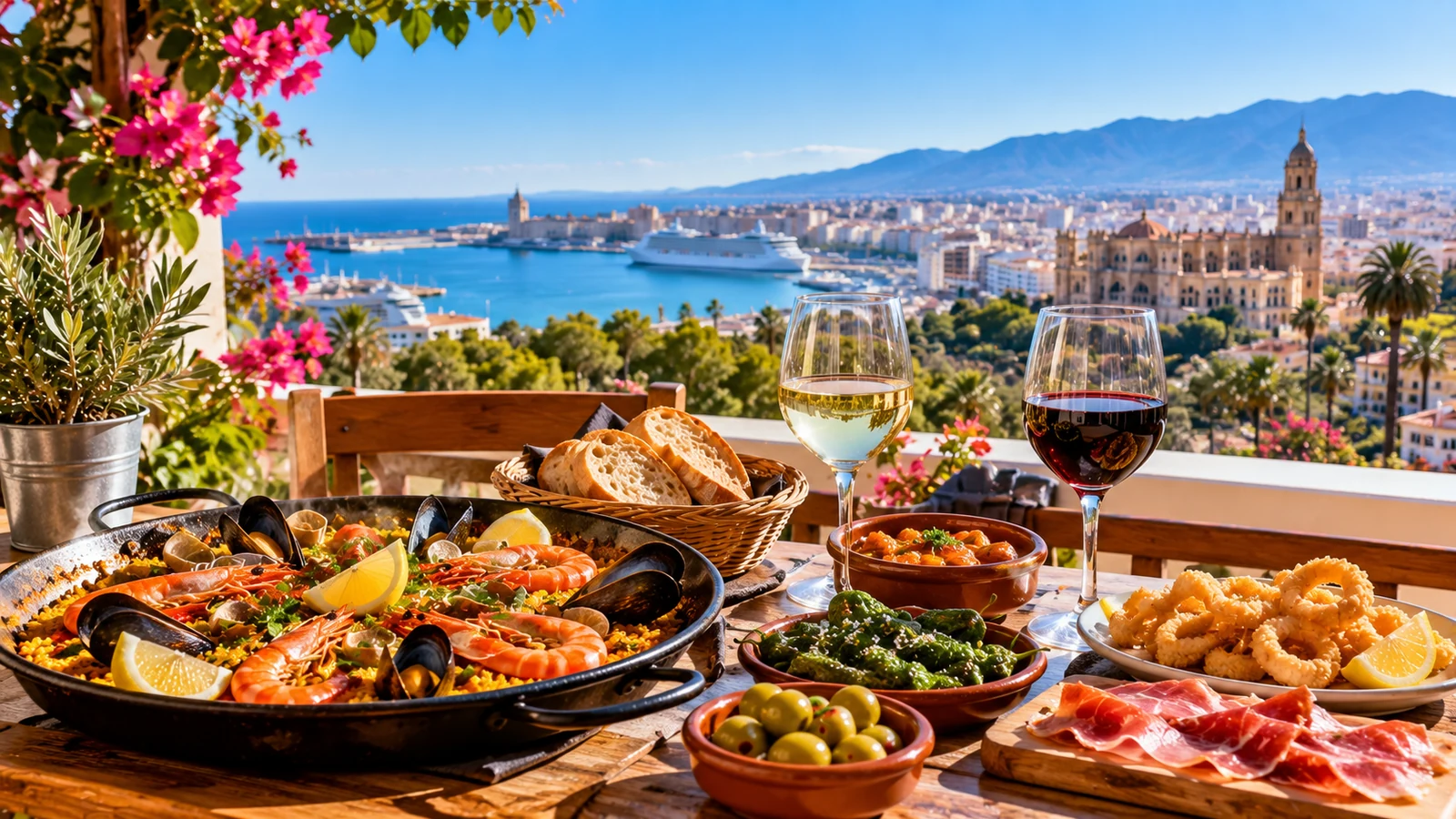
Food on the Costa del Sol makes more sense when you stop looking for one universal list of “best restaurants”. The region stretches through old fishing districts, city markets, resort promenades, inland villages and a modern restaurant scene that ranges from simple beach cooking to ambitious tasting menus. What you should eat depends partly on where you are and what kind of meal the day needs.
An espeto beside the sea, a plate of fried fish, a slow lunch in an old centre and a modern dinner in Marbella are not competing versions of the same experience. They are different expressions of a coast where tourism and local food traditions have grown alongside each other.
The practical approach is to understand the main styles, recognise when a location adds to the meal and avoid treating every lunch as a once-in-a-lifetime booking.
Start with the espeto, but understand what it is
The espeto is one of the clearest food symbols of Málaga’s coast. Spain’s official tourism portal describes the traditional preparation: sardines are skewered on long canes and cooked over the fire. The point is not complicated technique on the plate. It is a direct coastal style of cooking that belongs naturally beside the sea.
That context matters. An espeto is at its best as part of a relaxed beach or seafront meal, not because every skewer is automatically exceptional. Look for a place where fish is clearly part of the identity of the restaurant rather than an item added to a giant international menu.
Pedregalejo in Málaga is strongly associated with the tradition, and La Carihuela in Torremolinos has its own long fishing and seafood identity. Chiringuitos along many parts of the coast also keep grilled fish central to the experience. You do not need to cross the province to eat a good espeto. If your day already takes you to a coastal area with a strong fish tradition, let the food follow the geography.
Sardines are not the only fish that can be prepared over the fire, and menus change with availability and season. Ask what is good that day rather than arriving with a checklist that ignores what the kitchen is actually handling well.
Pescaíto frito is a meal, not a single dish
Fried fish is another core Málaga reference, and Spain.info explicitly places it alongside the region’s wider gastronomic offer. For visitors, the useful thing to understand is that “pescaíto frito” is not one fixed recipe. It is a style of ordering and sharing different fried fish or seafood, often in portions that make sense across a table.
This is where restraint helps. Ordering too many similar plates at once can flatten the meal and leave everything cooling while you work through it. Start with fewer dishes, share, and add if needed. A simple salad, something grilled or a vegetable dish can make the table much more balanced than six versions of fried seafood.
Ask about portion size. A “ración” can be far more food than a visitor expecting a small tapa imagines. If the goal is to try several things, explain that and order accordingly.
The best setting is often informal. Do not assume that a higher price or more elaborate dining room automatically improves a style of food built around freshness, frying technique and fast service from kitchen to table.
Chiringuito does not mean one type of restaurant
The word chiringuito can describe very different experiences. At its simplest, it is a beach restaurant or bar where the location and sea are part of the meal. Across the Costa del Sol, however, the category now ranges from traditional fish-focused places to polished beach restaurants and high-spend beach clubs.
Marbella’s municipal tourism site treats chiringuitos as their own gastronomic category and highlights fish and seafood, but the same coastline also includes sophisticated beach venues. Torremolinos connects chiringuito culture closely to the seafront and La Carihuela. The label alone therefore tells you less than visitors sometimes think.
Before sitting down, decide what you want. If the goal is a straightforward fish lunch after swimming, a menu dominated by bottle service and day beds may be solving a different problem. If the goal is a long social afternoon, a basic lunch stop may not provide the atmosphere you want.
Location has value, but you are allowed to separate “paying for the view” from “paying for the food”. A restaurant can be worth choosing because it sits directly on the sand even if another kitchen inland is technically stronger. Just know what you are buying.
Málaga city is the best place to mix traditional and modern food in one day
Málaga gives you variety within walking distance. Official tourism material links the city to espetos, fried fish, tapas, ajoblanco and a broader contemporary food scene. That means a good food day does not need to commit to one style.
You can use a market or central café as a daytime stop, eat a more traditional lunch in a coastal neighbourhood or central bar, and choose something more contemporary in the evening. The strength is density: you do not need a car between every food decision.
Pedregalejo makes particular sense when the meal itself is part of a beach or coastal outing. The historic centre works better when food is tied to culture, museums or an evening walk. Treating those areas as interchangeable misses why the city is useful.
Be cautious with the most obvious tourist corridors at the busiest hours. A full terrace is not proof of quality, but neither is an empty side street automatically more authentic. Read the menu, look at what nearby tables are actually eating and decide whether the restaurant seems focused or simply trying to serve every possible visitor.
La Carihuela is one of the easiest places for a fish-led meal
Torremolinos’ La Carihuela is practical because the food tradition, beach and promenade reinforce each other. You can make lunch part of a wider day rather than a separate destination. A morning on the beach, fish lunch and long walk along the seafront require almost no logistical effort.
That ease also creates tourist demand, so restaurant choice still matters. Look beyond the first line of menu photographs. A place that has a clear fish section, visible turnover and a menu consistent with its identity is generally more useful than one promising pizza, curry, burgers, paella, sushi and thirty other unrelated dishes with equal enthusiasm.
Do not confuse “traditional” with “must be old-fashioned”. A restaurant can respect local fish and still have a modern room, careful wine list or updated service. What matters is coherence.
If you are staying in Torremolinos, there is little reason to travel a long distance purely to reproduce the same fish lunch elsewhere. Save cross-coast journeys for food experiences that are genuinely different.
Marbella offers the widest contrast between casual and high-end dining
Marbella’s official tourism site separates chiringuitos, wine venues, delicatessen, highlighted restaurants and Michelin-starred dining, which reflects the unusually broad range available in the municipality. You can eat grilled fish by the beach, have a simple old-town lunch or make dinner the expensive centrepiece of the day.
This is where planning by occasion helps. Do not use a fine-dining restaurant because a generic list says it is “best” if the group actually wants a relaxed family meal after the beach. Equally, if a special dinner is important, Marbella is one of the places where booking and choosing deliberately can add real value.
Location matters within Marbella too. Old Town, central promenade, Golden Mile, Puerto Banús, Nueva Andalucía and San Pedro create different nights. A restaurant that is perfect before a walk through the historic centre may be inconvenient if the evening is built around Puerto Banús.
High-end awards and restaurant rosters also change. Use current official or restaurant information before making a special-occasion booking rather than relying on an old article that freezes a guide or chef in time.
Tapas are useful because they let the evening stay flexible
Visitors sometimes approach tapas as a list of famous dishes that must be ordered. It works better as a way of eating. Smaller plates allow a group to try different flavours, stop when satisfied or move elsewhere rather than committing every meal to one large restaurant sitting.
Málaga centre is particularly good for this kind of flexible evening because walking between areas is easy. The important thing is not to force a bar crawl if you find a place you like. Staying for another plate can be more enjoyable than leaving simply because an itinerary says you need four stops.
Ask how large the portions are. Not every establishment uses the same language or serving size in exactly the same way, and some menus are built more around sharing than classic small tapas.
If you have dietary restrictions, explain them clearly rather than assuming the apparent simplicity of a dish tells you everything in the kitchen.
Do not order paella everywhere just because you are in Spain
Paella has become shorthand for “Spanish holiday food”, which means it appears on menus far beyond the places and kitchens that take rice seriously. The Costa del Sol has good rice dishes, but you do not need to make paella compulsory simply because the Mediterranean is visible from the table.
Judge a rice restaurant or rice dish on its own merits. If a place specialises in arroces, that is more meaningful than a laminated menu presenting one paella beside twenty unrelated international dishes. Ask whether the rice is prepared to order and whether minimum portions apply.
The same principle works with every “must-eat” food. A holiday improves when you eat what the place does well, not when you force a national checklist into every destination.
Markets are good for understanding a place, not always for replacing a meal
Markets can help you see ingredients, local shopping habits and the relationship between everyday food and tourism. They can also be busy visitor attractions. Treat them according to what they actually are rather than assuming every market is a cheap hidden secret.
A market stop can work brilliantly as breakfast, coffee, snack or ingredient discovery. It may also simply be a useful walk before lunch somewhere else. If stalls are primarily designed for eating on site, expect a different experience from a traditional produce market serving residents.
Go earlier if you want to see a market functioning as a market rather than arriving just before closing and expecting every stall to be active.
Lunch timing changes the whole day
One of the easiest ways to make a Costa del Sol itinerary feel rushed is forcing lunch into a narrow northern-European slot and then stacking reservations immediately around it. A relaxed lunch, especially by the sea, can legitimately take a large part of the afternoon.
Instead of treating that as lost sightseeing time, decide whether lunch is one of the day’s experiences. If it is, reduce the number of stops around it. A beach morning, substantial lunch and evening old-town walk can be a complete day.
If you prefer to eat earlier or need predictable timing with children, look for places serving continuously or confirm kitchen hours. Do not assume every restaurant follows the same schedule, particularly outside peak tourist areas or seasons.
Reservations become more useful for special restaurants, weekend lunches, large groups and popular evening periods. For an ordinary lunch, leaving some flexibility can be more valuable than locking every meal weeks ahead.
Families should optimise for ease, not food prestige
A family meal is better when everyone can reach the table without already being exhausted. Beach restaurants, promenades and pedestrian centres are useful because children can move from one part of the day to another with less transport.
Choose a restaurant based on the actual family, not on whether a guide calls it child-friendly. A toddler, a child with allergies and a ten-year-old who eats everything have different needs. Check high chairs, allergy handling or space directly when those details matter.
Sharing dishes can work well because it allows children to try food without committing to a full unfamiliar plate. But never assume a shared dish is free of an allergen simply because the ingredient is not obvious.
A famous restaurant that forces a tired child through a long formal dinner is not automatically a better holiday experience than a simpler meal everyone enjoys.
How to avoid the most common restaurant mistakes
First, do not travel across the coast for a restaurant unless the meal itself is the reason. Málaga to Marbella or Nerja to Puerto Banús is a meaningful journey. Make it for something distinctive, not because an unsourced list used the word “best”.
Second, do not equate sea view with food quality—or assume a sea view is a tourist trap. It is a feature with a price. Decide whether it matters to you.
Third, be suspicious of menus that try to be every cuisine simultaneously when you are specifically seeking local food. Variety is normal in tourist towns; total lack of identity is different.
Fourth, verify current opening days and booking conditions. Restaurants change faster than monuments. Awards, chefs, hours and even entire businesses can change between one travel article and your visit.
Finally, leave room for an unplanned meal. The Costa del Sol is a place where eating can be part of the geography of the day. If you are already in a fishing district at lunchtime, use that context rather than travelling forty minutes to satisfy a spreadsheet.
A simple food plan for a first trip
Give yourself one coastal fish meal, ideally somewhere it naturally fits the day. Have one tapas-led or informal evening in Málaga or another walkable centre. Use one market or food-shopping stop to understand ingredients and local rhythm. If modern or fine dining matters to you, choose one deliberate special meal rather than turning every dinner into a reservation project.
Then let the rest be normal. Coffee, breakfast, a sandwich, an ice cream or a simple menu can be part of a good food trip too. Not every meal needs to produce a photograph or a story.
The strongest Costa del Sol food experience is not eating at the largest number of famous restaurants. It is understanding why grilled sardines belong beside the sea, why La Carihuela feels different from a Marbella tasting menu, and why the right lunch can sometimes be the main event of the day.
Continue your Costa del Sol planning
Other published guides for the same destination or a closely related topic.