Málaga for first-timers: how to plan the city without rushing it
A practical first-visit guide to Málaga: the historic centre, Alcazaba, museums, beaches, transport, neighbourhoods and the choices that make the city easier.
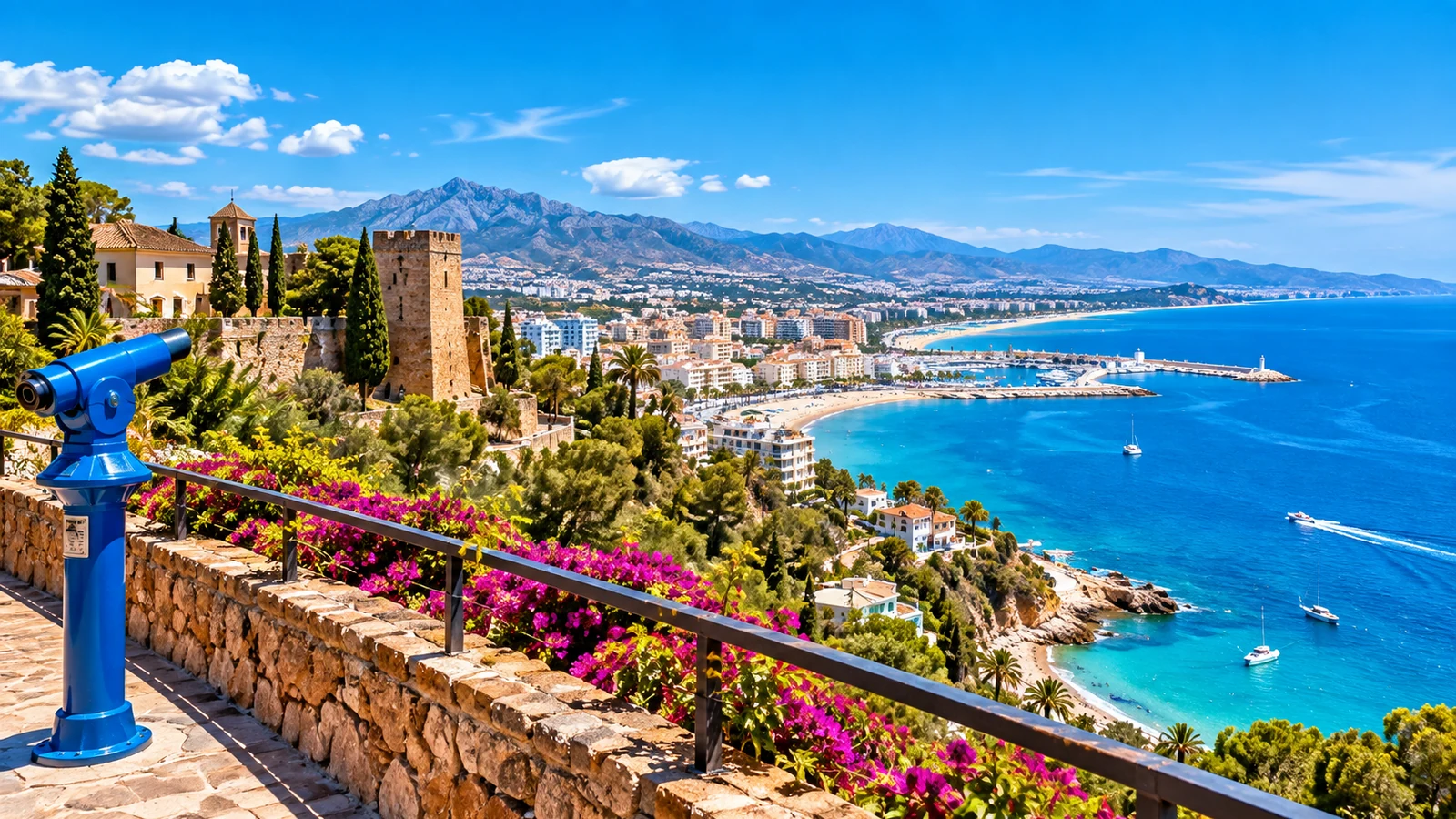
Málaga is one of the easiest places on the Costa del Sol to over-plan. On a map, the historic centre, port, La Malagueta, Gibralfaro and the eastern beach neighbourhoods all look close enough to collect in a single day. Some of them are. Others become much better when you stop treating the city as a checklist and give each part enough time.
For a first visit, the useful approach is simple: use the historic centre as your anchor, add one strong cultural block, choose either the port and La Malagueta or the eastern seafront for your coastal time, and leave the rest for another day. Málaga works especially well because you can arrive from the airport without a car, move around the centre on foot and still have a proper urban beach within easy reach.
The short answer for a first visit
If you have one full day, start around the historic centre and Calle Alcazabilla. The Roman Theatre and Alcazaba sit together, with the Picasso Museum, cathedral area and Plaza de la Merced only a short walk away. Choose one or two of those rather than trying to enter every museum you pass. Continue through the centre towards Atarazanas if the market is open, then walk south to the port. From Muelle Uno you can continue to La Malagueta if you still want beach time.
If you have two or three days, Málaga becomes much more relaxed. Give the monuments and museums their own half-day, use another stretch for the port and beach, and reserve an evening or a separate outing for Pedregalejo and El Palo. That gives you city, history and coast without spending the trip moving between disconnected highlights.
Understand the centre before choosing attractions
Central Málaga is compact, but “the centre” contains several different moods. Around Calle Larios, Plaza de la Constitución and the cathedral you are in the busiest pedestrian core. This is the easiest area for a first-time visitor because many sights, restaurants and cafés are within a short radius.
A few minutes north-east, Plaza de la Merced and Calle Alcazabilla put you beside the Roman Theatre, Alcazaba and the lower slopes of Gibralfaro. This is the strongest historical cluster in the city. It is also a useful place to understand Málaga geographically: the old city lies between the Guadalmedina river and Gibralfaro, while the port and sea open immediately to the south.
West of the main pedestrian core, the area around Atarazanas feels more everyday. The municipal market is still a working food market, not a purpose-built tourist attraction. Go in the morning if you want to see it operating properly; the municipal listing gives regular opening from Monday to Saturday in the morning and early afternoon. It is a poor choice for a late-afternoon plan simply because the market day is already over.
The first common mistake is therefore not choosing the wrong attraction. It is crossing the same compact centre repeatedly because you planned individual pins rather than neighbourhoods.
Make the Alcazaba your main historical visit
For most first-time visitors who want one major monument, the Alcazaba is the obvious choice. The municipal site describes a fortified palace complex arranged through multiple defensive precincts on the slope of Mount Gibralfaro. It is not a single room that you can tick off in ten minutes. There are walls, courtyards, gardens, viewpoints and level changes, so allow enough time and wear shoes that make sense on stone and slopes.
The Roman Theatre below it makes the area unusually efficient: you can understand two very different periods of Málaga without travelling across the city. Gibralfaro Castle is higher again. It gives the broader city-and-bay perspective, but adding it changes the physical effort of the visit. If heat, mobility or time matter, do not assume you need both the Alcazaba and Gibralfaro just because a combined ticket exists.
Opening hours at the monuments change between summer and winter, and last admission is before closing. The official monument site is the right place to check the current timetable before building a late-day visit around it. Sunday-afternoon free admission is also listed by the city, but free periods can naturally be busier.
A sensible first visit is often better with the Alcazaba plus one museum than with Alcazaba, Gibralfaro and three museums squeezed into the same afternoon.
Choose museums by interest, not by reputation
Málaga has enough museums that “doing the museums” is not a realistic plan. The Picasso Museum in the Palacio de Buenavista is the obvious name for many visitors, while the Picasso Birthplace Museum at Plaza de la Merced is a separate institution with a different scale and purpose. The Centre Pompidou Málaga sits by the port, and the Carmen Thyssen focuses strongly on Spanish and Andalusian painting.
This variety is useful because you can match a museum to the route you are already taking. If you are spending the morning around the Alcazaba and Plaza de la Merced, the Picasso-related options fit naturally. If your day is moving towards the port, the Centre Pompidou can make more sense geographically. The point is not to choose the “best” museum in isolation; it is to choose the one you will still enjoy after the rest of your day.
Museum hours, exhibitions and ticket conditions can change. Check the institution itself when a specific exhibition is the reason for your visit.
Málaga is a city with beaches, not a beach resort with a centre
This distinction helps set expectations. The city council lists around 14 kilometres of Málaga coastline, including La Malagueta, La Caleta, Pedregalejo, El Palo and Misericordia. The beach is part of city life, but different stretches work for different kinds of day.
La Malagueta is the easiest first beach because it sits close to the historic centre and port. The municipal page describes it as an urban beach of roughly 1.2 kilometres with a promenade, food options and services. It works well when you want to add an hour or two by the sea without reorganising the whole day.
Pedregalejo and El Palo are farther east and deserve more than a quick photo stop. Their appeal is the seafront neighbourhood rhythm: walking, eating by the water and letting the evening stretch out. If that sounds more attractive than another museum, make it a deliberate part of the plan rather than an afterthought after a full day in the centre.
Misericordia, west of the centre, is another urban beach option but does not combine as naturally with the historic core for a first sightseeing day. It can make more sense if you are staying on the western side of the city.
Do not rent a car just for Málaga city
For the city itself, a car is usually more burden than advantage. Aena lists the C1 suburban railway between Málaga Centro Alameda and Fuengirola with a station at the airport; its published approximate journey is 12 minutes from the airport to Málaga centre and 8 minutes to María Zambrano station. That makes Málaga one of the simplest Costa del Sol bases for an arrival without a rental car.
Once you are central, the core sightseeing area is walkable. Buses and taxis fill the gaps, particularly for the eastern beaches or when heat and mobility make a longer walk unattractive. A car becomes useful when your wider trip includes places that are awkward by rail or when you plan multiple rural or inland day trips, not because you need it to move between the cathedral and the port.
If you arrive by high-speed train at María Zambrano, you are also close to the centre, with local rail and urban transport available. For a short city break, adding a rental car purely out of habit can create parking work without solving a real problem.
Build the day around heat and opening hours
Málaga rewards a little timing. In warmer months, a steep midday climb to Gibralfaro is a very different experience from an early visit. The historic centre can also feel busiest in the middle part of the day, particularly around the main pedestrian streets.
Use mornings for the market, monuments or the attraction that matters most. Lunch naturally slows the day down. Later afternoon is good for the port or beach, while the centre becomes lively again towards evening. This is not a rigid timetable; it is simply a way to avoid turning the hottest hours into the most strenuous part of the route.
Atarazanas is the clearest example of why current hours matter. It is primarily a morning and early-afternoon market. The Alcazaba and Gibralfaro have seasonal closing times. Museums have their own weekly patterns. Check the few places you care about and leave the rest flexible.
Where to stay for a first Málaga trip
If the purpose of the trip is mostly culture, food and sightseeing, the historic centre or its immediate edge is the easiest choice. You can walk to the principal monuments and return to your accommodation without relying on transport late at night.
Soho, south-west of the core, works well for visitors who want to be close to the centre, port and María Zambrano side without sleeping in the busiest historic streets. La Malagueta suits someone who wants the sea immediately outside while remaining close enough to walk back towards the old centre.
Pedregalejo is a different proposition. Choose it because you specifically like the idea of a coastal neighbourhood and evenings by the water, accepting that the main monuments are no longer outside your door. That trade-off can be excellent for a longer stay and less convenient for a two-night culture-heavy break.
Do not choose an area based only on the word “Málaga” in a hotel listing. Look at the actual neighbourhood and how often you expect to cross the city.
Eating well does not require chasing a single famous address
For a first visit, location and timing matter more than collecting a list of supposedly essential restaurants. Atarazanas can be useful for understanding ingredients and market culture during the day. The historic centre gives enormous choice but also the greatest concentration of visitor-oriented menus. The eastern seafront is the natural place to look for the beachside fish tradition associated with Málaga.
A practical rule is to decide what kind of meal you want before choosing the venue: quick market stop, traditional lunch, beachside fish, contemporary cooking or a long evening with drinks. Then choose within the area you are already exploring. Crossing the city for a restaurant that looked good in a ranking often costs more of the day than it adds.
If seafood is a priority, remember that “by the beach” and “good seafood” are not the same guarantee. Read recent menus and reviews, and treat highly photographed places with the same judgement you would use anywhere else.
What to skip on a first visit
Skip the idea that every named attraction must fit into one day. Málaga is compact enough to tempt you into doing this and varied enough to punish it.
You probably do not need the Alcazaba, Gibralfaro, Picasso Museum, Carmen Thyssen, Centre Pompidou, Atarazanas, Muelle Uno, La Malagueta and Pedregalejo in a single route. Technically moving between them may be possible. Enjoying them is another matter.
Also avoid using Málaga as a base for a different distant day trip every day if you have not actually left time for Málaga. Ronda, Nerja, Caminito del Rey and other Costa del Sol excursions can all be worthwhile, but a holiday built entirely from departures can miss the city you chose to stay in.
A sensible first-time rhythm
With one day, keep it central: Alcazaba and Roman Theatre area, one museum or the cathedral quarter, lunch, then the port and La Malagueta. With two days, add Atarazanas in the morning and give Pedregalejo or El Palo its own evening. With three days, you can add Gibralfaro, another museum, a slower beach block or a day trip without making the city itself feel rushed.
Families should reduce the number of formal visits rather than simply adding child-friendly stops on top of an adult itinerary. Travellers with reduced mobility should check individual monument access and treat the slopes around Gibralfaro separately from the flat pedestrian centre. Visitors without a car are in one of the strongest positions on the coast: airport rail access and a compact centre remove much of the transport friction.
The best first trip to Málaga is not the one that proves you saw the most. It is the one where the historic city, the Mediterranean and the everyday rhythm still feel connected. Start with one compact area, add one meaningful choice at a time, and let the city be a place rather than a list.
Continue your Costa del Sol planning
Other published guides for the same destination or a closely related topic.