Ronda day trip from the Costa del Sol: plan it by your base
A practical Ronda day trip built around transport, Puente Nuevo, the old town and one or two interiors—not an overpacked monument checklist.
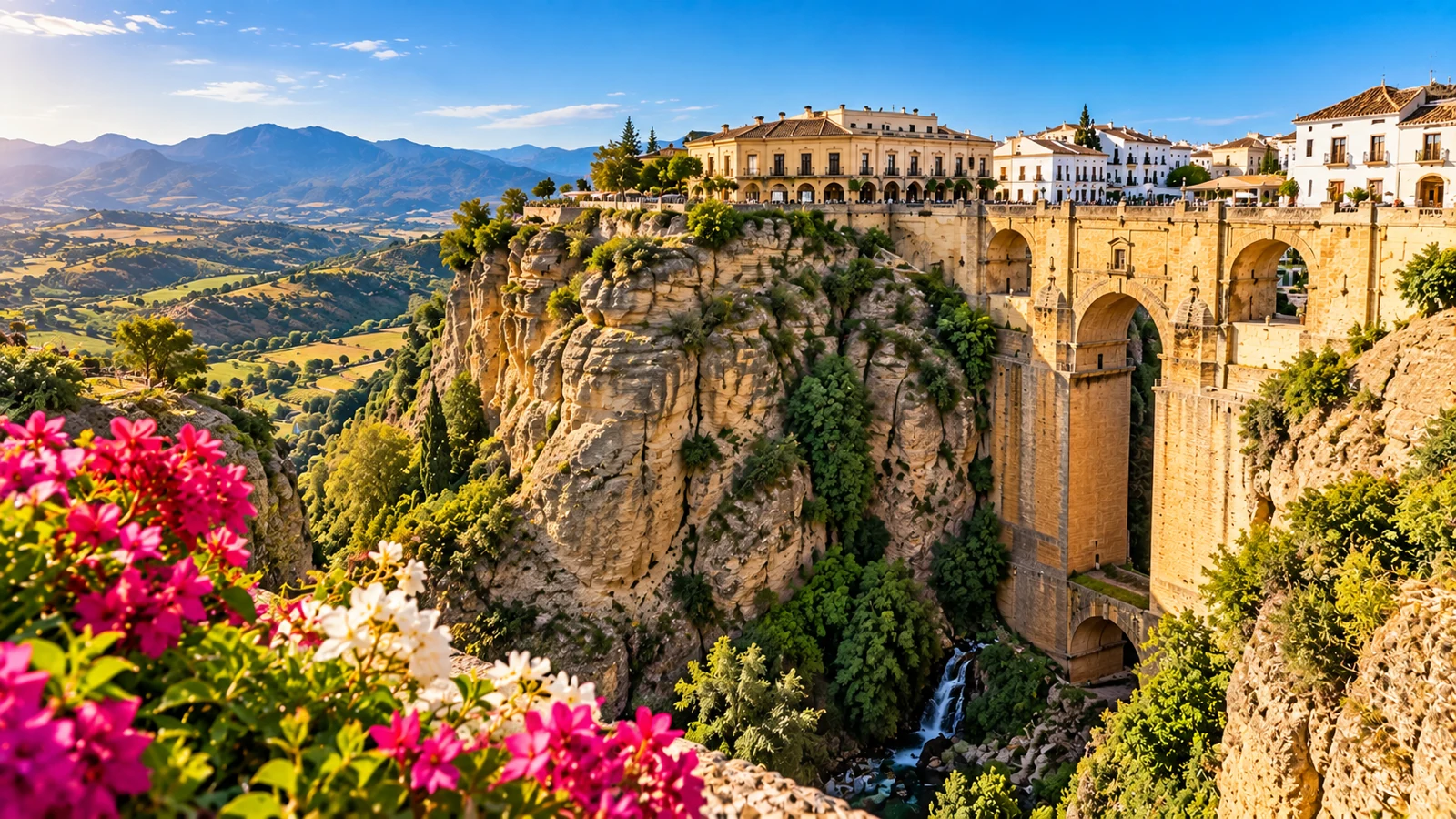
Ronda is one of the best day trips from the Costa del Sol, but only when you treat the journey as part of the plan. The town itself is compact enough for a coherent walking day around the gorge, Puente Nuevo and the old quarter. What changes dramatically is the transfer from your base.
A visitor staying in Málaga has a realistic train option. Someone in Marbella or Estepona will usually think more naturally in terms of road or coach. A visitor in Torremolinos or Fuengirola has to account for the extra step of reaching Málaga or another connection before assuming public transport is effortless.
The useful question is therefore not simply “is Ronda worth a day trip?” It is “from where, by which transport, and how many hours will I actually have on the ground?”
Quick answer
Ronda is worth a full day if you can give yourself enough time to walk the central viewpoints, cross Puente Nuevo, explore the old town and choose one or two interiors such as Palacio de Mondragón or the Arab Baths.
Do not try to combine Ronda with another major inland destination on the same day unless you are deliberately taking a fast organised tour. Independently, Ronda works better as the single destination.
For most first-time visitors the strongest route is: Alameda del Tajo and the cliff edge → Puente Nuevo → old town → Palacio de Mondragón or another focused interior → lunch → Arab Baths if timing works → return through the centre with time for viewpoints before leaving.
First decide how you are getting there
The official Ronda tourism site separates arrival by car, bus and train and links current operators. That is important because there is no single transport answer for the whole Costa del Sol.
From Málaga, Renfe currently publishes Málaga María Zambrano–Ronda rail service. The route page shows a morning departure from Málaga, but schedules and fares are date-specific and must be checked for the day you travel. The advantage of train is obvious: no mountain-road driving and no parking decision on arrival.
The limitation is flexibility. Your entire day becomes structured around the available outbound and return services. Before buying anything, check both directions and make sure the time in Ronda is worth the journey.
From Marbella, Estepona and the western coast, road travel is often more direct than first returning east towards Málaga for a train. The official Ronda tourism page links current bus operators as well. Check the actual service from your base instead of relying on an old blog timetable.
From Torremolinos, Benalmádena or Fuengirola, public transport may involve connecting through Málaga or using bus combinations. Compare the total door-to-door time with driving or an organised excursion before deciding.
Car: the most flexible option, but not automatically the easiest
Driving gives you control over departure and return time and can be especially useful from the western Costa del Sol. It also lets you stop en route if that is genuinely part of the day.
But do not mistake flexibility for zero friction. Mountain roads require attention, and arriving in Ronda means deciding where to park before entering the most walkable central area. The official tourism site provides parking information, so choose a parking strategy before departure rather than circling the centre after arrival.
If you are not comfortable with winding inland roads, train, bus or an organised excursion may be a better day even if the theoretical travel time is longer.
Train from Málaga: good when the timetable fits
Renfe confirms service between Málaga María Zambrano and Ronda. This can be an excellent option for visitors already staying in Málaga because the journey starts from a major central station and Ronda station has onward bus and taxi connections as well as facilities for passengers with reduced mobility.
The key is the timetable. A day trip needs a useful morning outbound journey and enough return options to avoid spending the afternoon watching the clock. Check the live Renfe journey for your date, not just the generic route page.
If the available trains give you only a short window in Ronda, do not try to compensate by rushing every monument. Focus on the bridge, old town and one interior visit.
Start with the Alameda and the gorge
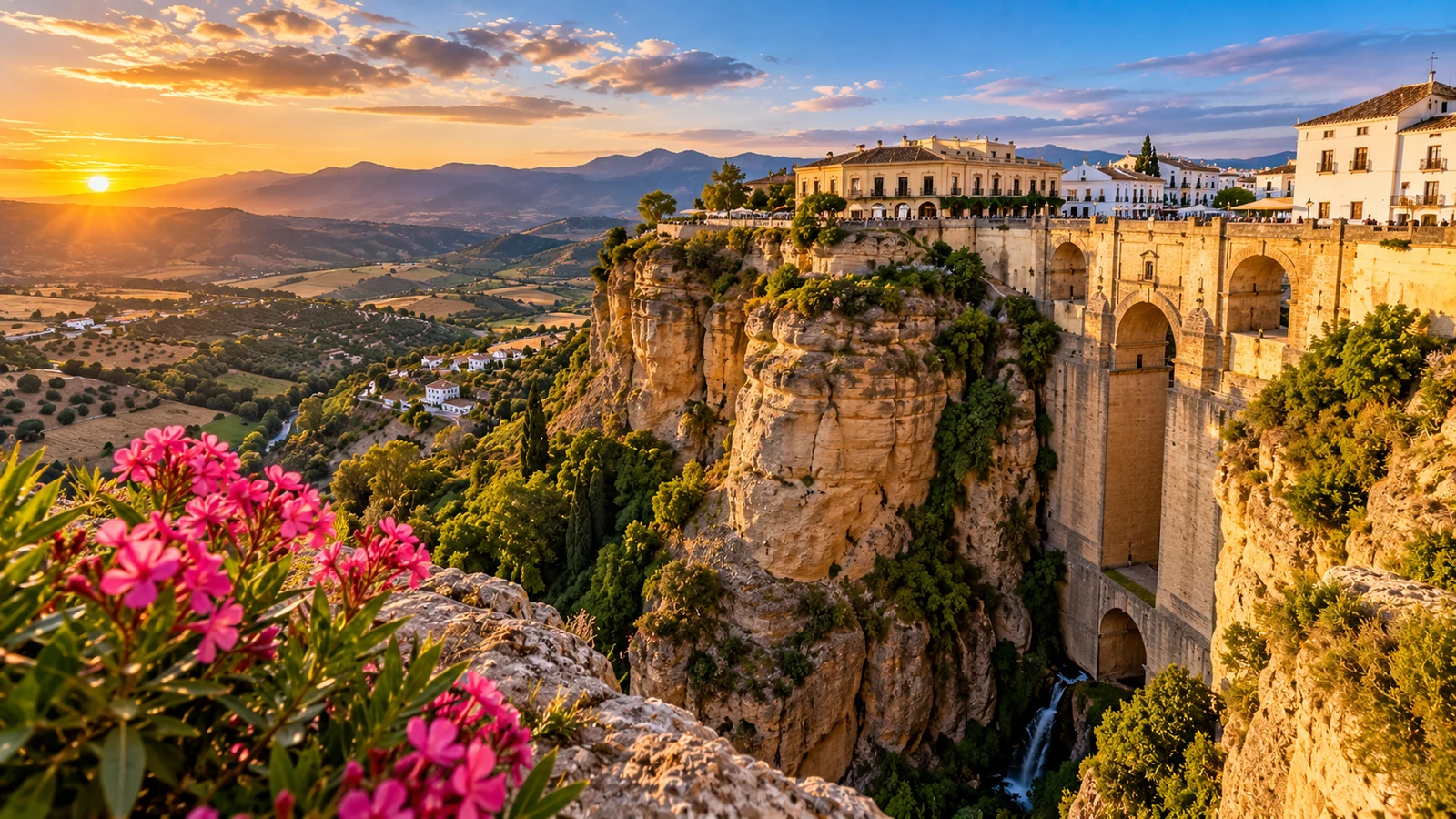
Once in central Ronda, begin around Alameda del Tajo and the cliff edge rather than immediately entering a museum. The first value of Ronda is geographical: the town sits around the dramatic Tajo gorge, and understanding that landscape makes Puente Nuevo and the old quarter more meaningful.
Walk towards the bridge slowly. Viewpoints along this central area give you the scale of the gorge before you cross it.
This opening also has a practical advantage. It is outdoors and flexible. If your transport arrived later than expected, you have not already committed to a timed interior visit.
Puente Nuevo is the anchor, not the whole day
Puente Nuevo is the symbol of Ronda and naturally becomes the centre of a first visit. The municipal tourism office also operates an interpretation centre at Plaza de España with published 2026 hours and a modest admission fee.
Whether you enter the interpretation centre should depend on time and interest. The bridge itself and the surrounding viewpoints already give a strong sense of the site. If you only have five hours in town, spending too much time inside every small attraction can weaken the overall day.
Cross the bridge and continue into the older southern part of Ronda rather than treating the bridge as the endpoint.
The old town deserves more than one photograph
South of Puente Nuevo, the street pattern becomes quieter and more historic. This is where the day should slow down.
Walk towards Plaza Duquesa de Parcent and the streets around Santa María la Mayor. You do not have to enter every church or house. The value comes from the transition from the busy bridge area into a more residential historic quarter.
This section is also where a focused interior such as Palacio de Mondragón makes sense, because it fits geographically rather than requiring a separate excursion.
Choose Palacio de Mondragón if you want one substantial interior
The municipal tourism timetable describes Palacio de Mondragón as a sixteenth-to-eighteenth-century palace with patios and gardens. It currently has published opening hours that vary by day, with shorter Sunday and holiday hours.
For a one-day trip, it is a strong choice because it adds architectural depth without taking you far from the old-town route.
Check the current hours before travelling. Ronda’s monuments do not all share one continuous timetable, and some split the day or close earlier on Sundays and holidays.
If the palace is closed when your route reaches it, do not distort the day trying to return later. Continue through the old town and use another open site.
Lunch: stay inside the walking route
Ronda has enough restaurants in and around the central and historic areas that lunch should not require leaving the route.
Choose whether food is a quick break or an important part of the day. If you want a long lunch, accept that you may only visit one paid monument afterwards. If you want to maximise sightseeing, keep lunch simpler.
Avoid using lunch as the moment to drive to a rural restaurant outside town unless that restaurant is specifically the reason for your trip. Moving the car again breaks the logic of an otherwise walkable day.
Arab Baths: excellent if the timing works
The Baños Árabes are one of Ronda’s strongest historical sites. The municipal tourism office describes the thirteenth-to-fourteenth-century thermal archaeological complex as one of the best preserved on the Iberian Peninsula.
They sit lower than the main bridge-and-old-town route, so adding them requires time and some additional walking. This is precisely why they work better as a deliberate afternoon choice than as an automatic box.
Check the current 2026 opening pattern before the trip. If your transport home leaves early, do not descend to the baths only to rush back uphill.
If you have enough time, the baths add a completely different historical layer to the day and justify the extra movement.
What to skip when time is short
If you have only four or five useful hours in Ronda, skip the urge to enter everything.
Keep Puente Nuevo, the viewpoints, the old town and one interior. That is enough for a strong first visit.
The bullring, museums, Casa del Rey Moro, churches, Palacio de Mondragón and Arab Baths can all be interesting, but a one-day visitor does not need all of them. Choose based on interest and current opening hours.
Ronda is visually powerful enough that walking the town is not “wasted time” between attractions. It is the main experience.
Heat changes the route
In hot weather, start outdoor viewpoints earlier and place an interior visit around the hottest part of the day. The old town has narrow streets and some shade, but exposed viewpoints and climbs can be tiring in summer.
Carry water and avoid scheduling the most demanding walking immediately after a long lunch.
If you drive, the flexibility to start early is valuable. If you use train or bus, adapt the route to the arrival time rather than pretending you have an early-morning start.
Rain changes the priorities
Ronda in rain can still be atmospheric, but slippery stone, viewpoints and gorge-edge walking deserve extra care.
Use the clearer periods for Puente Nuevo and the viewpoints. Put Palacio de Mondragón, the interpretation centre or another interior into wetter periods.
If the weather is severe, do not force the Arab Baths descent or long viewpoint loops. A shorter central visit can still justify the journey if transport conditions are safe.
Reduced mobility: choose the core carefully
Ronda’s geography is not uniformly flat. The central area around Alameda, Plaza de España and Puente Nuevo is easier than routes that descend towards lower historical sites.
Ronda station itself is listed by Renfe as adapted for passengers with reduced mobility, and the municipal monument sheet marks accessibility information for several attractions. But accessibility of a building does not mean the route between all sights is effortless.
If mobility is limited, prioritise the central viewpoints, bridge area and accessible interiors and use taxis where they remove unnecessary gradients.
Families: keep the monument count low
With children, Ronda usually works better when the gorge, bridge and walking are the main story. One palace or archaeological site is enough for many families.
Do not build a day around five interiors with separate ticket desks and opening times. Give children space between visits and keep lunch predictable.
The dramatic landscape does much of the work for you; you do not need to turn the town into a classroom schedule.
From Málaga versus from Marbella
From Málaga, rail can make the day pleasantly independent when the timetable fits. You avoid driving and arrive with the town itself as the focus.
From Marbella and the western coast, the road connection can make a car or coach more natural. The important difference is not which option is universally “best”; it is which one avoids an unnecessary backtrack.
This is why a generic “Ronda is two hours from the Costa del Sol” statement is not very useful. The coast is long. Start from your actual accommodation and calculate the whole journey.
Do not pair Ronda with too much else
Ronda is often sold in combined tours with other inland places. That can be useful if your priority is seeing several names in one day and you accept limited time at each.
For an independent trip, however, Ronda is substantial enough on its own. Add another village only if the transport is specifically designed around it and you understand how much Ronda time you are giving up.
The stronger first visit is normally one unhurried town rather than three rushed stops.
Before leaving
Give yourself time to return to the bridge and central viewpoints before departure. The light and atmosphere may be different from the morning, and ending near the centre keeps the final transfer simpler.
If you arrived by train or bus, leave a sensible buffer for the station. If you drove, avoid discovering at the last minute that your parking location is farther from the old town than you remembered.
The final plan
A strong default day is: arrive → Alameda del Tajo and viewpoints → Puente Nuevo → old town → Palacio de Mondragón or another single interior → lunch → Arab Baths if time and mobility allow → return through the centre → departure.
Check transport and monument hours before leaving the coast. Then keep the day simple enough to actually experience Ronda rather than merely prove you were there.
Continue your Costa del Sol planning
Other published guides for the same destination or a closely related topic.