Driving on the Costa del Sol: when a car helps and when it gets in the way
A rental car can unlock villages, inland routes and flexible day trips, but it is not automatically the best choice for every Costa del Sol stay. Use this guide to decide when driving adds freedom, where parking and traffic add friction, and which safety rules matter.
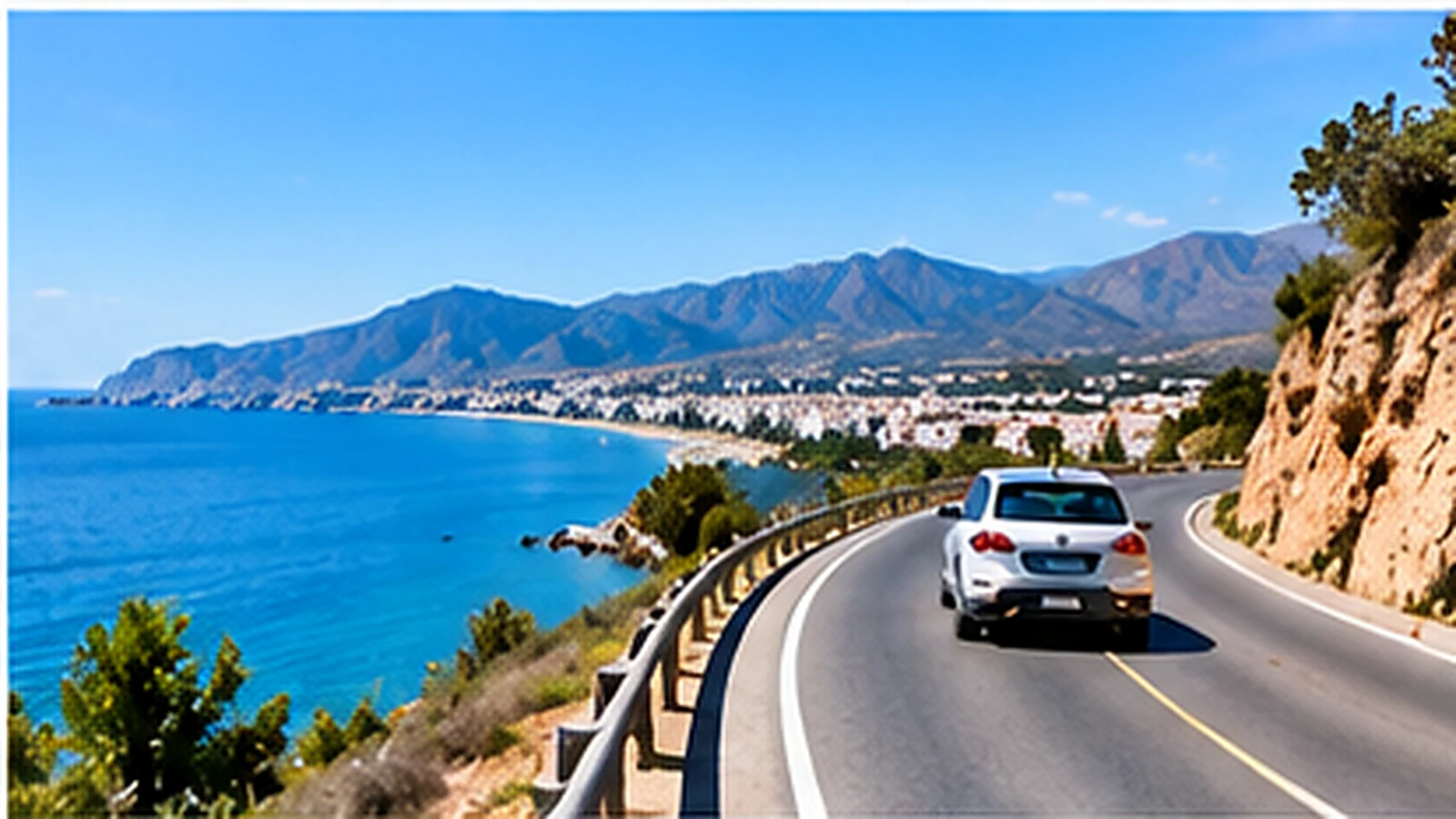
Hiring a car on the Costa del Sol can transform a trip, but only if you use it for the journeys that actually benefit from one. A car is excellent for an inland village day, a flexible route between scattered places or accommodation outside the main public-transport corridors. It can be unnecessary baggage if your holiday is centred on Málaga, Torremolinos, Benalmádena or Fuengirola and most of your plans sit close to the C1 railway and a walkable centre.
The right question is therefore not “do I need a car on the Costa del Sol?” It is “which parts of my itinerary become meaningfully easier with a car, and what inconvenience am I accepting in return?” Parking, traffic, unfamiliar roads and the responsibility of driving after a long flight all have a cost. So does spending a holiday waiting for buses to reach a village that would be simple by car.
This guide focuses on that trade-off. For legal details, road signs and safety requirements, use the current guidance from Spain’s Dirección General de Tráfico (DGT), because rules can change.
A car makes the biggest difference away from the C1 corridor
Málaga Airport, Málaga city, Torremolinos, Benalmádena and Fuengirola sit on the C1 rail corridor. Aena’s current airport information confirms the direct airport connection and lists approximate journey times of 12 minutes to Málaga centre, 18 minutes to Benalmádena and 34 minutes to Fuengirola. If your accommodation and most of your plans are in those areas, renting a car for the entire stay may solve a problem you do not have.
The calculation changes as soon as your itinerary becomes more dispersed. Mijas Pueblo, inland villages, rural accommodation, golf courses, trailheads and multi-stop days often become easier when you control the route and departure time. Marbella and Estepona also lack the same rail connection; buses can work well, but a car may be useful if you want to move repeatedly between different parts of a large municipality or continue inland.
A useful compromise is to split the holiday. Spend the first days car-free if you are based on the rail corridor, then rent a car only for the days that need it. Málaga Airport currently lists multiple car-hire desks in Terminal 2, but airport collection is not the only possible model. Depending on your accommodation, collecting later can reduce parking costs and remove the temptation to drive when train or walking would be easier.
Do not rent a car just because you are landing at Málaga Airport
The airport is exceptionally well connected for a leisure airport. The train, airport buses, taxis and app-based chauffeur services mean that “we arrive by plane” does not automatically imply “we need a rental car”.
If you land and are heading to central Málaga, Torremolinos, Benalmádena or Fuengirola, compare the full door-to-door journey. A train avoids the rental desk, inspection, fuel questions, unfamiliar navigation and the need to park immediately on arrival. For a short city or resort stay, that simplicity can be worth more than having a vehicle available outside the hotel.
If you are heading to a villa above the coast, rural accommodation, a dispersed part of Mijas or a trip built around inland excursions, the opposite may be true. One airport collection can be simpler than arranging multiple transfers and local taxis.
Also consider the arrival time and the driver. Starting an unfamiliar motorway journey after a delayed late-night flight can be a poor first use of the car. There is nothing wrong with using a transfer for the first night and collecting the car the next morning if that makes the trip calmer.
The coast is easy to drive along, but the holiday is not only the coast road
The main coastal road network makes east-west travel look straightforward. That can encourage overplanning. The fact that two places are connected by a major road does not mean they belong in the same relaxed day. Traffic around Málaga, junctions serving busy resorts and the western corridor can turn a theoretically short transfer into the least enjoyable part of an itinerary.
Use the car to create better geography, not worse geography. A good driving day might link a base with one inland village and a nearby viewpoint, or make a focused excursion to Ronda possible. A bad driving day often consists of checking off four coastal towns that could each have supported several hours on their own.
Parking should be part of the route design. If the destination has a compact pedestrian centre, the aim is usually to park once and walk. Repeatedly moving a car between small stops in Málaga centre, Marbella Old Town or a busy seaside area defeats much of the benefit of having it.
Old towns and beach centres are often where the car helps least
Historic centres are exactly the places where visitors sometimes overvalue a car. Narrow streets, pedestrian zones, one-way systems and limited on-street parking make “drive to the attraction” a poor mental model. Treat the vehicle as a way to reach the edge of the walkable area, not as a tool for moving between every point of interest.
In Málaga, a car can be useful for trips outside the city, but it is rarely the easiest way to hop between central museums, the historic centre and the waterfront. In Marbella, use the same logic: if the day is Old Town plus promenade, park and forget the car for several hours. In Mijas Pueblo, the village itself is a walking experience; having a car helps you reach it, not move around it.
Beach days vary. A car is useful for reaching a specific cove or less central stretch, especially when carrying family equipment. For a central promenade beach in Torremolinos or Fuengirola, it may add parking friction without adding much freedom.
Parking changes by destination and season
Avoid building a guide around a list of “free parking secrets”. Those age badly and can encourage visitors to rely on spaces that disappear, become regulated or are inappropriate for tourist demand. The robust strategy is simpler: decide in advance whether you are comfortable using a paid car park when the destination is busy.
In a historic centre or major beach zone, paying for a predictable parking space can be cheaper in holiday time than circling side streets for forty minutes. This is especially true with children, luggage or a timed booking.
At accommodation, check parking before you book the car, not after. A vehicle that gives you freedom during the day can become a nightly problem if your apartment is in a dense centre with no practical parking arrangement.
Summer, weekends and major events can change the equation. The same destination may feel simple to drive in a quiet month and frustrating during a peak afternoon. Leave buffer rather than making a reservation at the exact time your navigation estimate says you will arrive.
Use a car for the inland experiences that genuinely need flexibility
This is where driving earns its place. White villages, mountain areas, golf courses, rural restaurants, trail access and multi-stop inland routes can become much more practical. Public transport may still exist, but a car lets you choose when to leave and avoids designing the entire day around one return service.
Ronda is a good example of a destination that deserves its own day rather than being treated as a roadside stop. A car can make it easier to control arrival and departure, but the value comes from the destination, not from trying to add three more towns because you have wheels.
Mijas Pueblo is another useful case. Visitors staying on the coast can reach it by bus, so a car is not essential. But if your plan combines the village with a more dispersed coastal or inland stop, driving may become the cleaner option. The important question is not whether public transport exists; it is whether it supports the particular sequence you want.
For hiking or nature days, current route access and weather matter. Do not assume that every trailhead has unlimited parking or that a mountain road is as easy as the coast. Check the official information for the specific route before leaving.
Know the safety rules before you drive
Spain’s DGT publishes guidance specifically for road users and foreign visitors. Seat belts are compulsory. For children up to 135 cm, an appropriate child restraint system is mandatory and, as a general rule, should be fitted in the rear seats, subject to the exceptions described by DGT. If you are renting with a child, arrange the correct restraint in advance rather than assuming the rental desk will solve it without preparation.
Speed limits depend on road type, vehicle and the posted restrictions. The safest practical advice is not to memorise a simplified table from an old travel blog. Follow current road signs and DGT guidance. Urban streets can have different limits depending on their configuration, and temporary restrictions can change normal expectations.
DGT also emphasises the risk of alcohol and driving and states that the only genuinely safe alcohol level for driving is 0.0 g/l. For a holiday itinerary, this makes the decision simple: if lunch, wine, beach clubs or nightlife are part of the plan, do not build the return journey around driving.
Motorways are not an invitation to treat a rental car as part of the holiday entertainment. Unfamiliar junctions, navigation instructions, motorcycles and sudden congestion need attention. Give the passenger the phone and route-management job when possible.
Driving with children requires planning before collection
A family car gives enormous flexibility: luggage stays together, you can carry beach equipment and a tired child does not need another bus transfer. It also creates responsibilities that should be resolved before the first kilometre.
DGT’s current child-safety guidance requires an appropriate restraint up to 135 cm and recommends choosing systems according to the child’s size and weight. Confirm what the rental company is actually supplying, not just that the booking says “child seat”. If you know the child is uncomfortable in a particular setup, that matters on a long, hot journey.
Keep the first day simple. A flight, baggage collection, rental paperwork, fitting a child seat and immediately driving a complicated route is a lot of transitions. If the accommodation is easy to reach, make that the only objective.
Never leave a child or pet in a parked car while you “quickly” do something. Heat can build rapidly. Treat the vehicle as transport, not temporary storage for living passengers.
A car does not make every day faster
Door-to-door time includes more than the moving vehicle. You need to walk to the car, load it, navigate, enter the destination, find parking and walk from the parking space. On the C1 corridor, a train can sometimes turn that chain into a simpler journey even when the car’s pure driving time looks shorter.
This is particularly relevant for Málaga. If you are based near a station in Torremolinos, Benalmádena or Fuengirola and want a central Málaga day, taking the train can remove the least interesting parts of driving while leaving you exactly where walking becomes useful.
The same logic works in reverse. If a day requires two buses, a taxi and a strict return timetable, the car may save hours of mental and actual waiting. Compare the entire trip, not just kilometres.
Consider a mixed transport holiday
The strongest Costa del Sol itinerary often uses more than one transport mode. Train for Málaga. Walking for a local beach day. Taxi or VTC after dinner. Car for Ronda, a rural stay or a day that links places poorly served by public transport.
This avoids the false choice between “rent a car for the whole holiday” and “never use a car”. If a seven-day rental will spend four days parked, price the alternative. Even when the money is similar, removing parking and driving from several days can improve the holiday.
Likewise, do not reject a car on principle if it would unlock the exact experiences you came for. A traveller staying in a rural villa with plans for villages and hiking has a different mobility problem from someone staying beside the station in central Fuengirola.
Before returning the car
Read the rental company’s fuel, return-location and damage procedures when you collect the vehicle, not in the airport car park on the final morning. Leave enough time to refuel if required, find the correct return access and complete the handover before check-in pressure begins.
Take the same practical care at collection. Check the recorded condition of the vehicle, understand what is included and make sure the driver is comfortable with the controls before joining traffic. Rental terms are contractual and provider-specific, so Costa Guest does not generalise deposits, insurance or fuel policies as if every company used the same system.
If something is unclear, resolve it at the desk. Saving five minutes at collection can be expensive if it creates a dispute later.
So, should you rent a car?
Rent one if your trip depends on inland villages, dispersed accommodation, golf, hiking access, repeated travel west of the rail corridor or day trips where schedule freedom has real value. Consider renting only for part of the trip if most days are on the C1 corridor but two or three excursions benefit from driving.
Skip it, or delay collection, if you are staying centrally in Málaga, Torremolinos, Benalmádena or Fuengirola and your first days consist mainly of walking, beaches and rail-connected visits. A vehicle parked in a garage is not freedom.
The best use of a car on the Costa del Sol is not to drive more. It is to make the places that are genuinely awkward without one easier to reach, while leaving the simple car-free days simple.