One day in Estepona: an easy old town to seafront itinerary
A practical one-day route through Estepona old town, one indoor stop and the seafront, with realistic timing, heat and mobility alternatives.
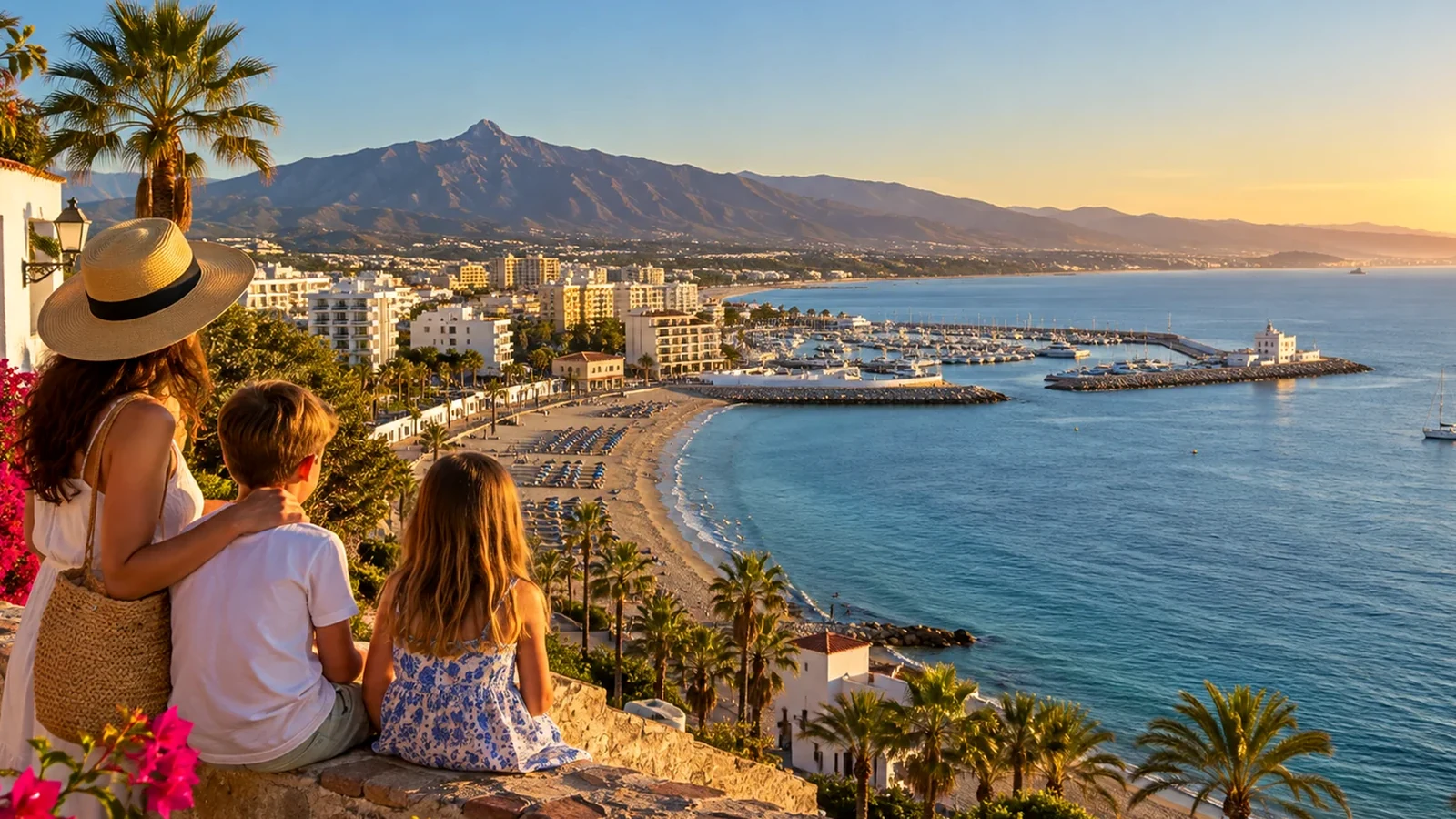
Estepona is unusually easy to enjoy in one day because its strongest visitor areas can be connected without constantly getting back into a car. The renovated old town, Plaza de las Flores, the botanical-orchid house area, the boulevard and La Rada seafront all sit close enough to build a coherent walking day.
The mistake is trying to turn every public-art route, museum, garden and beach into a separate attraction. Estepona works better when you treat the centre as one continuous urban walk, choose one substantial stop, then finish by the sea.
Who this plan suits
This route is designed for a first visit of roughly six to eight useful hours. It works for couples, families with older children and visitors who prefer a steady walking day to a checklist of ticketed attractions. It is also easy to shorten because the old town and seafront are close together.
If you have only three or four hours, stay with the old town, Plaza de las Flores and the seafront. If you have a full day, add the orchid house, Mirador del Carmen or a selective mural detour.
Start around Plaza de las Flores
Use Plaza de las Flores as the mental centre of the morning. From here, the point is not to march directly to one monument. Walk the surrounding pedestrian and traffic-restricted streets, letting the flowered squares, white façades and smaller passages form the visit.
Municipal tourism publishes a dedicated “Rincones con Encanto” route through this network of streets. You do not need to follow every turn exactly. For a one-day visit, the route is more useful as evidence that the old town itself is the attraction, not merely a path between buildings.
Allow around ninety minutes for a relaxed first loop. That gives time for photographs, coffee and small detours without making the day feel slow.
Add one historical anchor, not five
Around the centre you can include the Church of Los Remedios, the Clock Tower area, remains of San Luis Castle or one of the small cultural spaces. Pick what fits naturally into your walking line rather than zig-zagging between every point on a map.
This is especially important in warm weather. The old town is pleasant precisely because you can move slowly, pause in shaded streets and stop when something catches your attention.
If history is your priority, give this part more time and reduce the beach section later. If you mainly came for atmosphere, keep the historical stops short and save energy for the afternoon.
Choose one indoor stop before lunch
For most first-time visitors, one indoor or structured visit is enough. The Botanical Park and Orchid House is the obvious option because it sits close to the old town and gives a different texture to the day without requiring a cross-town transfer.
Another option is to save the structured visit for Mirador del Carmen, depending on current exhibitions and opening arrangements. The principle is the same: one meaningful indoor block works better than entering several small sites because they happen to be nearby.
Check current opening hours before building the day around a specific interior. Municipal tourism material is the right starting point, but operating details can change.
Lunch: stay central
There is little reason to move the car for lunch. The old town and surrounding central streets give you enough choice, and staying central preserves the simple geometry of the day.
If you want a long lunch, do it here and shorten the afternoon. If you prefer more time by the sea, eat earlier and keep the meal lighter. In summer this choice matters: a long shaded lunch can be a useful way to avoid the hottest part of the day.
Do not over-engineer the restaurant choice around a supposedly essential address. For a one-day itinerary, location and timing are often more valuable than chasing a venue that forces you away from the route.
Use the boulevard as the transition to the sea
After lunch, move south towards the boulevard and the seafront. This is one of the nicest features of Estepona as a day-trip town: the transition from old streets to open Mediterranean space is short.
Once you reach the promenade, you do not need a complicated plan. Walk a section of La Rada, stop for a drink or coffee and decide whether you want actual beach time or simply the sea view.
The municipal tourism page describes the promenade as roughly three kilometres along La Rada towards the fishing port, with the route continuing into the coastal path. You do not need to walk all of it. For a first visit, thirty to sixty minutes on the seafront is usually enough unless walking itself is the main purpose of the afternoon.
The mural route is better as an optional layer
Estepona’s mural route is spread across different neighbourhoods. That makes it interesting, but it also means it can break the compactness of a first day if you try to see everything.
The better approach is to choose one or two murals that sit close to your existing route or on the way to another stop. If street art is a major interest, make the mural route the theme of a separate half-day rather than squeezing dozens of works into the standard itinerary.
This is a good example of why “more sights” does not automatically mean a better day.
A low-friction timetable
A realistic sequence could look like this:
09:30–11:00 — Plaza de las Flores and a relaxed old-town walk.
11:00–12:00 — one historical or cultural stop, or continue the old-town route if you prefer outdoor time.
12:00–13:00 — Botanical Park and Orchid House or another single structured visit, subject to current opening hours.
13:15–15:00 — lunch in the central area.
15:00–16:30 — boulevard and La Rada promenade, with optional beach time depending on season.
16:30 onward — coffee, a selected mural, Mirador del Carmen or simply a slower walk back through the centre.
The times are deliberately flexible. Estepona does not reward minute-by-minute scheduling.
With children
For families, reduce the number of formal stops. The pedestrian old town, open squares and seafront give children more breathing room than a chain of interiors.
A useful family version is old town in the morning, early lunch and then the promenade or beach. The orchid house can replace a longer historical block if children respond better to plants and a visually distinctive indoor environment.
In summer, municipal accessibility information notes assisted-bathing services at La Rada and El Cristo for people with reduced mobility. Always recheck current seasonal arrangements before relying on a specific service.
If mobility is limited
Estepona is comparatively friendly for a central walking day. The municipality describes more than 130 renovated old-town streets and squares as pedestrian or traffic-restricted and accessible to people with reduced mobility, and several public-art routes are presented as accessible.
That does not mean every surface or route is effortless for every visitor. Build a shorter loop around Plaza de las Flores, the flatter central streets and the seafront, and avoid adding distance only to collect extra sights.
If accessibility is critical, use the current municipal accessibility information to check individual sites and beach services before travelling.
If it is very hot
In summer, begin earlier. Use the old town while temperatures are lower, put the indoor visit or long lunch in the middle of the day and leave the seafront for later afternoon.
A one-day plan should not force a long exposed promenade walk at the hottest hour just because it appeared in a template itinerary.
If the weather turns bad
Estepona remains workable in poor weather, but change the balance. Keep the old-town loop compact, prioritise an indoor cultural stop or the orchid house if operating normally, and treat the seafront as optional.
The advantage of the central layout is that you can abandon the outdoor part without losing the entire day.
Arriving by car
If you drive in, park once and keep the central day on foot. Moving the car between old town, lunch and seafront normally adds friction rather than saving time.
Choose parking based on your arrival direction and where you want to finish. The centre is compact enough that walking back to the car is usually simpler than building several parking stops into the day.
What to skip on a first day
Do not try to visit every mural, every sculpture, every poetry plaque and every museum. Do not combine a full old-town programme with several hours at the beach unless you are comfortable dropping stops. And do not treat the marina, fishing port and far ends of the coastal path as compulsory simply because they exist.
The strongest first day in Estepona is compact: understand the old town, choose one additional interest, eat without rushing and finish by the sea.
That gives you enough structure to feel you have seen the city, while leaving a reason to return for the routes and neighbourhoods you deliberately did not force into one day.
Continue your Costa del Sol planning
Other published guides for the same destination or a closely related topic.