Estepona for first-timers: old town, seafront and a city made for walking
Estepona is much easier to understand when you separate its compact old town from the long coast and treat the murals, Orchid House and Mirador del Carmen as choices rather than a checklist.
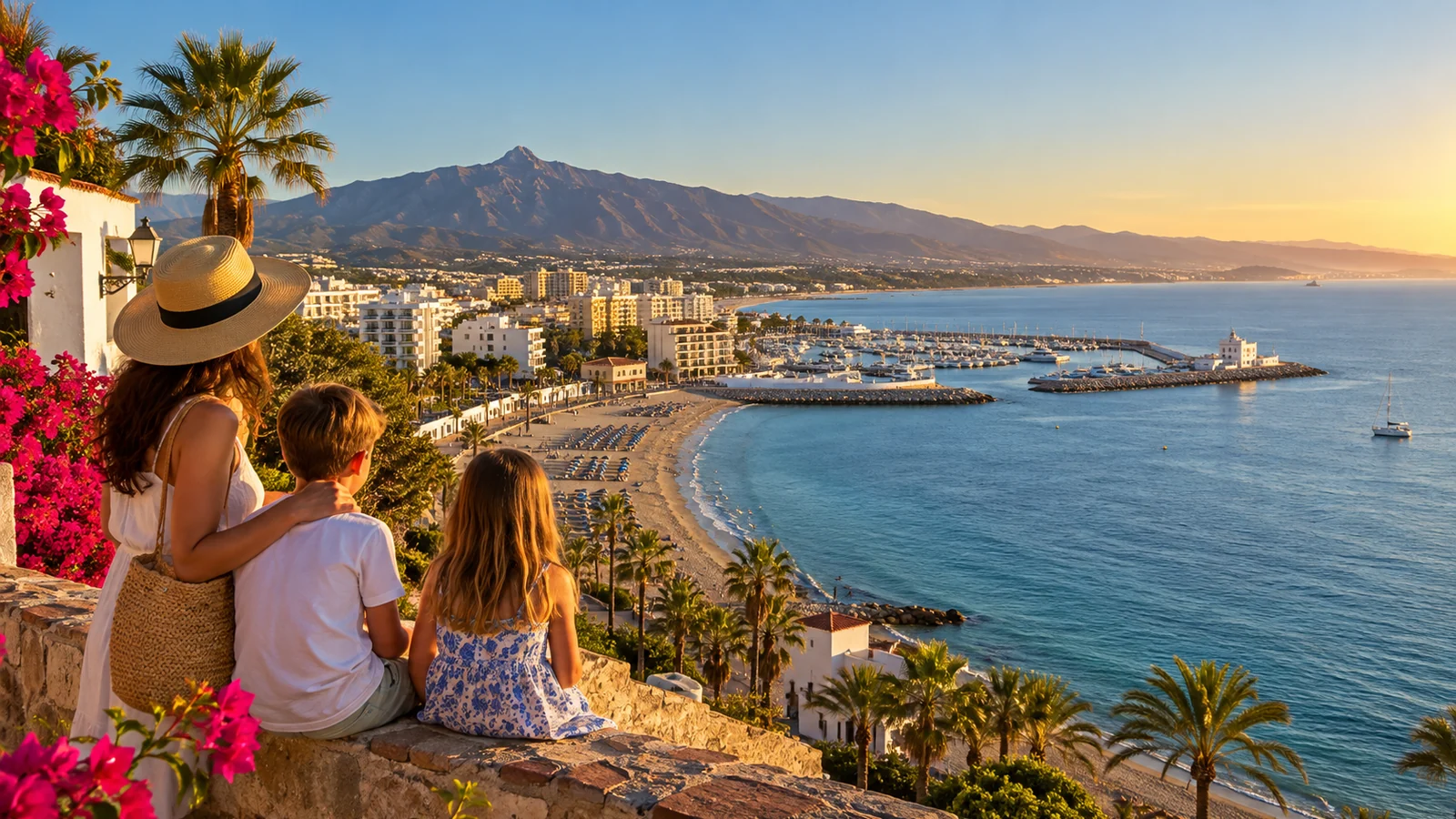
Estepona is often described as a beach town, but that is only half the picture. The part that surprises many first-time visitors is how much of the central experience is urban and walkable: the old town, flower-lined streets, Plaza de las Flores, the Orchid House, the seafront boulevard and Playa de la Rada can all belong to the same day without a car.
The mistake is trying to stretch that easy central day across the whole municipality. Estepona has a long coastline, dispersed mural locations, a marina and residential areas that extend well beyond the old centre. For a first visit, the most useful approach is to treat central Estepona as one compact experience and add only one extra layer: the seafront, a cultural stop, selected murals or a longer coastal walk.
Begin in the old town, because it explains modern Estepona
Plaza de las Flores is the natural orientation point. The municipal tourism office uses it as the starting point for its official old-town walking route, and that makes sense on the ground: from here you can move into a network of renovated streets, small squares, passages and white façades decorated with plants.
Do not think of the old town as one monument surrounded by souvenir streets. Its appeal is the accumulated effect of many small public spaces. The official "Rincones con Encanto" route threads through streets such as Damas, Sevilla, Casares and Miño and through a series of named squares and passages. You do not need to follow every turn. The route is more useful as evidence that the old centre is designed to be explored slowly on foot.
For a first morning, give yourself permission to wander. A rigid list works against the place. Stop when a square is pleasant, continue when a street is crowded, and use Plaza de las Flores as the point you can always return to.
The Orchid House is a good anchor, not the whole day
The Parque Botánico-Orquidario sits close enough to the old centre to work as a deliberate stop within a walking day. Municipal tourism material presents the Orchid House as part of Estepona's "Garden of the Costa del Sol" identity, alongside the planted streets and urban landscaping.
That makes it especially useful when you want one clear indoor or semi-indoor attraction between periods of walking. It also gives the day a different rhythm: streets and squares before it, the seafront afterwards. Check current opening information before you go rather than relying on an old timetable, particularly around holidays or special events.
If orchids are not your interest, skip it without feeling that you have missed the essence of Estepona. The old town works independently. That is an important first-time principle here: the city rewards selecting a few experiences rather than collecting every official attraction.
The seafront is the second half of the central city
Estepona's centre does not stop at the old town. The boulevard and Paseo Marítimo open directly towards Playa de la Rada, so the change from historic streets to the sea is part of the same central experience rather than a separate excursion.
This is where Estepona is easy to underestimate. You can spend the morning among flower-lined streets, have lunch in the centre and then walk towards the sea without reorganising the whole day. The official tourism material describes the boulevard as a large landscaped pedestrian space that connects the city to the coast, while the Senda Litoral continues the idea of walking beside the sea on a much larger scale.
For a first visit, you do not need to complete a long coastal route. Use the promenade as your flexible afternoon section. If the weather is good, extend the walk. If it is hot, windy or you have already walked enough, sit by the sea or use the beach instead.
Mirador del Carmen is worth choosing deliberately
The Mirador del Carmen sits in the seafront boulevard area and combines several functions: viewpoint, cultural spaces, library, auditorium and exhibition areas. The municipal page also describes a tower viewpoint with panoramic views over the city and Mediterranean.
This is a useful stop if you want contemporary Estepona rather than another historic square. It works particularly well late in the day because it gives you a reason to remain near the seafront and can connect naturally with an evening walk.
Do not build your entire itinerary around a published opening time or admission price months in advance. Those details can change. Use the official page close to your visit, especially if the tower or an exhibition is the specific reason you are going.
The mural route is spread out: pick, do not chase
Estepona's mural programme is a real part of the city's identity, but the phrase "mural route" can create the wrong expectation. The works are distributed across different neighbourhoods and streets, not arranged as one short gallery corridor beside Plaza de las Flores.
That is why the official route is best used selectively on a first trip. Look at the map, identify one or two works that fall naturally on your route and let them expand your walk slightly. Trying to collect a large number of murals can turn an otherwise relaxed city day into repeated crossings of busy roads and residential districts.
If street art is one of your main interests, then reverse the logic and make the murals the purpose of the day. The municipality maintains dedicated material for the route, and some works sit well outside the compact historic core. In that case, plan the route as a route rather than as a casual extra.
Estepona without a car works well for the centre
The central old town and seafront are precisely the areas where a car is least necessary. Walking is the default, and taxis or local buses can cover occasional longer movements. The more your holiday is built around central Estepona, the less reason there is to drive every day.
The regional picture is different. Estepona is west of the C1 suburban rail terminus at Fuengirola, so there is no direct coastal train to Málaga Airport. Aena lists a direct Avanza coach connection between the airport and Estepona. That makes a car-free arrival realistic, but your wider Costa del Sol mobility is bus-led rather than rail-led.
If you plan repeated trips to inland villages, golf courses, remote beaches or trailheads, a car may add useful flexibility. If your priority is old-town evenings, Playa de la Rada, the promenade and central restaurants, parking one outside the core and then walking is usually more sensible than treating it as the main way to move around town.
Where to stay on a first visit
For most first-time visitors, the strongest base is around the centre or within an easy walk of it. That keeps the old town, seafront and everyday restaurants within reach and means you can go out in the evening without turning every meal into a transport decision.
Staying farther west or east along the coast can be excellent for a resort-style holiday, golf or a quieter beach-focused stay, but check the actual address. "Estepona" covers much more than the historic centre. A property can be within the municipality while still requiring a bus, taxi or car for the old town.
If the purpose of your trip is mainly the town itself, optimise for walking. If the purpose is a specific resort, golf course or beach club, optimise for that and treat central Estepona as a separate outing. Problems begin when visitors book for one type of holiday and assume they have automatically booked the other.
A first day that makes sense
Start around Plaza de las Flores and spend the first part of the morning in the old town. Let the municipal walking route guide the general direction without following every numbered stop. Add the Orchid House if it genuinely interests you; otherwise keep moving through the centre at your own pace.
Have lunch before shifting the day towards the sea. Walk down to the boulevard and Playa de la Rada, then decide how much coast you want. The Mirador del Carmen can become the later cultural/viewpoint stop, especially if there is an exhibition you want to see.
That is already a complete day. You do not also need the marina, a long mural circuit, several kilometres of Senda Litoral and an inland excursion. Those are excellent reasons for a second day, not proof that the first one was incomplete.
If you have two days
Use the first for the compact centre and seafront. On the second, choose a theme. Street-art fans can build a proper mural route using the official map. Walkers can extend along the Senda Litoral. Beach-focused visitors can spend more time outside the central Playa de la Rada area. Drivers can use the extra day for the wider municipality or an inland excursion.
This division has another advantage: it protects the old town from becoming just the first thirty minutes of an overpacked driving itinerary. Estepona's central streets are the part that benefits most from unstructured time.
Common first-time mistakes
The most common is assuming all of Estepona is compact because the old town is compact. It is not. The municipality stretches along a substantial section of coast, and accommodation, golf, beaches and residential areas can be far from the historic centre.
Another mistake is trying to complete the mural route incidentally. The works are deliberately spread across different neighbourhoods. Either pick a few near your path or make street art a dedicated route.
A third mistake is spending the whole visit on the seafront because Estepona is labelled a beach destination. The coast is important, but the old town is what gives central Estepona much of its character. Conversely, do not spend the entire day in the old streets and miss how directly the modern boulevard opens onto the sea.
Finally, avoid using static opening times for cultural venues. The Mirador del Carmen, Orchid House and temporary exhibitions can have changing schedules. Check official sources shortly before you go.
Estepona in a wider Costa del Sol trip
Estepona works particularly well if you want the western Costa del Sol and prefer a town that combines a walkable centre with a long coastal setting. Marbella is a logical neighbouring destination. Málaga is entirely reachable, but it is not a quick suburban-train hop from here.
If your trip is built around Málaga city, airport rail and frequent car-free movement between Torremolinos, Benalmádena and Fuengirola, Estepona sits outside that easy rail corridor. If you want slower evenings, an attractive old centre and the option to spend entire days along the western coast, that distance may be a benefit rather than a drawback.
For a first visit, keep the rule simple: walk the centre first, add the sea second, and choose only one extra theme. That is enough to understand why Estepona feels different from both the larger urban centres and the classic resort strips of the Costa del Sol.
Continue your Costa del Sol planning
Other published guides for the same destination or a closely related topic.