Costa del Sol hidden gems: places worth the detour
Skip the fake secret-spot lists. These are less-obvious Costa del Sol places that add something different to a trip, with the practical trade-offs explained.
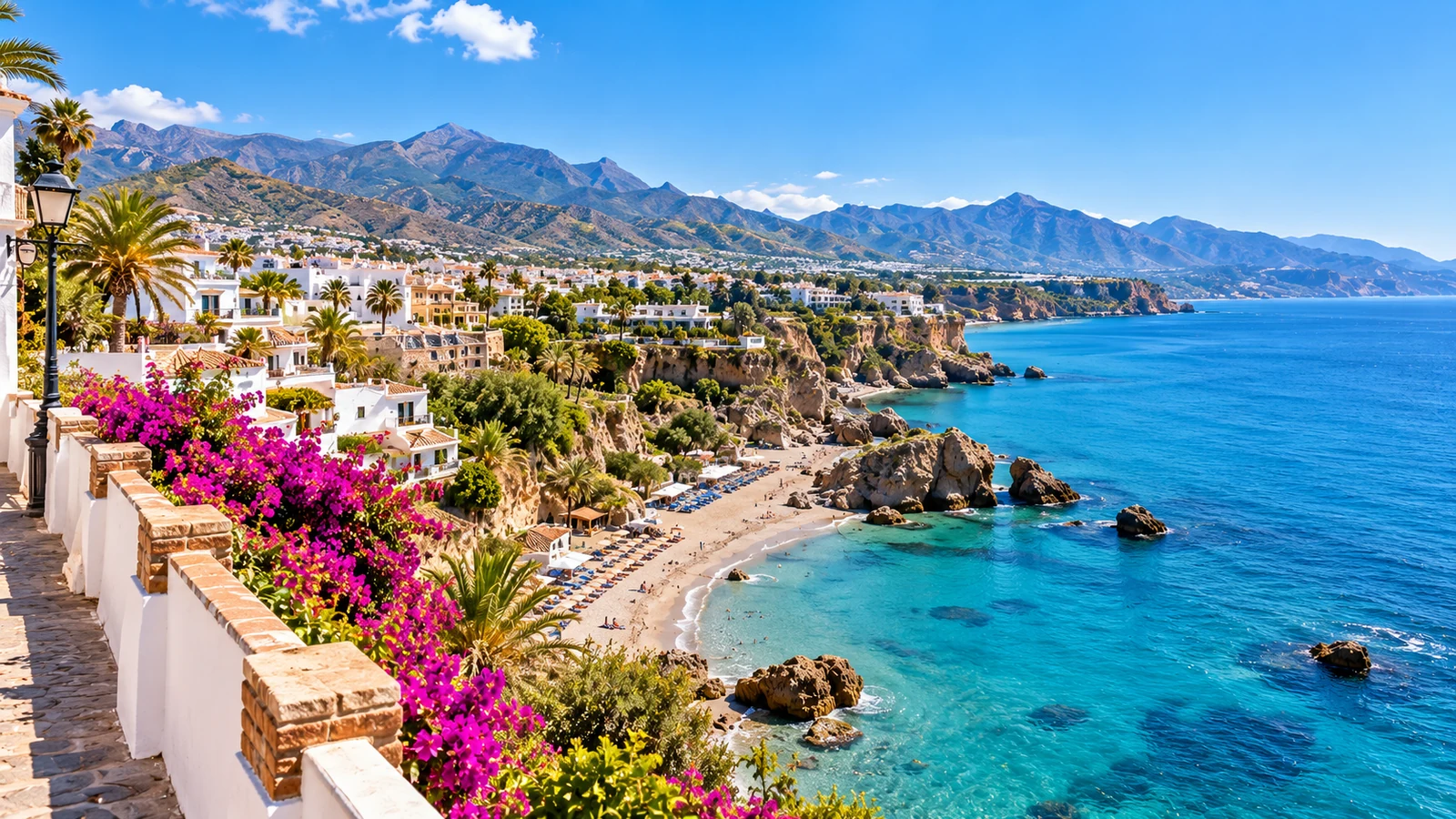
The Costa del Sol has no shortage of famous names. Málaga, Marbella, Nerja and Puerto Banús already arrive in most visitors' plans before the flight is booked. The more interesting question is what to add once the obvious anchors are covered. The places below are not "secret" in the literal sense, and pretending otherwise would be silly. They are simply stops that are easier to miss because they sit outside the standard beach-resort checklist, reward a specific kind of traveller, or work best when you understand the practical detail first.
Start with the rule: hidden does not mean remote
A useful hidden gem is not necessarily the place furthest from the motorway. It is somewhere that gives you a different version of the Costa del Sol without wasting half the day reaching it. That can mean a white village above the western coast, a public-art route spread through residential streets, a coastal path you walk in sections, a botanical garden behind Torremolinos, or the small village-and-beach pairing around Maro.
The practical test is simple: add one of these places because it changes the shape of your day. Do not stack five of them into one heroic road trip. Casares, Maro, Mijas Costa, Estepona and Torremolinos sit in different parts of the coast; each works best as an anchor or an add-on to a nearby base.
Casares: go for the hill village, not just the photograph
Casares is one of those places that appears repeatedly in images of Andalusian white villages: a dense cluster of white houses climbing a steep hillside beneath the remains of a castle. The view is part of the appeal, but the village makes more sense if you treat it as a slow walking stop rather than a viewpoint you drive to, photograph and leave.
The old village is west of Estepona and inland from the municipality's coastal strip. Those two Casares experiences are separate. If your accommodation says Casares Costa, do not assume the hill village is outside your door. The official tourism material also highlights the castle area and the Baños de la Hedionda, a sulphurous bath site in the municipality. They can belong to the same wider outing, but they are not one compact attraction.
Casares suits travellers who enjoy steep streets, viewpoints and smaller-scale historic places more than a packed attraction list. Good footwear matters. So does accepting that the reward is the setting itself. If your group needs a flat, pushchair-friendly day with frequent indoor stops, choose another option.
From Marbella or Estepona, Casares can be a sensible half-day detour. From Málaga or Nerja, it becomes a much bigger transport commitment and should probably be part of a western-coast day rather than a casual extra.
Estepona's mural route: use it to leave the obvious centre
Estepona's flower-filled old town already attracts plenty of attention. The mural route is useful because it gives you a reason to look beyond the most photographed streets. The municipality has developed large-scale artworks across different neighbourhoods, turning ordinary building façades into an open-air route.
The important detail is that the murals are dispersed. This is not a single gallery district where every work sits five minutes from the next. Trying to tick off the entire route can turn an enjoyable idea into a navigation exercise. A better approach is to select two or three murals that fit naturally around the part of Estepona you are already exploring.
That makes the route especially good for repeat visitors or anyone who wants a cultural layer without committing to a museum timetable. It also works well when the weather is dry but not necessarily beach-perfect. You can combine a section of the mural route with the old town, a coffee stop and the seafront, while keeping the day flexible.
Costa Guest already treats Estepona as more than one attraction cluster. If it is your first visit, begin with the broader first-time guide and use the mural route as a selective add-on rather than the whole itinerary.
Mijas Costa's Senda Litoral: walk a section, not the whole ambition
The coastal path along Mijas is one of the most useful examples of a place that is hiding in plain sight. Thousands of people stay around La Cala de Mijas, Riviera, Calahonda and the surrounding coastal developments, yet many experience the coast mainly from the road, the beach below their accommodation or a restaurant terrace.
The Senda Litoral changes that perspective. It is a pedestrian and cycling route made up of coastal sections, connecting beaches, watchtowers, dunes and seafront businesses. Recent municipal works have continued filling gaps in the route, including new sections opened in 2026. That is precisely why you should think in sections rather than assume one uninterrupted promenade behaves the same from end to end.
For most visitors, La Cala is the easiest starting point because you can combine the path with a town stop, lunch and the beach. Choose a direction, walk as far as feels pleasant and return rather than setting a mileage target. Morning and late afternoon are usually more comfortable than the hottest part of a summer day.
Cyclists need to pay attention to local access rules and pedestrian priority. The path is not a high-speed cycle lane. Families also benefit from checking the exact section before setting out, because surfaces, access points and connections can differ.
If you want a deeper version of this outing, Costa Guest's Mijas coastal-walk guide is the better next read. The hidden-gem value here is not exclusivity; it is discovering how much of Mijas exists between the resort names on a booking website.
Molino de Inca: the quieter side of Torremolinos
Torremolinos is normally associated with beaches, La Carihuela, nightlife and the easy airport connection. The Molino de Inca Botanical Garden gives you a completely different couple of hours without leaving the municipality.
The garden sits on Camino de los Pinares, away from the seafront and town-centre rhythm. The official tourism information describes more than 15,500 square metres with springs, plant collections, viewpoints, a Japanese garden and a reconstruction linked to the historic mill. It is a genuine change of pace rather than another stop on the promenade.
This works particularly well for couples, solo travellers and families who want shade, greenery and a quieter activity between busier beach days. It can also rescue part of a day when you simply want something calmer than another shopping street or marina.
Do not build the visit around old screenshots of opening times. The official page currently publishes hours and facilities, but these are exactly the details worth checking shortly before you go. The same applies to any scheduled bird exhibition or group activity.
Because the garden is outside the centre, think about how you will reach it. A taxi can be the simplest answer from the beach areas; walkers should check the route rather than assuming the pleasant garden experience starts at the hotel door. Pair it with central Torremolinos only if the transfer makes sense for your day.
Maro: small scale, but plan access before the beach bag
Maro sits just east of Nerja and is easy to reduce to one photograph of its beach. The more useful way to see it is as a compact village at the edge of a much larger natural setting. Municipal tourism material links Maro with the protected Maro-Cerro Gordo coast, the nearby cave area and Nerja's wider beach-and-old-town offer.
Playa de Maro is attractive precisely because the geography feels tighter and less urban than the main resort beaches. That also means access needs more thought in high season. In summer 2026 the municipality ran a daily shuttle to reduce private-car pressure, with the service operating through 15 September. The key lesson is not that a shuttle always exists; it is that seasonal access arrangements can change and should be checked before you drive down expecting easy parking beside the sand.
Maro is best for a deliberate beach half-day or as part of a Nerja-based stay. It is not an efficient "quick stop" if you are crossing the whole Costa del Sol. If you are already in Nerja, however, the contrast is valuable: Balcón de Europa and the old town give you the urban visitor experience, while Maro shifts the emphasis towards cliffs, smaller-scale settlement and protected coastline.
Use Costa Guest's Nerja first-time guide for the wider decision about where Maro fits. If sea conditions, access or parking look awkward on the day, keep Nerja itself as the fallback rather than forcing the beach plan.
Baños de la Hedionda: interesting, but keep the claims sensible
The Baños de la Hedionda near Casares are often described in romantic or therapeutic language. The official Costa del Sol tourism material identifies the site as a sulphurous natural bath and notes free access. That is enough to make it historically and geographically interesting; there is no need to turn a travel recommendation into a medical claim.
Treat it as a rustic heritage-and-nature stop. Check access conditions, respect the site and expect something much simpler than a commercial spa. If you are visiting Casares village, decide whether the extra drive adds value to your day rather than assuming both must be done together.
This is a good example of the wider rule for less-obvious Costa del Sol places: the charm often comes with fewer layers of visitor infrastructure. That can be exactly what you want, but it also means more responsibility for checking access, weather and practical conditions yourself.
How to choose the right one from your base
From Málaga, Molino de Inca and sections of the Mijas coast are the easier additions; Maro also works if you are deliberately heading east. From Torremolinos or Benalmádena, Molino de Inca is the lowest-effort change of scene, while Mijas Costa makes sense when you want a longer coastal outing.
From Fuengirola, the Mijas coastal path is the natural nearby choice. Casares and Estepona are possible by car, but they should be treated as western day trips rather than small detours.
From Marbella, Estepona's murals and Casares are the strongest options because they extend a western-coast day without sending you back across Málaga. From Estepona, Casares is particularly logical; the mural route, of course, can be built into a day without leaving town.
From Nerja, Maro is the obvious complement. Driving all the way west to Casares or Estepona for the sake of a "hidden gem" defeats the point.
What not to do
Do not chase places because a social post calls them undiscovered. None of these locations needs that mythology. They are worthwhile because they add a different texture to a Costa del Sol trip.
Do not assume access information is permanent. Coastal paths gain new sections, beach traffic controls change seasonally and gardens adjust hours. Use current official information for the final practical check.
Do not combine distant stops just because they appear in the same article. Casares and Maro are roughly opposite ends of the coast. A good day here usually has one geographic logic.
And do not ignore the familiar places. Hidden gems work best as contrast. A morning in Estepona's old town followed by selected murals is stronger than a mural scavenger hunt. A Nerja stay with one Maro beach day is stronger than treating Maro as a trophy stop. A Mijas coast walk is more enjoyable when you leave enough time for lunch and the sea.
The Costa del Sol rewards visitors who understand its shape. Once you stop trying to collect destinations and start choosing the right extra place for the base you already have, the less obvious side of the coast becomes much easier to find.
A better way to use these places over a three- or four-day trip
If you only have a long weekend, the strongest approach is to keep the famous anchor and add one quieter counterpoint. A Málaga-based trip can pair the historic centre and museums with a separate morning at Molino de Inca or a deliberate eastbound day towards Nerja and Maro. A Marbella-based weekend can combine the Old Town and seafront with Casares or selected Estepona murals. A Fuengirola stay can use the Senda Litoral as the low-planning day between bigger excursions.
The point is rhythm. The obvious attractions are often where crowds, parking pressure and fixed entry times concentrate. A less-obvious place can work as the day when you do not want another timetable. That does not mean it is logistically effortless. Casares has steep streets. Maro can have seasonal access controls. The Mijas path changes character by section. Molino de Inca is away from the beach strip. Hidden gems are useful when you understand their friction before leaving the hotel.
For families: choose space over novelty
Families do not automatically need child-branded attractions. Some of the best alternatives in this list work because they give children room to move without forcing adults into a full entertainment programme.
The Mijas coastal path is the clearest example. Choose a manageable section close to facilities, keep the walk short enough that the return is still pleasant, and let the beach or lunch become the reward rather than another scheduled activity. Molino de Inca can work for families who enjoy gardens and slower exploration, especially when everyone needs a calmer break from the seafront.
Casares is more demanding. The slopes and irregular historic streets are part of its character, but they are also the reason to think carefully about pushchairs, very young children or anyone with reduced mobility. Maro beach can be excellent with older children when access conditions are straightforward, but a steep or awkward last section is not the place to discover that your plan depends on carrying too much equipment.
The useful family rule is to judge the route, not just the destination name. A beautiful place that creates an hour of parking stress is rarely a hidden gem by the time everyone arrives tired.
For travellers without a car
Not every place here is equally good car-free. Molino de Inca is relatively easy to fold into a Torremolinos stay with a short taxi or local transport plan. The Mijas coastal path can work from Fuengirola or La Cala if you choose your starting section carefully. Estepona's mural route is straightforward once you are already in the town.
Casares village and Maro require more deliberate planning. Public transport may exist, but frequency, final walking distance and seasonal arrangements matter more than the simple question of whether there is a bus. If the connection forces you to build the entire day around one return service, decide whether the place is important enough to justify that constraint.
This is where the broader Costa Guest transport guides become useful. A no-car holiday works very well in some parts of the coast, especially along the Málaga–Fuengirola rail corridor, but the hidden-gem layer gets easier when you accept that taxis or a carefully chosen regional bus may occasionally be the sensible tool.
For photographers: arrive for light, not for emptiness
Calling a place "hidden" often creates the expectation that nobody else will be there. That is a poor way to plan photography on the Costa del Sol. Casares, Maro and Estepona's murals are known and photographed regularly. Your best advantage is timing.
Early morning gives Casares softer light and quieter streets before day visitors accumulate. The mural route is easier to photograph when parked cars, delivery activity and strong midday shadows are less dominant. On the Mijas coast, late-afternoon light can transform a simple boardwalk section without requiring you to find a supposedly secret cove.
At Maro, do not let photography override access or environmental rules. Protected coastal areas are valuable because they are managed, not because every viewpoint is available for improvisation. Stick to permitted access and treat changing seasonal controls as part of the destination rather than an inconvenience to defeat.
When weather changes the choice
These suggestions are not interchangeable in poor weather. A grey but dry day can be excellent for Casares or the Estepona mural route because you are not relying on beach conditions. Strong heat pushes the decision in another direction: early-morning village walking, shaded gardens and shorter coastal sections are more sensible than a long exposed path at midday.
After heavy rain or strong coastal weather, paths and natural-access areas deserve extra caution. The Senda Litoral is infrastructure, but individual sections can still be affected by maintenance or local conditions. Maro and the protected coast should always be approached with current sea and access information in mind.
Molino de Inca is the most controlled environment in this selection, but even there published opening hours and any temporary closures matter. One of the advantages of having several types of lesser-known stop is that you can choose according to the day rather than forcing the plan you made a week earlier.
Pairings that actually make geographic sense
Casares plus Estepona is the cleanest western pairing. Visit the village in the cooler part of the day, then use Estepona for lunch, the old town or a small section of the mural route. Do not add Marbella, Mijas and Málaga simply because they are also on the coast.
Mijas coastal path plus Fuengirola works for the central-west corridor. You can use rail to reach Fuengirola, then continue locally towards the chosen Mijas section. This creates a day with both an easy urban base and a more open coastal stretch.
Molino de Inca plus central Torremolinos is another coherent pair. The garden provides the quiet half, while the centre or La Carihuela gives you food and the Mediterranean atmosphere people usually came for.
Nerja plus Maro is the obvious eastern combination. The town gives you the Balcón de Europa, streets, cafés and services; Maro gives you the smaller settlement and natural-coast contrast. You do not need to invent a more complicated itinerary than that.
The difference between a good detour and filler
A worthwhile detour changes what you understand about the destination. Casares shows how quickly the Costa del Sol becomes mountainous once you leave the shoreline. Estepona's murals show a municipality investing in culture outside conventional museum walls. The Mijas path reveals the coastline as a connected landscape rather than a sequence of resort names. Molino de Inca reminds you that Torremolinos contains quieter heritage and garden spaces behind its beach identity. Maro shows how the eastern coast tightens into cliffs and protected natural areas.
Filler, by contrast, is a place added only because there is time left. If you would not choose it without the label "hidden gem", leave it out. The Costa del Sol is too large to reward completionism.
Final check before you go
For each place, verify the one detail most likely to change. For Casares, check access and parking for the part of the municipality you actually intend to visit. For Estepona's murals, use the current municipal route rather than an old blog map. For the Mijas coastal path, check the section you want and any local cycling or access rules. For Molino de Inca, confirm opening hours. For Maro, confirm the current seasonal access and transport arrangement.
Then stop researching. Pick one, leave spare time around it and let the place be the reason for the outing rather than another box in a coast-wide checklist.
If you are staying east, centre or west
It helps to divide the coast into three practical zones. The eastern side around Nerja rewards people who are already based there; Maro becomes a natural extension rather than a separate expedition. The central corridor around Málaga, Torremolinos, Benalmádena and Fuengirola makes Molino de Inca and Mijas Costa the easier low-friction additions. The western side around Marbella and Estepona makes Casares and the Estepona mural route much more logical.
This matters because the Costa del Sol looks deceptively compact on a map. A place can be only a modest straight-line distance away yet still require a long road transfer once traffic, access and the exact starting point are considered. Hidden-gem planning improves dramatically when you choose by zone first and by attraction second.
The best choice for a slow morning
For a slow morning, Casares and Molino de Inca offer two very different moods. Casares gives you elevation, streets, viewpoints and a village that rewards wandering. Molino de Inca gives you a controlled garden setting with greenery and a defined perimeter. The first is more atmospheric and physically demanding; the second is calmer and easier to structure.
If you want breakfast, a gentle walk and one memorable visual setting, Casares works especially well when based in the west. If you want to avoid heat, traffic and a full sightseeing programme, the garden can be a better fit. The right choice depends less on prestige than on how much energy you want to spend before lunch.
The best choice for a low-cost day
Several suggestions here can work without building the day around expensive tickets. Walking selected stretches of the Mijas coastal path costs nothing. Estepona's mural route is open-air. Casares village is primarily about the public-space experience. Baños de la Hedionda is identified by official tourism material as free to access, although practical conditions should still be checked.
That does not make the day automatically cheap. Transport, parking, food and taxis can easily exceed the cost of an attraction ticket. A genuinely low-cost plan is the one that starts near your accommodation. A free place an hour away can be more expensive than a paid attraction you reach on foot.
The best choice when you have already visited the coast before
Repeat visitors often benefit most from this list because they already know the major anchors. If Málaga, Marbella Old Town, Puerto Banús and Nerja are familiar, use the next trip to explore one municipality more deeply rather than adding another headline destination.
Stay in Estepona and use the mural route to understand neighbourhoods beyond the old centre. Stay in Fuengirola and walk into a different part of the Mijas coast. Return to Torremolinos but replace another beach morning with Molino de Inca. Use a Marbella base to spend real time in Casares rather than treating the white village as a photo stop.
This kind of second-visit planning is one of the easiest ways to make the Costa del Sol feel new without searching for places that nobody has heard of.
Respect the fact that some places are residential
Murals, village streets and sections of coastal path often pass through normal residential areas. That is part of their appeal, but it changes how visitors should behave. Keep noise reasonable, do not block entrances for photographs, respect parking restrictions and remember that a picturesque façade may still be somebody's home.
The same principle applies to beaches and natural areas under seasonal pressure. Access controls around Maro exist because popular places can become overwhelmed. Treating those controls as useful information rather than obstacles makes the visit easier for everyone.
Why these places belong in Costa Guest
Costa Guest should not reward obscurity for its own sake. The goal is to help people make better choices. These places earn a place in the guide because each answers a specific travel need: Casares for a mountain-village contrast, Estepona's murals for open-air culture, Mijas for a connected coastal walk, Molino de Inca for a quieter green space, and Maro for a smaller-scale eastern-coast experience.
That makes them more useful than a long list of random coordinates. A traveller can understand not only what the place is, but who it suits, what it replaces in the day and what practical detail must be checked before setting out.
If a future source update changes access, opening hours or route conditions, the recommendation should change with it. That is more valuable than preserving a romantic description after the facts have moved.
One final rule: leave room for the place itself
The temptation with a list like this is to turn every suggestion into a tightly managed itinerary. That would miss the point. Casares needs time for a street that looks interesting. The Mijas coast needs room for an unplanned swim or coffee. Estepona's murals work better when you stop following the map for a while. Molino de Inca is a garden, not a sequence of compulsory checkpoints. Maro is most rewarding when the weather, access and sea conditions are good enough that you are not fighting the day.
Build in slack. If a journey takes longer, remove the next stop. If the village is more enjoyable than expected, stay for lunch. If the beach access is awkward, switch to Nerja rather than wasting an hour proving that the original plan was possible.
That flexibility is the real advantage of knowing the coast beyond its headline attractions. You have alternatives. You can choose according to the day in front of you rather than the itinerary you imagined at home. And that is usually what turns a less-obvious stop into one of the parts of the trip you remember.
Which stop fits which traveller
For couples who want atmosphere without a full-day commitment, Casares is strongest when they are already staying around Marbella or Estepona. The appeal is the change in scale: mountain streets, views and a slower lunch rather than another coastal resort. For a couple based around Torremolinos, the same amount of effort is better spent at Molino de Inca and then somewhere good to eat in La Carihuela or the centre.
Solo travellers often have more flexibility with transport and timing. The mural route in Estepona works well because you can follow only the pieces that interest you and change direction whenever you like. The Mijas coastal path offers the same freedom: walk until the landscape or weather tells you to turn around. Neither requires you to keep pace with a group itinerary.
Families should favour the option with the simplest exit strategy. A short coastal-path section, garden visit or Nerja-plus-Maro plan allows you to shorten the day without losing the whole outing. Casares can be excellent for older children who enjoy exploring streets and viewpoints, but less forgiving when wheels, naps and steep gradients dominate the logistics.
Older travellers or anyone with reduced mobility should not rely on destination labels alone. "Village", "coastal path" and "beach" can hide very different gradients and surfaces. Molino de Inca is the first option to investigate because the official page specifically lists accessibility, but even then the journey to the entrance and the individual's needs matter. For Casares and Maro, exact access should be checked before committing.
When the detour is not worth it
Skip Casares if your day is already centred on Nerja or Málaga and you only have a few hours. Skip Maro if you are staying in Estepona and the only reason to go is that somebody called it secret. Skip the Mijas path in punishing midday heat when you could walk a shorter stretch at a better hour. Skip a mural hunt if the group really wants the beach. Skip Molino de Inca if you only have one morning in Torremolinos and have not yet seen the seafront or La Carihuela.
Good travel advice includes permission not to go. The coast has enough variety that you do not need to justify a long transfer for every attractive place. A hidden gem is valuable when it fits the trip you already have, not when the trip has to be rebuilt around the label.