Nerja for first-timers: town, cave, beaches and Maro without overplanning
Nerja is compact in the centre but its best-known experiences are not all in one place. Use this guide to decide what belongs in the same day, when transport matters and what to leave for another visit
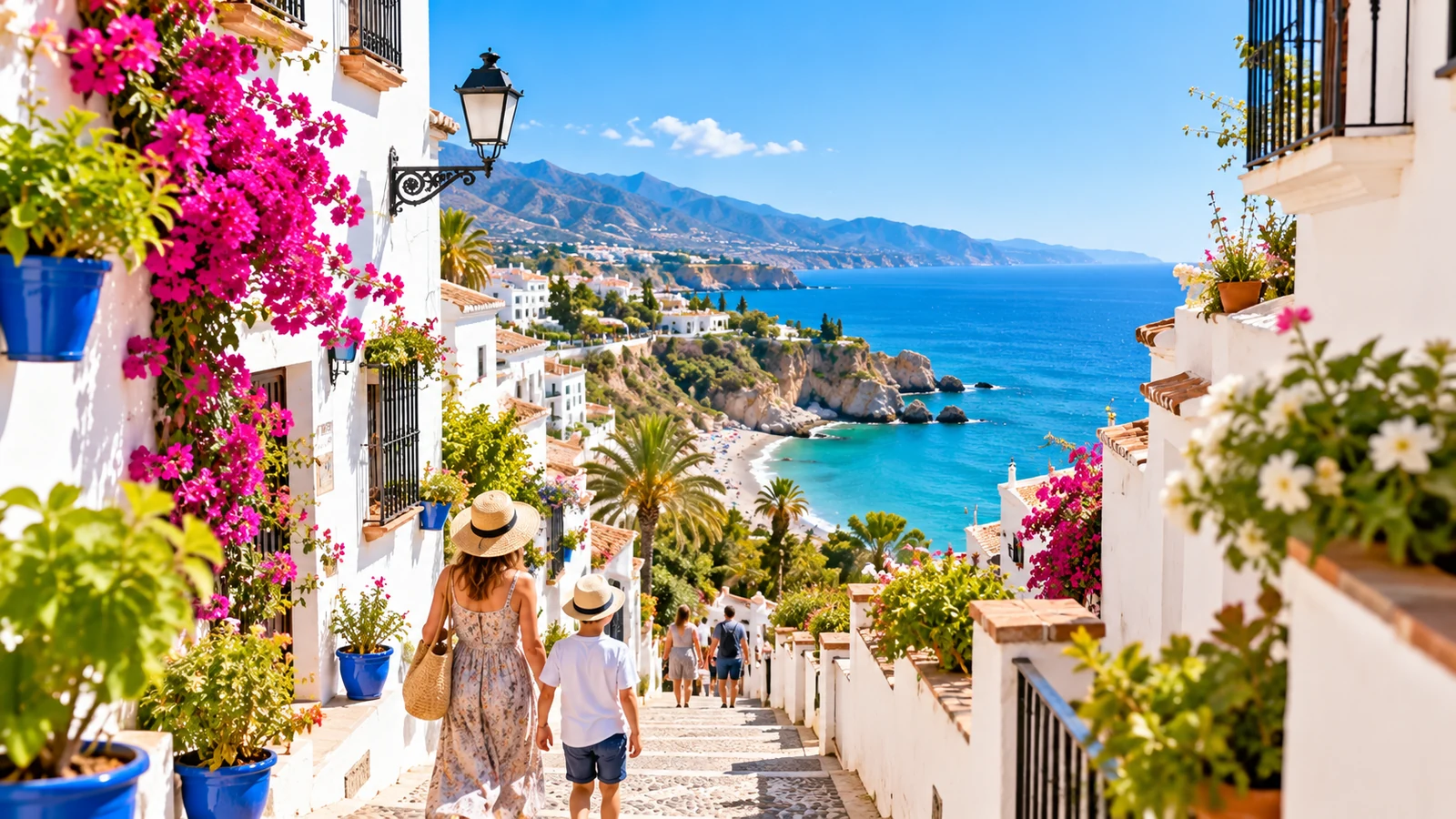
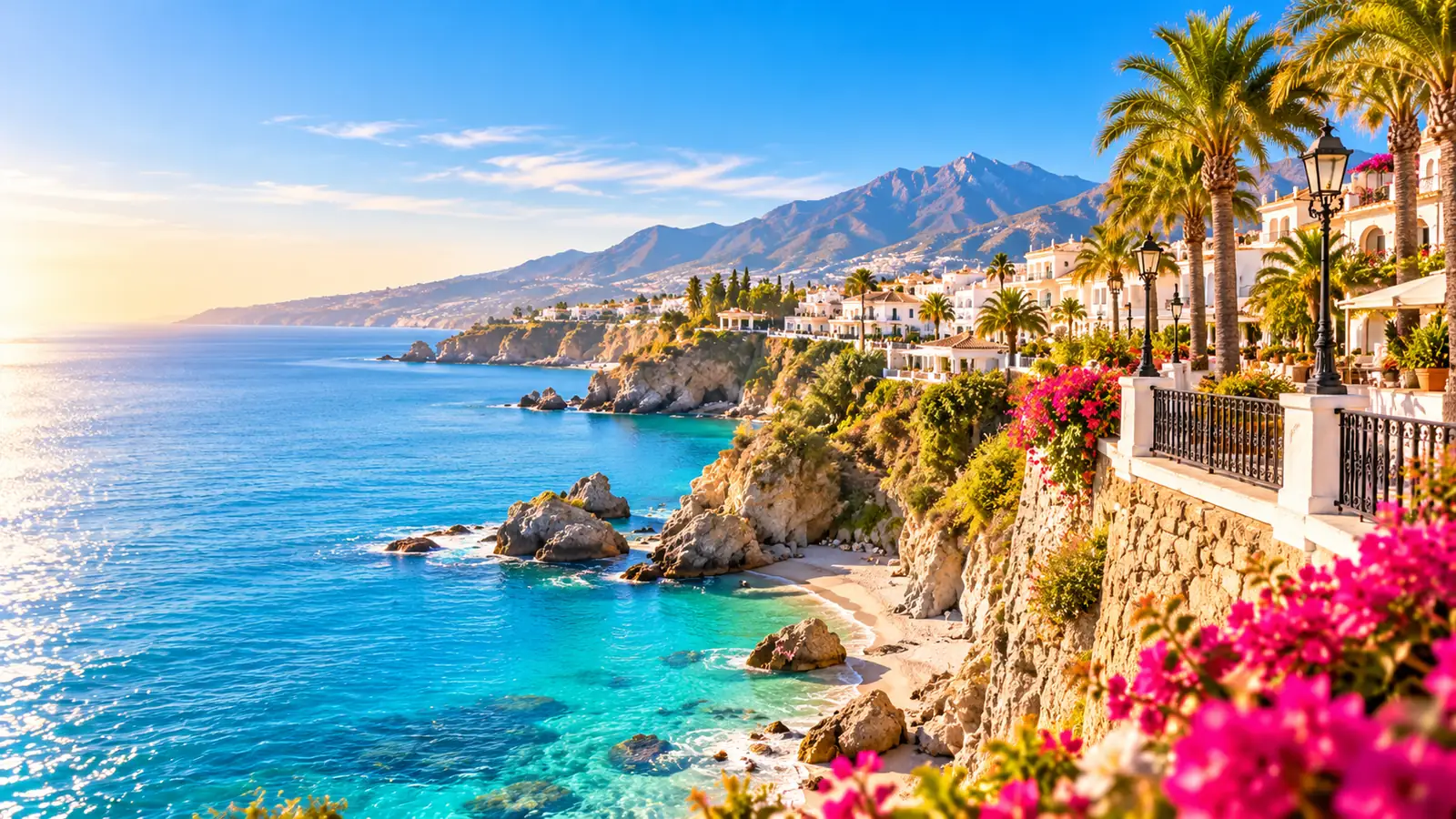
Nerja is one of those Costa del Sol destinations that looks simpler on a map than it feels once you start planning. The old centre, the Balcón de Europa and several urban beaches sit close enough to combine easily. The Cueva de Nerja is outside the centre. Maro is farther east again, and the protected coast around Maro-Cerro Gordo deserves more than being treated as a quick photo stop between two other appointments.
For a first visit, the useful decision is not how many attractions you can fit into one day. It is whether you want a town day, a cave-and-town day, or a nature-and-coast day. Nerja works best when you choose one of those shapes and leave room for the place itself.
Start with the geography, not the checklist
Central Nerja is the easy part. The Balcón de Europa, Plaza de España, the Museo de Nerja, the old streets and several viewpoints and beaches are close enough that walking is the natural way to move between them. You do not need a car to understand the centre, and in fact a car can become more nuisance than help once you are inside the compact urban core.
The Cueva de Nerja is a separate destination near Maro. It is perfectly realistic to combine the cave with the centre in one day, but treat the transfer as an actual journey rather than as another stop around the corner. The same applies to Maro and its beach. In summer especially, access and traffic management can change: in 2026 the municipality operated a seasonal shuttle to Playa de Maro through mid-September. That is exactly the kind of detail worth checking close to your visit instead of relying on an old blog post.
If you only have a few hours, stay in central Nerja
For a short first visit, begin around the Balcón de Europa and let the centre unfold from there. The Balcón is not a museum or a timed attraction; its value is that it gives you an immediate sense of the coastline and places you directly in the part of Nerja where walking works best.
From there, wander through the nearby streets rather than building a rigid turn-by-turn route. Plaza de España is useful because it gives you a second anchor and is also where you find the Museo de Nerja. The museum is the better choice if you want context rather than simply pretty streets: its official presentation connects the town's history with archaeological material from the Cueva de Nerja and the story of the cave's discovery.
This central plan also leaves space for lunch, a coffee or a beach without making any one of those things compulsory. If the weather is good, descend towards an urban beach. If it is too hot, windy or crowded, stay in the centre longer and save the coast for later in the day.
The Cueva de Nerja deserves its own time slot
The cave is the one attraction on a first Nerja trip that benefits from advance planning. The municipality describes it as one of the town's defining cultural and scientific landmarks, while the cave foundation provides current visitor rules, opening information and ticketing guidance.
Do not bolt it onto the day as if it were a five-minute viewpoint. Allow for the journey out, entry procedures and the visit itself. The cave's own visitor information recommends the first part of the morning, roughly 10:00 to 11:30, as a generally less crowded period, while also warning that opening times vary through the year. Treat that as planning guidance, not as a permanent timetable.
If the cave is your priority, make it the first fixed commitment of the day. You can then return to central Nerja for lunch, the Balcón, the museum and an easy walk. That sequence is much calmer than spending the morning in town and then watching the clock because you still have a booked cave slot outside the centre.
Maro is not simply "the beach next to the cave"
Maro is often reduced to an add-on because it lies close to the cave, but that misses the point. The municipal tourism material places Maro and the protected Maro-Cerro Gordo coastline alongside the cave, old town and beaches as core parts of Nerja's visitor offer. This is a different experience from central Nerja: more landscape, less urban wandering, and more dependence on conditions, access and the season.
If Playa de Maro or the protected coast is a real priority, give it half a day rather than squeezing it between the cave and dinner. In summer, parking and access pressure matter. The 2026 municipal shuttle was explicitly introduced to reduce private-car traffic and manage visitor flows. Future arrangements may differ, so check the municipality's current transport information before setting out.
For swimming, kayaking, diving or any activity on the protected coast, use current local rules and operator information. Weather and sea conditions can change what is sensible on the day. A first-time guide should help you structure the trip, not pretend that a coastal activity is guaranteed.
Nerja without a car is realistic
Nerja is not on the C1 suburban rail line. That is the key transport fact to understand before you book. You can still stay here very comfortably without a car, but your regional travel is bus-led rather than rail-led.
Aena lists an ALSA connection between Málaga Airport and Nerja, and ALSA operates frequent daily services between Nerja and Málaga. That makes a car-free stay entirely workable if your plan is mainly Nerja, Maro and occasional bus trips. What you lose compared with Torremolinos, Benalmádena or Fuengirola is the spontaneity of a coastal railway: you need to look at bus times rather than simply walking to a station and assuming a frequent train.
If you are staying several days and want to explore inland villages, trailheads or multiple points along the eastern coast, a car may add flexibility. If your trip is built around the centre, beaches and the cave, you may find that hiring one only creates a parking problem.
Where to stay for a first visit
Stay near the centre if you want the easiest version of Nerja. The closer you are to the Balcón de Europa, Plaza de España and the surrounding pedestrian streets, the less transport you need for ordinary meals, evening walks and sightseeing.
A seafront or beach-oriented location can be excellent if swimming matters more than being in the middle of the old centre, but check the actual walking route rather than the straight-line distance. Nerja has changes in level, and a property that looks close on a map may involve more slope or steps than expected.
Maro is a different base. Choose it because you want Maro, the cave and the natural coast nearby, not because you assume it is simply another quarter of central Nerja. For first-time visitors who want restaurants, evening atmosphere and the Balcón within an easy stroll, central Nerja is usually the simpler starting point.
Beaches: choose by convenience, not reputation alone
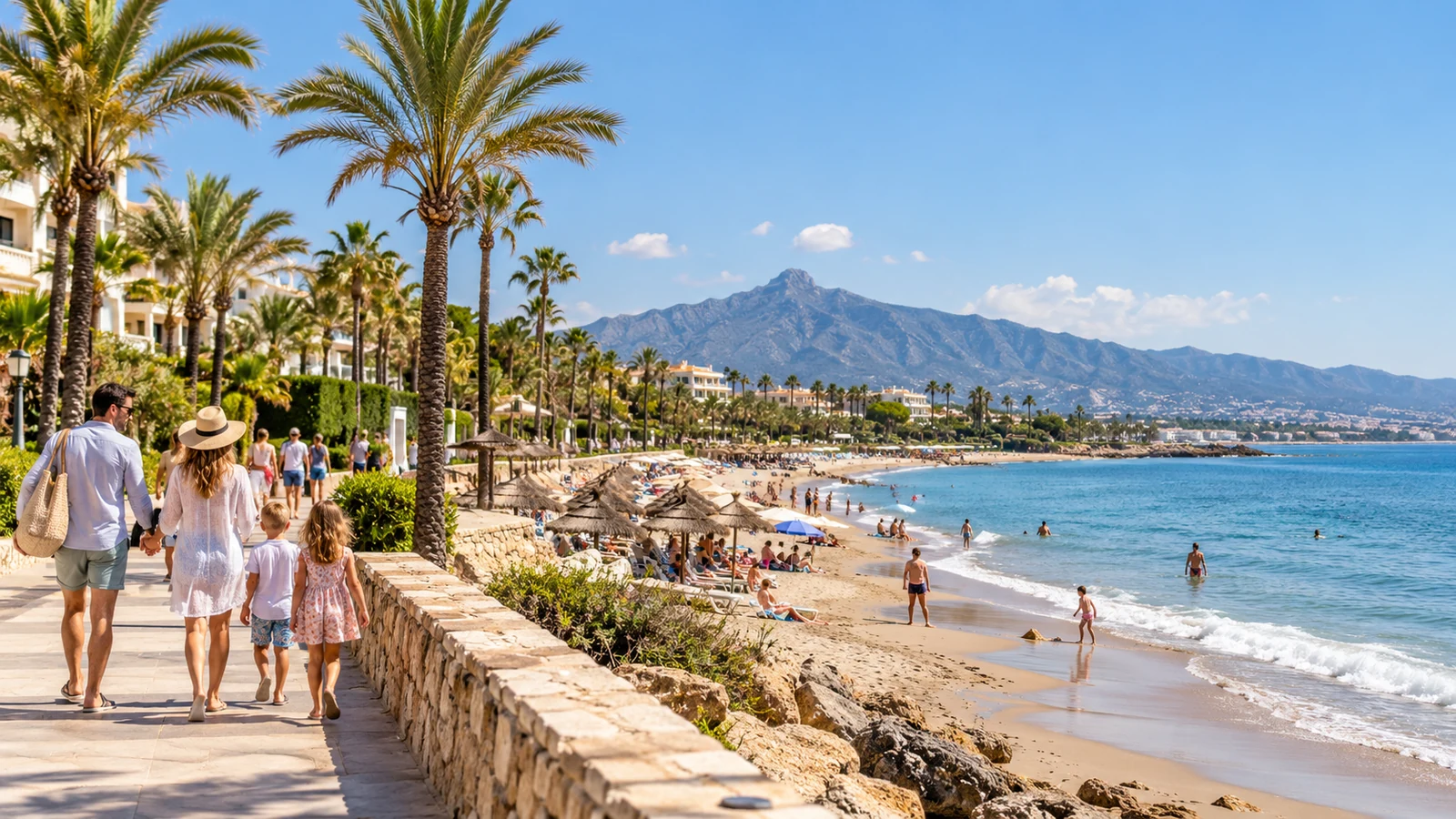
Nerja's coastline is one of its main strengths, but a first visit does not require a ranking of every cove. Start with what fits your day. If you are already in the centre, an urban beach lets you add sea time without turning the afternoon into a transport exercise. If you specifically want Maro, plan the journey and access conditions around that choice.
Beach conditions also change. Space, access, waves, wind and seasonal crowding can matter more than which beach appears first in a generic "best beaches" list. On a short trip, the beach you can reach easily and enjoy for two relaxed hours is often the better choice than one that costs much of the day in logistics.
A sensible first day
If you have one full day and the cave matters, use the morning for the Cueva de Nerja, then return to the centre. Have lunch without rushing, walk through Plaza de España and the old streets, use the Museo de Nerja if you want deeper context, and finish at the Balcón or an urban beach depending on weather and energy.
If the cave does not interest you, keep the entire day central. That sounds less ambitious, but it usually produces a better first impression: a slow morning around the centre, a proper lunch, time by the water and an evening walk when the daytime heat has dropped.
If nature is the priority, reverse the logic. Make Maro and the protected coast the main event, then use central Nerja as the easy evening section rather than trying to complete every town sight as well.
Common first-time mistakes
The first is treating the cave, Maro, the Balcón and multiple beaches as if they formed one compact pedestrian circuit. They do not. The second is hiring a car automatically because Nerja lacks a train station, even when the holiday is mainly centred on the town. The third is using seasonal access information as if it were permanent. Transport arrangements to popular beaches can change from one summer to the next.
Another mistake is planning every hour around "must-see" lists. Nerja's strongest central experience comes from having enough unscheduled time to move between viewpoints, streets, a meal and the sea. A first visit should establish how the town fits together; specialist beach days, longer nature outings and extra day trips can come afterwards.
How Nerja fits into a wider Costa del Sol trip
Nerja makes most sense as an eastern Costa del Sol base rather than as a neutral midpoint for the whole coast. Málaga is accessible by bus, and a day trip there is realistic. Repeated trips to Marbella or Estepona from Nerja are a different proposition because you are crossing a large part of the coast.
If your holiday mixes Nerja with several western destinations, consider splitting your stay rather than spending hours repeatedly travelling through Málaga. If Nerja itself, Maro and the eastern side are the reason for the trip, staying here gives you something the central resort corridor does not: a compact town base with immediate access to a much more dramatic natural coastline.
That is the useful first-time rule. Choose Nerja because you want Nerja, not because it happens to be on the Costa del Sol. Then decide whether your first day belongs to the town, the cave or the natural coast, and let the rest follow from that.
Continue your Costa del Sol planning
Other published guides for the same destination or a closely related topic.