Espetos: technique, place and Málaga identity
Few foods are as closely associated with the Málaga coast as the espeto.
Espetos: technique, place and Málaga identity
Few foods are as closely associated with the Málaga coast as the espeto.
At first glance, it is simple: fish — most famously sardines — skewered on cane and cooked beside hot embers. But the espeto makes more sense when it is understood as part of a wider coastal culture built around fishing, beach cooking and social meals beside the sea.
More than sardines on a stick
Regional tourism material presents the espeto as one of the defining images of Málaga gastronomy.
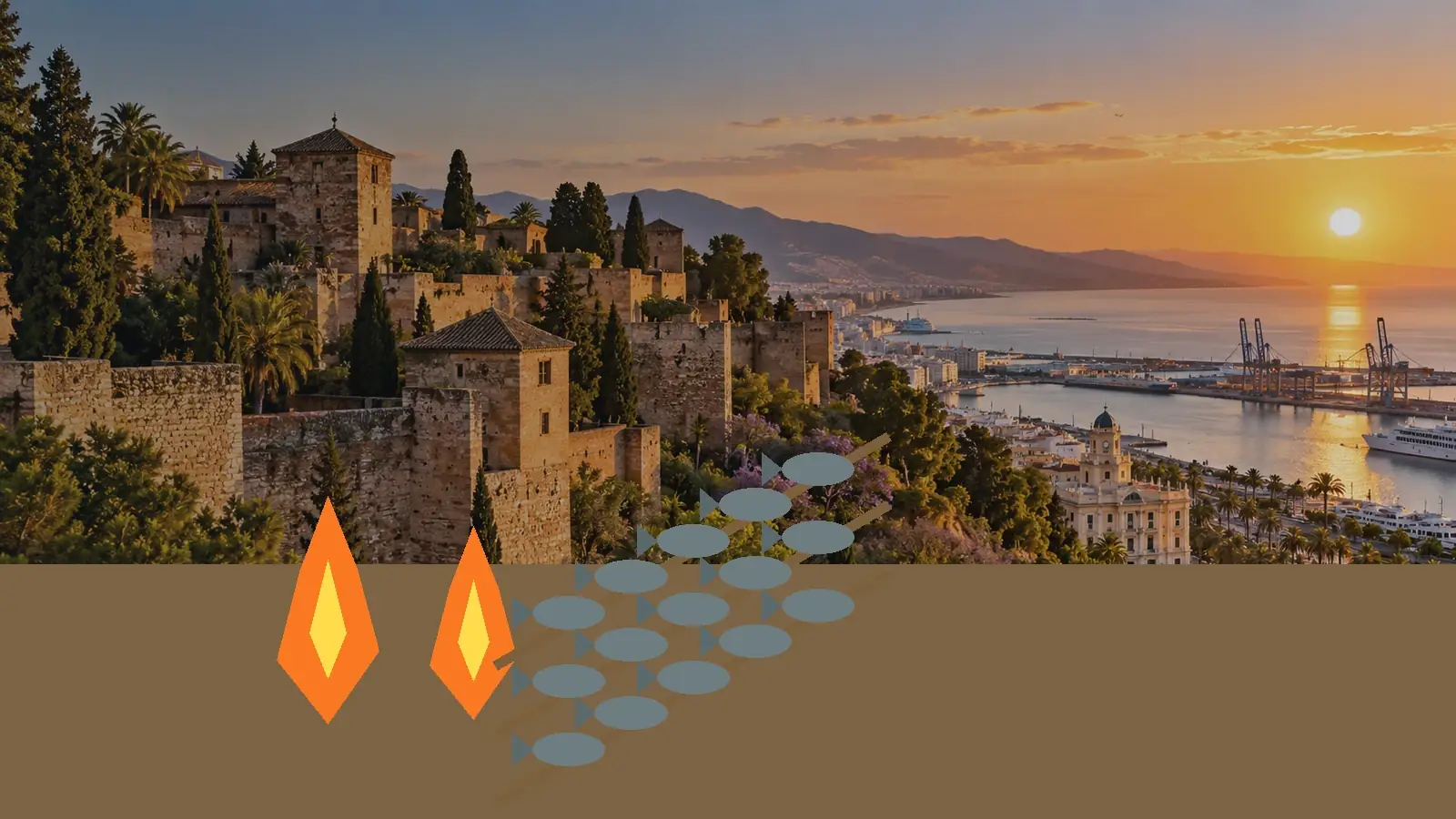
The technique traditionally uses a cane skewer. The fish is threaded onto it and cooked close to the embers, often beside a boat-shaped grill or beach cooking area.
Sardines are the most familiar version, but the logic of the technique is broader than one species.
That distinction matters because the espeto is a cooking method as much as it is a dish.
The technique belongs to the coast
The espeto is closely tied to places where fishing communities and beach food culture developed together.
Málaga's maritime heritage documentation connects traditional boats, fishing customs, fried fish and sardine espetos within the same coastal cultural landscape.
That does not mean the modern chiringuito is identical to an old fishing beach. It means today's food tradition grew from a coastline where fish came directly from working maritime communities.
Why cane matters
The cane skewer is not an arbitrary detail.
Its length makes it possible to position the fish close to the heat while keeping the cook away from the strongest embers. It also gives the espetero fine control over distance and angle.
The quality of the result depends on judgement: heat, fish size, wind, distance and timing all matter.
That is why an espeto is difficult to reduce to one universal recipe.
Cooking beside embers changes the flavour
Espetos are cooked with radiant heat rather than simply placed flat on a grill.
The fish cooks gradually while the skin browns and the fat renders. The goal is not heavy smoking or burning, but a balance between heat, salt and the natural flavour of the fish.
This simplicity is precisely what makes ingredient quality so important.
The ritual matters too
Part of the espeto's identity comes from where and how it is eaten.
It belongs naturally to an informal meal near the beach, often shared with other fish dishes. That setting links the technique to the wider social culture of chiringuitos, promenades and coastal neighbourhoods.
The food and the place reinforce each other.
There is no need for a perfect origin myth
Popular stories sometimes try to identify one inventor, one restaurant or one exact date as the birth of the espeto.
Those stories can be attractive, but official cultural and tourism sources are more useful for understanding the tradition as part of a broader coastal food culture.
The safest conclusion is also the more interesting one: the espeto became important because fishing, beach cooking and communal eating developed together along the Málaga coast.
How to appreciate an espeto today
Look for the technique rather than chasing a single "best" venue.
A visible ember fire, fresh fish, a skilled espetero and a setting connected to the coast matter more than mythology.
And because restaurants, menus, prices and opening hours change constantly, those details are better treated as live information rather than frozen into an evergreen cultural guide.
Technique matters more than mythology
The cultural value of the espeto does not depend on finding one undisputed inventor.
What matters is the recognisable technique: fish skewered on cane, cooked beside embers and closely associated with Málaga's beach and fishing culture.
That makes the practice easier to understand through method, setting and continuity than through an unsupported single-origin story.
Sources used for this draft
- Junta de Andalucía · BIC Carpintería de Ribera en la provincia de Málaga
- Turismo de Andalucía · La sardina andaluza: del espeto a la moraga
- Turismo de Andalucía · Guía de Turismo Gastronómico
Continue your Costa del Sol planning
Other published guides for the same destination or a closely related topic.