Watchtowers, piracy and coastal defence on the Costa del Sol
Long before the Costa del Sol became associated with beaches and tourism, the shoreline was also a defensive frontier.
Watchtowers, piracy and coastal defence on the Costa del Sol
Long before the Costa del Sol became associated with beaches and tourism, the shoreline was also a defensive frontier.
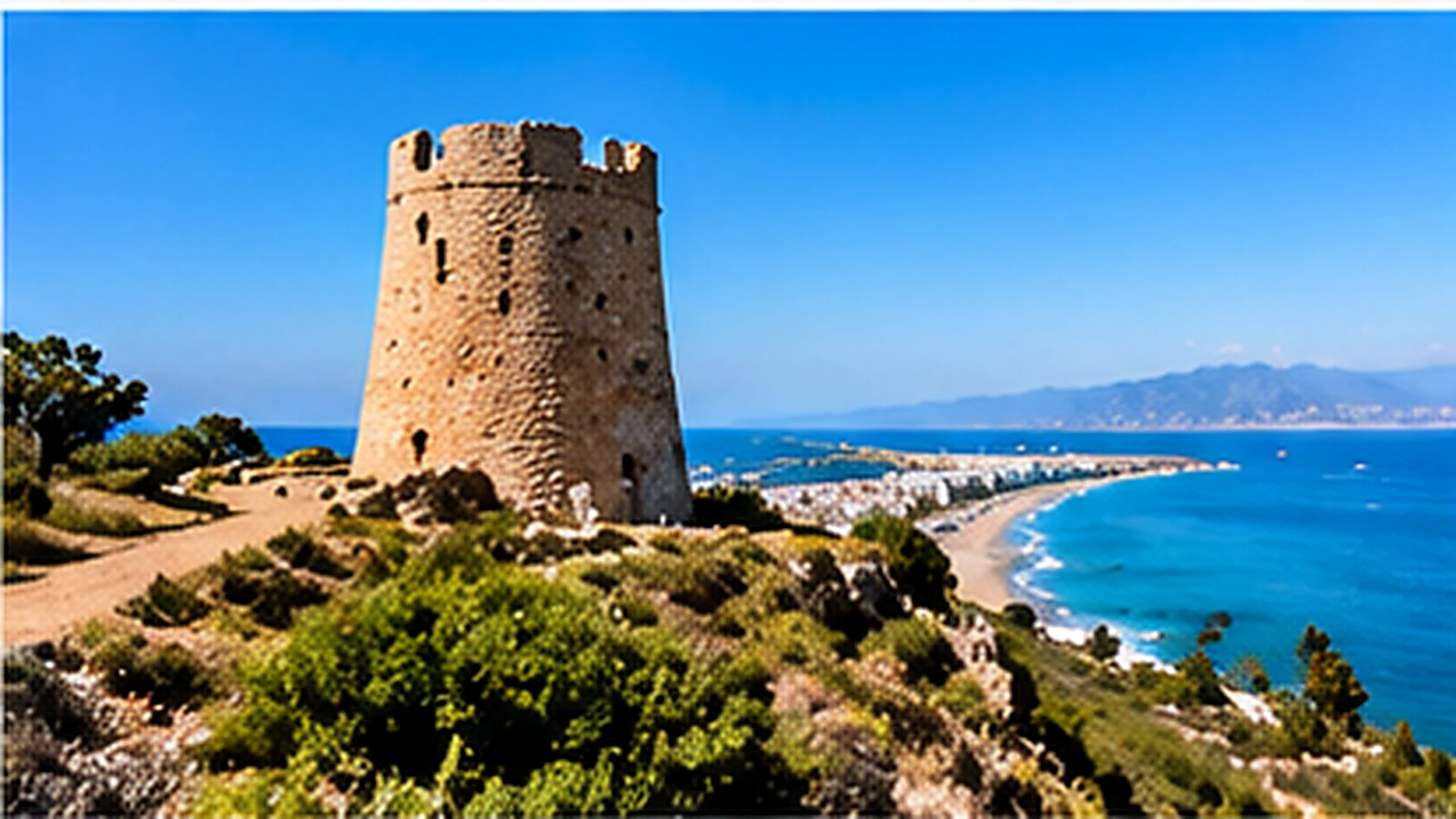
A chain of coastal towers helped watch the sea, communicate danger and protect settlements and routes along the Málaga coast. Several of these towers still survive inside landscapes that today look completely different from the ones they were built to defend.
A coastline that had to be watched
The Junta de Andalucía's heritage catalogue includes numerous surviving towers in Málaga province as protected coastal watchtowers.
Examples include Torre Molinos, also known as Torre Pimentel, in Torremolinos; Torre de Chilches in Vélez-Málaga; and Torre de Lagos, also in the eastern part of the province.
These structures formed part of a wider system of surveillance rather than operating as isolated monuments.
Their location close to the shoreline gave watchmen long views over the sea and made it possible to warn nearby communities when a potential threat appeared.
Why the coast needed a defensive network
The western Mediterranean was not a peaceful frontier for much of the late medieval and early modern period.
Raids, piracy, military rivalry and the vulnerability of coastal settlements made surveillance important. Towers were placed at strategic points where sections of coast could be observed and signals could pass between neighbouring positions.
The precise history of each tower differs. Some were built or rebuilt in different centuries and their form changed over time. That is why it is misleading to describe all the towers as one uniform construction project.
What they shared was function: keeping watch over a coast exposed to danger.
Torre Pimentel and the origin of Torremolinos
One of the best-known examples is Torre Molinos, today usually called Torre Pimentel.
Its presence is especially important because the tower became so closely identified with the place that it contributed to the name Torremolinos: the tower and the mills became two defining elements of the settlement.
Today it stands surrounded by a dense resort town, making the historical contrast unusually clear. A structure designed for surveillance now sits inside one of the most tourism-intensive parts of the coast.
The eastern coast preserves the same defensive logic
Further east, towers such as Chilches and Lagos show that this was not only a story of the western Costa del Sol.
The Axarquía coastline also formed part of the same broad defensive landscape. Towers protected stretches of coast where settlements, roads, fields and landing places were exposed to maritime attack.
Their survival makes it possible to trace a historical route along the shoreline that predates the modern tourism corridor by centuries.
Towers were part of a communication system
A watchtower was most useful when it could connect with others.
From elevated coastal positions, guards could observe vessels and send warnings using visual or other agreed signals. The exact methods varied by period and place, but the general principle was simple: detect a threat early and pass the warning along the coast.
This network logic matters more than the architecture of any single tower.
Why they are easy to overlook today
Many surviving towers now stand beside roads, apartment blocks, promenades or developed beaches.
Because the surrounding landscape has changed so dramatically, it is easy to see them as decorative ruins. Their original meaning was almost the opposite: they were practical military infrastructure built because the coastline was vulnerable.
That makes them especially valuable for understanding how radically the Costa del Sol has changed.
How to read them when you find one
When visiting a surviving tower, first look at its position rather than only at the masonry.
Ask what stretch of sea it could observe, which nearby headlands or towers might have been visible, and what settlements or routes lay behind it.
That perspective turns a small stone structure into part of a much larger story about defence, communication and coastal insecurity.
The Costa del Sol was once watched as carefully as it is now visited.
Sources used for this draft
- Junta de Andalucía · Patrimonio Histórico: Torre Molinos / Torre Pimentel
- Junta de Andalucía · Patrimonio Histórico: Torre de Chilches
- Junta de Andalucía · Patrimonio Histórico: Torre de Lagos