Costa del Sol in summer: heat, crowds, beach timing and how to plan better
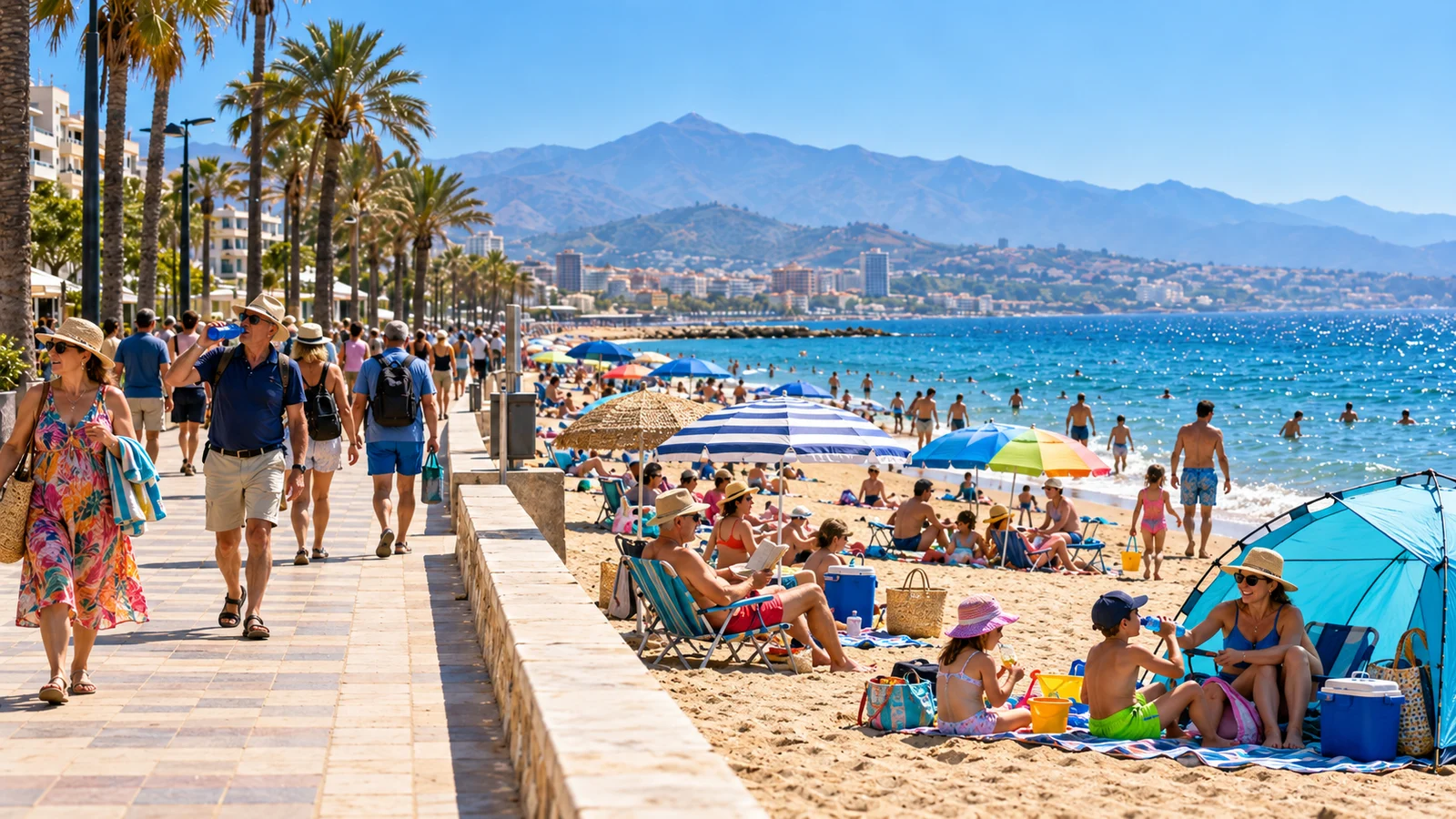
Summer on the Costa del Sol is less about fitting in more and more about managing heat, crowds and timing well. The best trips use mornings and evenings actively and protect the middle of the day.
Quick answer
For more context, see getting around the Costa del Sol.
Do beaches early or later, reserve midday for lunch/rest/indoor time, pre-plan parking or transport and avoid building the itinerary around long exposed walks.
Heat
Heat management should shape the day. Shade, water and shorter routes matter more than trying to maintain a winter-style sightseeing pace.
Beaches
For more context, see family beaches guide.
Early morning and late afternoon usually create a more comfortable beach rhythm than one very long midday session.
Families
Toddlers and older children both benefit from an indoor or shaded reset during the hottest period.
Transport
For more context, see Costa del Sol shopping guide.
Congestion and parking pressure can increase in popular zones. Rail-served towns can reduce friction.
Reservations
Popular restaurants, activities and beach products may need earlier booking during peak periods.
Day trips
For more context, see best day trips from Málaga.
Inland excursions should be timed carefully because heat can make long outdoor visits harder.
Evenings
Summer evenings are one of the region's strengths. Promenades, old towns and marina areas become more comfortable after the hottest hours.
Budget
Peak demand can raise accommodation and activity costs. Compare total trip cost, not only room price.
Long stays
For more context, see Costa del Sol markets guide.
Air conditioning, laundry, supermarket access and shade around the accommodation matter more over several weeks.
What to pack
Sun protection, water bottle, light clothing and comfortable footwear for hot surfaces.
What the climate normals show
AEMET's Málaga Airport normals underline why summer planning should revolve around heat. July's average daily maximum is around 30.5°C and August's around 30.8°C, with very little normal rainfall in midsummer. Those are long-term averages, not a ceiling: individual hot spells can feel significantly more intense.
Do not transfer one station's figures blindly to every inland valley or urban microclimate. Inland excursions and exposed paved areas can feel hotter than a breezy seafront.
Build the day around exposure
The practical question is not simply “how hot will it be?” but how long your group will spend in direct sun, on reflective paving, in queues or on exposed walks.
Put old-town walks, viewpoints and active excursions earlier. Use lunch, siesta, pool or indoor attractions to break the strongest part of the day, then return outside later.
Beach strategy
Arriving early can improve both comfort and parking. Late afternoon is another strong window, especially for families who do not want a five-hour midday beach session.
Shade should be treated as a planning resource, not an assumption. If you need parasols, loungers or accessible beach equipment, verify current availability rather than assuming every beach offers the same service.
Sea, wind and safety
Warm weather does not guarantee calm sea conditions. Pay attention to local beach flags, lifeguard instructions and operator decisions for water activities.
A hot day can still be a poor day for a particular kayak, SUP or boat plan if wind or sea state is unsuitable.
Eating and reservations
Summer shifts the useful day later. Evening dining and promenade walks become more attractive after the strongest heat, but popular restaurants can fill more quickly in high-demand periods.
If one restaurant matters to the trip, reserve it rather than designing the whole evening around walk-in availability.
Parking and car use
A car gives flexibility but can add friction in beach zones at the exact hours everyone else arrives. If your base is on the C1 corridor, train plus walking or taxi can be easier for some days.
Use the Costa del Sol parking guide before assuming a rental car is automatically convenient.
Summer with children
Plan around hydration, shade, nap/rest time and shorter walking segments. A theoretically efficient itinerary with three outdoor stops can be much worse than one beach morning plus a relaxed evening.
Summer for couples and adults
The same heat-management logic applies. Use mornings for activity, protect midday and take advantage of later dinners, terraces and coastal walks.
Practical summer rule
Do less in the hottest hours, reserve the things that genuinely matter, avoid unnecessary driving into crowded beach centres and let mornings and evenings carry the active part of the holiday.
Continue your Costa del Sol planning
Other published guides for the same destination or a closely related topic.