Best scenic drives from the Costa del Sol: mountains, villages and realistic road planning
Scenic driving on the Costa del Sol is less about finding one “most beautiful road” and more about choosing a route that matches your confidence, daylight and appetite for mountain roads. The best drives combine one clear destination with a few proper stops, not constant roadside photography.
Quick answer
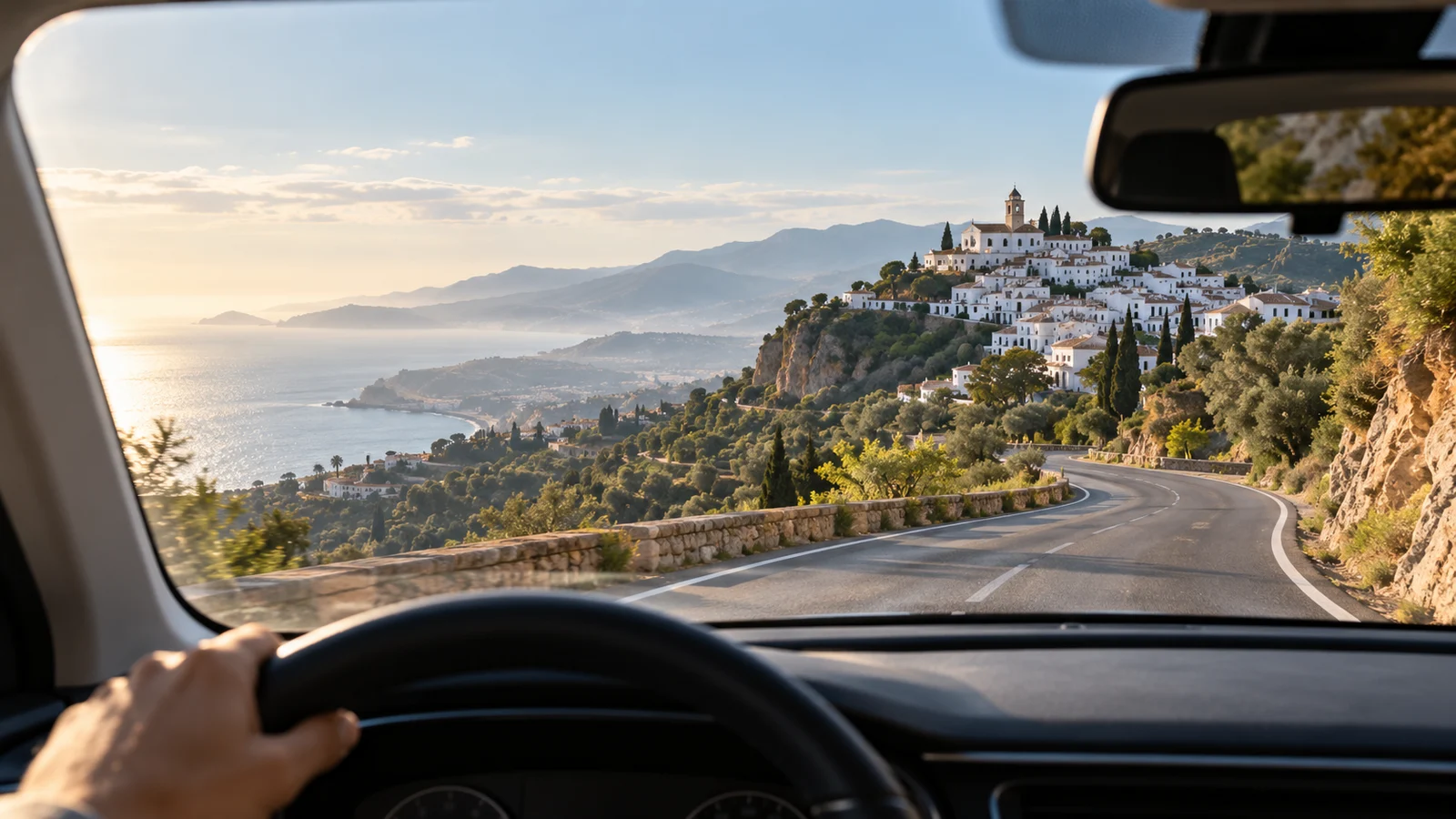
Choose a white-village drive for inland atmosphere, a western coast-to-Casares route for sea-to-mountain contrast or an eastern Nerja–Frigiliana route for a shorter Axarquía combination. Keep the route shorter than you think you need.
White-village driving
Mijas Pueblo, Casares and Frigiliana all involve elevation and historic centres where the car is best left outside the core.
The drive is only half the experience; allow real walking time.
Use the white villages guide.
Western scenic route
A strong western combination is Estepona + Casares.
You get an urban/coastal stop followed by an inland village without needing to push all the way to Ronda.
See the western Costa del Sol road trip.
Eastern scenic route
Nerja + Frigiliana gives an efficient coast-to-hills contrast.
It is particularly useful when you want scenery without a very long mountain driving day.
See the eastern Costa del Sol road trip.
Ronda route
Ronda can be a beautiful inland drive, but it should be chosen because you want Ronda itself—not merely because the road is scenic.
Mountain-road travel adds time and concentration.
If Ronda is the destination, give the city enough time rather than turning around immediately.
Choose by driving confidence
A traveller comfortable with mountain roads may enjoy a route that another visitor finds tiring.
Do not pressure yourself into a scenic mountain itinerary if narrow/curving roads reduce your enjoyment.
A coastal or major-road route with one inland village can still be an excellent day.
Weather
Rain, low cloud, strong wind or poor visibility can reduce both views and driving comfort.
Check conditions on the day, especially when going inland or higher.
Do not assume coastal sunshine means identical weather in mountain areas.
Daylight
In winter and shoulder season, shorter daylight matters.
Leave enough margin for the final mountain or unfamiliar section to be completed comfortably.
Summer
Heat affects both the stops and traffic.
Start earlier and avoid building the route around multiple midday village walks.
Seasonal beach traffic can also slow coastal sections.
Parking
A scenic drive should have planned stopping points.
Know where you will park in villages and towns instead of looking for informal roadside spaces.
See the Costa del Sol parking guide.
Safe viewpoints
Never stop on a shoulder or blind bend simply because the view is good.
Use official viewpoints, lay-bys where stopping is permitted, or town parking.
A safe stop is part of good route design.
Families
Shorter driving blocks and one major stop work better with children.
Build in toilets, food and space to move rather than adding scenic kilometres for adults only.
Seniors
Choose stops with manageable walking from parking.
A scenic drive can be excellent for travellers who want to see more landscape with less continuous walking, but white villages still involve slopes.
Fuel and charging
Plan fuel/charging on the main route.
Do not depend on a remote scenic stop. EV drivers should verify current charger status using live network data.
Rental-car choice
You do not need an oversized vehicle for most road trips, and a very large car can make historic parking less comfortable.
Choose enough luggage/passenger space without making narrow-town access unnecessarily difficult.
See whether you need a rental car.
Commercial fit
Car rental is relevant, but Costa Guest should first identify the route and whether a car genuinely improves it.
Affiliate economics must not push visitors toward driving when public transport would better fit their plan.
Practical decision rule
Choose one destination worth reaching, one secondary stop and safe places to pause. A scenic route is successful when the driving supports the day—not when the driver spends the entire day watching the road.
Before leaving
Check the live traffic situation, weather and any temporary access restrictions before departure. Keep a second, shorter version of the route in mind so the day still works if parking, heat or traffic is worse than expected.
A road trip is more resilient when one stop can be removed without breaking the whole itinerary.