Why Andalusian white villages look the way they do
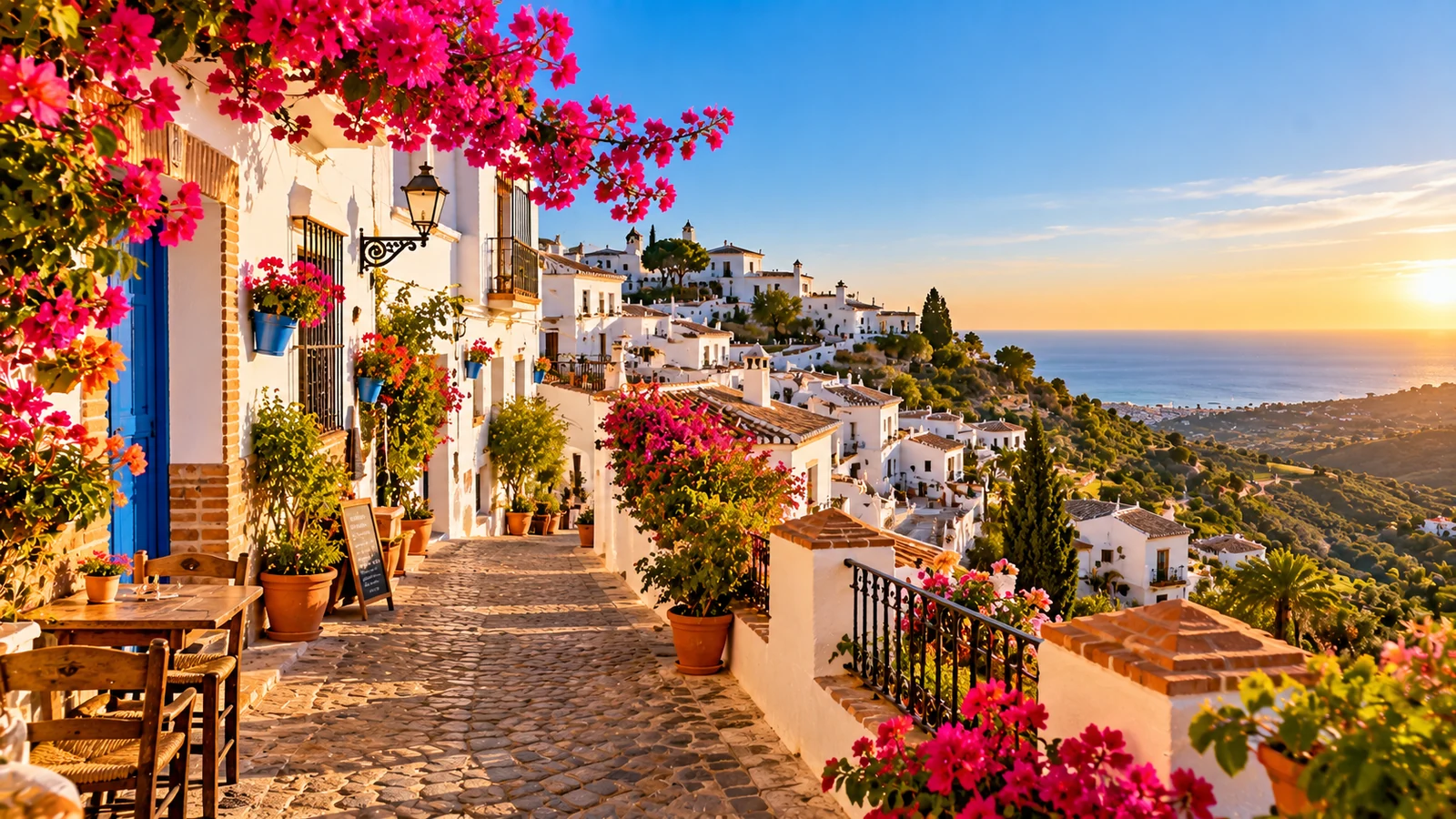
White villages are one of the most familiar images of inland Andalusia.
Why Andalusian white villages look the way they do
White villages are one of the most familiar images of inland Andalusia.
Whitewashed walls, compact streets, tiled roofs and houses climbing steep slopes appear across parts of Málaga and neighbouring provinces.
The temptation is to explain all of them with one simple origin story. Reality is more interesting.
Whitewash is practical and cultural
Limewashing became a common way to maintain and finish building exteriors.
It creates the bright surfaces associated with pueblos blancos, but its use belongs to a wider tradition of maintenance, climate adaptation and local building practice.
It is safer to understand whitewash as a long-lived practical and aesthetic convention than to claim one exclusive reason for its use everywhere.
Terrain shapes the street plan
Many white villages occupy hillsides, ridges or steep terrain.
That geography helps explain narrow, irregular streets, stepped routes and houses built close together.
The street pattern often developed over long periods rather than being designed as one plan.
This is why walking through a hill village can feel very different from moving through a modern coastal development.
Compact building had advantages
Dense settlement made efficient use of difficult terrain.
Shared walls, shaded streets and courtyards could also help buildings respond to heat and limited space.
But there is no one architectural formula repeated identically from village to village.
Local topography, water, agriculture, political history and available materials all mattered.
Not every white village is "Moorish"
Tourism language often labels anything white, narrow and irregular as Moorish.
That can be misleading.
Some settlements certainly preserve urban patterns influenced by medieval Islamic periods. Others changed substantially after the Christian conquest, and many buildings visible today are much later.
Visual resemblance alone does not prove a single origin.
Roofs, courtyards and rural buildings add variety
Whitewashed walls are only one part of the built landscape.
Tile roofs, patios, agricultural buildings, farmhouses and terraces connect villages to the countryside around them.
Official architectural studies of Málaga's rural buildings show how strongly construction relates to agriculture and terrain.
The village cannot be separated completely from the fields and working landscape.
Why the image became so powerful
The contrast between white facades, mountain terrain and blue sky made pueblos blancos especially attractive in photography and tourism promotion.
That image is real, but it can hide how varied the settlements actually are.
Some are agricultural centres. Some have strong fortress histories. Others grew around roads, churches or later economic activities.
How to look beyond the postcard
Instead of asking why "all white villages" look the same, look for differences.
Notice slope, street direction, roof type, courtyards, former walls, water sources and the relationship with surrounding farmland.
That approach turns a familiar visual style into a way of reading local geography and history.
Whitewash solves more than one problem
Whitewashed walls are visually striking, but the finish also has practical qualities.
Lime-based coatings can brighten narrow streets, reflect strong sunlight and be renewed relatively easily. In older settlements, repeated maintenance creates the clean visual continuity visitors now associate with Andalusian white villages.
That does not mean every house was white for one single historical reason. Climate, hygiene, maintenance and local custom all contribute to the appearance.
Street form follows terrain
Many villages occupy hillsides, ridges or defensible elevations.
That produces streets that bend, narrow, climb and adapt to the ground rather than following a modern grid.
For visitors, this means the characteristic urban form is not just decorative. It records the relationship between settlement and terrain.
Courtyards and thresholds matter
The experience of a white village is not limited to façades.
Patios, shaded entrances, balconies, small squares and transitions between public and private space all help regulate light, heat and social life.
These details are easy to miss when the village is reduced to a postcard view of white walls.
Not every white village shares the same origin
Some settlements have medieval Islamic roots, others were reshaped substantially after the Christian conquest, and many continued changing in later centuries.
It is therefore safer to describe shared architectural tendencies than to claim every white village follows one unchanged Moorish template.
Sources used for this draft
- Turismo de Andalucía · Los pueblos blancos: Cádiz y Málaga
- Junta de Andalucía · Arquitectura rural: cortijos de Málaga