Ronda practical travel guide: parking, walking, viewpoints and how long to stay
A practical stay here becomes much easier when you choose the right daily base before thinking about attractions. The useful questions are where you will buy food, how you will move, how far the pharmacy is and what the return route feels like after a full day.
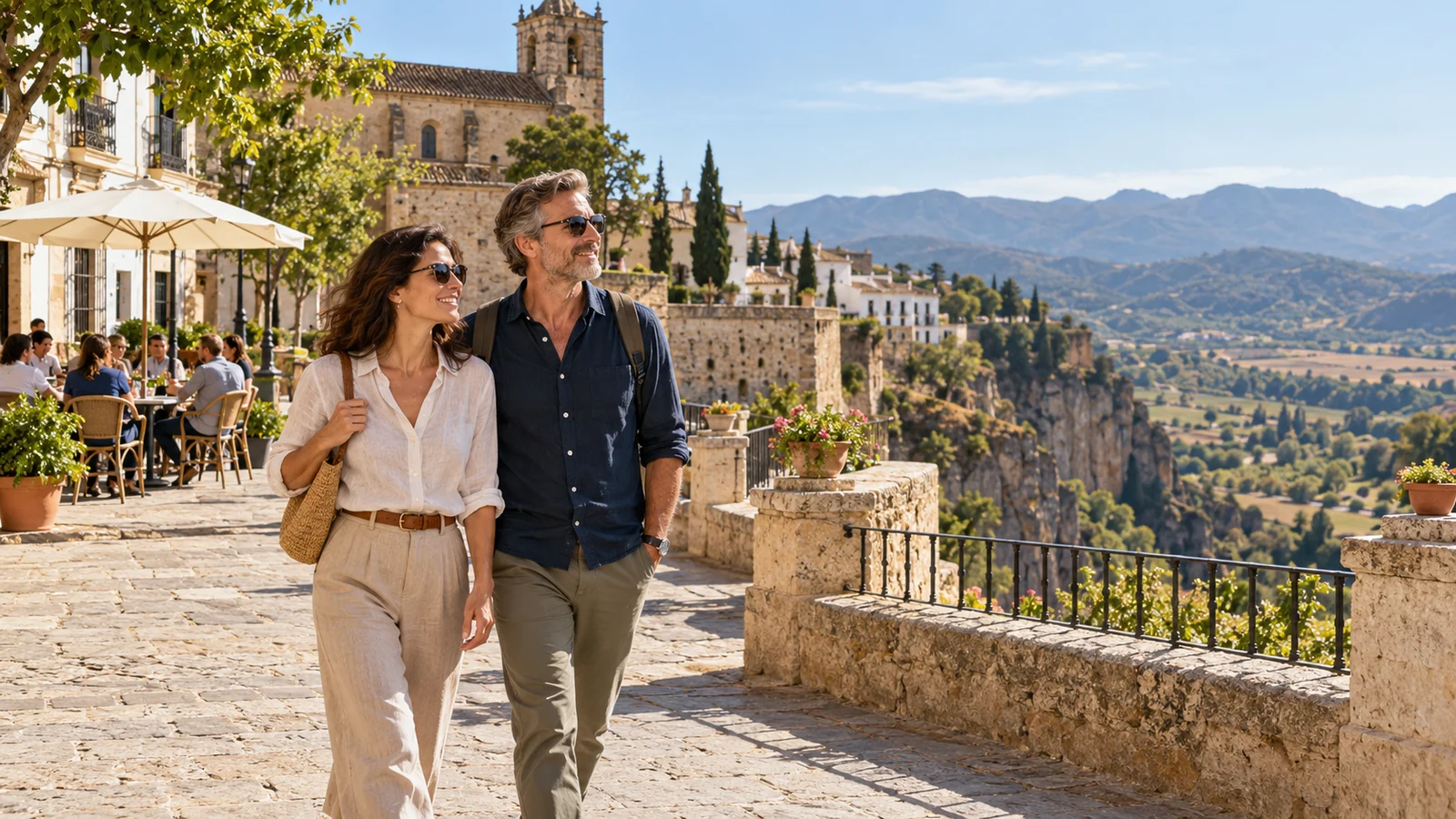
Puente Nuevo: use Ronda's official visitor information
Treat views from the town and visits inside heritage spaces as separate plans.
- Heritage
- Puente Nuevo crosses Ronda's El Tajo gorge. Use the official tourism description for its history and context.
- Access
- Do not assume that an interior interpretation space has the same access conditions as public viewpoints; verify accessibility.
- Route
- Plan walking around the gorge according to hills and your mobility, and confirm any visitor-centre entry arrangements.
Quick answer
For the excursion itself, continue with the Ronda day-trip guide.
Use historic centre for the strongest everyday base, compare new-town commercial area for a different rhythm and treat station/bus side as a separate practical zone. Local movement is mainly shaped by walking plus regional bus/train.
Best everyday base
historic centre usually gives the easiest mix of supermarkets, cafés, pharmacies and normal services.
Alternative area
new-town commercial area may be better for beach, atmosphere or a quieter routine, depending on your priorities.
Separate zone
station/bus side should not be assumed to work like the main centre. Daily errands, transport and walking can feel very different.
Transport
For the regional transport picture, see getting around the Costa del Sol.
The main local reality is steep edges, cobbles and a compact centre. Check the final route, not only the headline transport connection.
Supermarkets and food
If you prefer an organised option, compare the Ronda tours guide.
For a stay longer than a few days, having groceries and casual food within an easy walk can save more time and money than staying next to a major attraction.
Pharmacies and everyday health needs
Know the nearest pharmacy and basic urgent-care route, especially on longer stays. This is practical orientation, not medical advice or a quality rating.
Cash, cards and payments
For everyday payment planning, see the cash, cards and tipping guide.
Cards are widely useful, but keep a small backup payment option. Do not build the guide around claims about one bank, ATM fee or exchange rate without current verification.
Parking
If using a car, verify the exact accommodation parking situation before arrival. “Parking nearby” can mean a long walk, paid garage or seasonal difficulty.
Heat and timing
In warmer months, daily errands are easier early or later in the day. Use the hottest hours for lunch, rest or indoor tasks.
Laundry and longer stays
Apartments, laundromats or hotel laundry can matter after a week. Check exact facilities rather than assuming every apartment includes a washing machine.
Emergencies and documents
Before locking the plan, check the first-time Costa del Sol mistakes guide for the common logistics traps.
Keep identification, insurance/contact details and accommodation address accessible. Use official emergency channels rather than relying on travel-site instructions.
How the destination actually works
Ronda is an inland destination where walking profile, monument hours and return transport matter more than beach-style resort convenience. It can work as a day trip or overnight stay for very different reasons.
Transport model
Build the trip around the transport mode that serves your exact accommodation area. Rail, bus, taxi and walking can all be strong in the right place, but exact timetables, station works and diversions are live information.
Car and parking
A car is useful when it removes repeated difficult journeys, not simply because the Costa del Sol is large. Confirm accommodation parking, municipal restrictions and the real final approach before driving into a dense centre.
Daily errands
For longer stays, supermarket, pharmacy, laundry and everyday cafés matter more than tourist highlights. If you name a specific branch or provider, verify current operation rather than treating it as permanent.
Eating and evenings
Choose evening plans around the return route. A good restaurant area within an easy walk can be more valuable than a famous venue that creates a difficult late taxi or uphill walk.
Weather and timing
Heat, rain and daylight can change how practical the same route feels. In summer reduce exposed walking at midday; in wetter periods keep indoor alternatives and check surfaces or road conditions.
Families
With children, reduce unnecessary transfers and keep one simple backup activity. A short walk on a map can feel much longer with a pushchair, beach gear or tired children.
Accessibility and gradients
Do not label the whole destination accessible or inaccessible. Check the exact station, pavement, gradient, hotel entrance and venue route that the traveller will actually use.
What to verify live
Live-check transport disruptions, parking rules, temporary works, monument opening, named supermarket/pharmacy operation and any seasonal service that matters to the itinerary.
Practical decision rule
Choose the accommodation zone first, map the three journeys you expect to make most often, and only then decide whether walking, public transport, taxis or a car should carry the trip.
Continue your Costa del Sol planning
Other published guides for the same destination or a closely related topic.