An unhurried day in Mijas Pueblo
A practical route through Mijas Pueblo’s viewpoints, historic centre and museums, planned for a hillside village rather than a flat loop.
Plan the day around the slope
Mijas Pueblo is set on the slope of the Sierra de Mijas. That simple fact makes a difference to how you should visit: this is a hillside settlement, not a flat cluster of attractions that can be covered in a tidy circuit. Streets rise and fall, surfaces may be uneven, and the official walking guidance advises visitors to plan routes according to their physical capacity and health.
For most visitors, the most sensible day stays within the built-up historic centre. Begin by orienting yourself near the village arrival area, then move through the viewpoint and historic sights before choosing one principal museum. Leave the signposted mountain trails for another occasion or treat them as an optional extension, rather than assuming that a village visit requires a longer walk into the Sierra.
If you are coming by public transport, the M-122 is the useful direct link from Fuengirola. Check the current timetable for your date and direction before setting out, including the return journey. Timetable arrangements can change, and the published information includes a Fuengirola terminus change from 14 September 2026. Visitors arriving by car should also check current parking information and any seasonal shuttle arrangements before travelling.
Start with the viewpoints
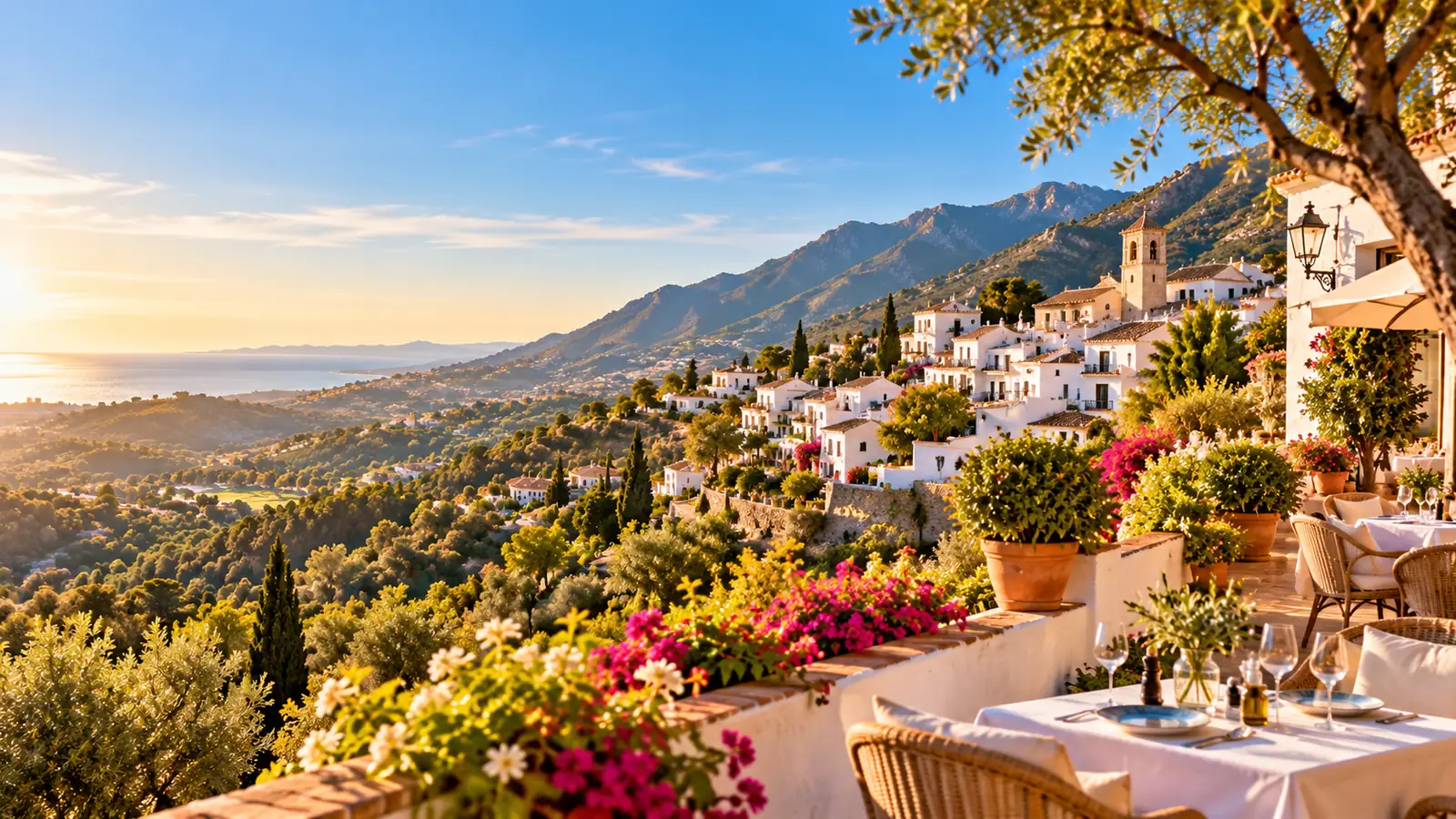
Once you have arrived, begin with the Virgen de la Peña area. The surroundings of the hermitage are identified as a coastal viewpoint, making this a useful first stop for understanding the village’s position above the coast. It also gives the day a natural orientation point before you start threading through the older streets.
From there, work towards the former wall and fortress area. The Mirador de La Muralla and its gardens combine an outlook with remains of the old fortification, so this is more than a pause for photographs. The wall gardens help explain the shape of the historic centre while offering another public viewpoint.
The Mirador Hermanos Núñez Andréu adds a different perspective, with views towards the mountains and the diversity wall. These viewpoints are close enough in the logic of a village route to combine, but they are not interchangeable: the Virgen de la Peña area is associated with the coast, while La Muralla joins views with the former fortress edge and the Hermanos Núñez Andréu viewpoint faces towards the mountains and diversity wall.
Take the streets between these stops at a measured pace. Mijas Tourism identifies whitewashed streets, patios and gardens as part of the village’s historic character, but that does not mean every stretch is level or effortless. If a slope is uncomfortable, slow down or shorten the route rather than turning the day into a test of endurance.
Continue through the historic centre
After the wall gardens, make your way towards Plaza de la Constitución and the bullring area. The Plaza is one of the points identified in the official viewpoint route, while the bullring is one of the centre’s principal historic sights. Its irregular shape is part of what distinguishes it from a conventional circular arena.
The historic centre also includes the parish church of the Immaculate Conception. The church was built against an earlier watchtower, which became its bell tower. Two seventeenth-century chapels and the Sanctuary of the Virgen de la Peña are also part of the village’s heritage landscape. You do not need to force every monument into a timed checklist: the point of this sequence is to let the main sights fall into place as you move through the centre.
The old fortress area, the wall gardens and the streets around the plaza work well as the outdoor portion of the day. They also provide natural opportunities to pause before deciding whether you want an indoor visit.
Choose one museum
The Casa Museo at Plaza de la Libertad is the strongest choice if you want local history and a sense of everyday life. The Museo Histórico–Etnológico presents material associated with agriculture, fishing, crafts, food production and domestic life in Mijas. The municipal page lists admission at €1 and daily opening from 10:00 to 19:00, but opening information and prices can change, so check directly before travelling.
CAC Mijas is the better alternative if your interest is art rather than local social history. It is on Calle Málaga 28 and has a collection including works associated with Picasso, Dalí, Braque and Foujita. The municipal page lists opening from 10:30 to 14:00, Monday to Saturday, with admission at €3. That shorter published window makes it worth checking the day before you build the rest of the visit around it.
You can also find El Carromato de Mijas on Avenida del Compás. The municipal information lists seasonal daily opening and adult admission of €3, with reduced prices for some visitors. As seasonal hours can change, treat it as an optional extra rather than the fixed centre of the itinerary. The Flour Mill, also on Avenida El Compás, should not be planned as a dependable stop: the official tourism page currently marks it temporarily closed.
Keep the mountain walk optional
The signposted mountain trails begin at El Mirador de Mijas Pueblo and continue across the southern slope of the Sierra. The official guidance describes the terrain as rugged and advises visitors to consider their capacity and health before walking. That is useful context for planning: a day in the pueblo does not need to become a mountain excursion.
The M-122 is identified as adapted for people with reduced mobility, but this does not establish step-free access throughout the historic centre. The sources do not verify every pavement, street, museum or viewpoint as accessible. If access needs are important, check each stop directly and plan around the sections you can use comfortably.
A good Mijas Pueblo day therefore has a clear rhythm: arrive, orient yourself at the viewpoints, move through the wall gardens and historic centre, then choose the Casa Museo or CAC Mijas according to your interests. Keep the return bus in mind, and leave enough time for the hillside streets rather than trying to collect every possible attraction.
Continue your Costa del Sol planning
Other published guides for the same destination or a closely related topic.