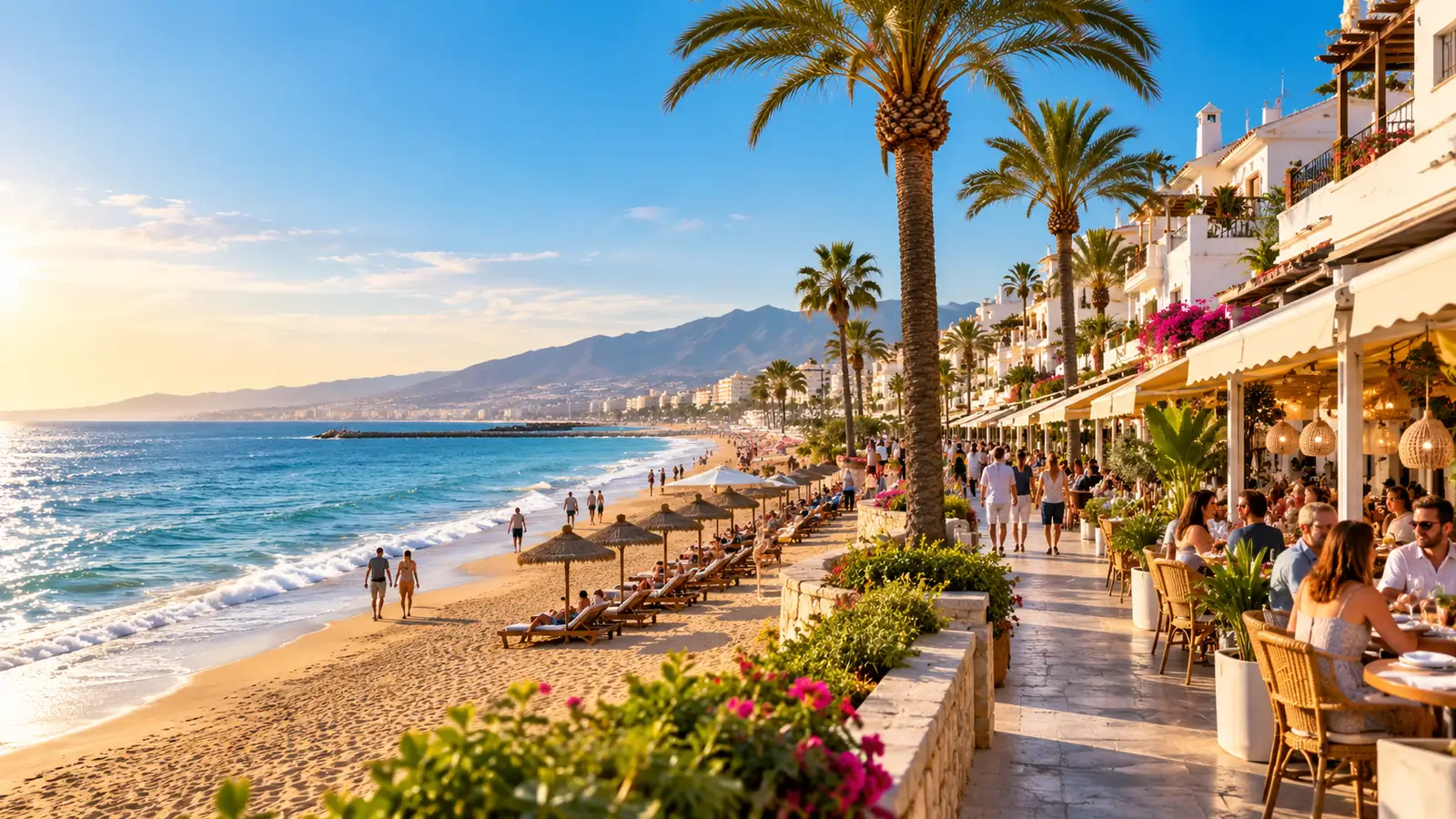
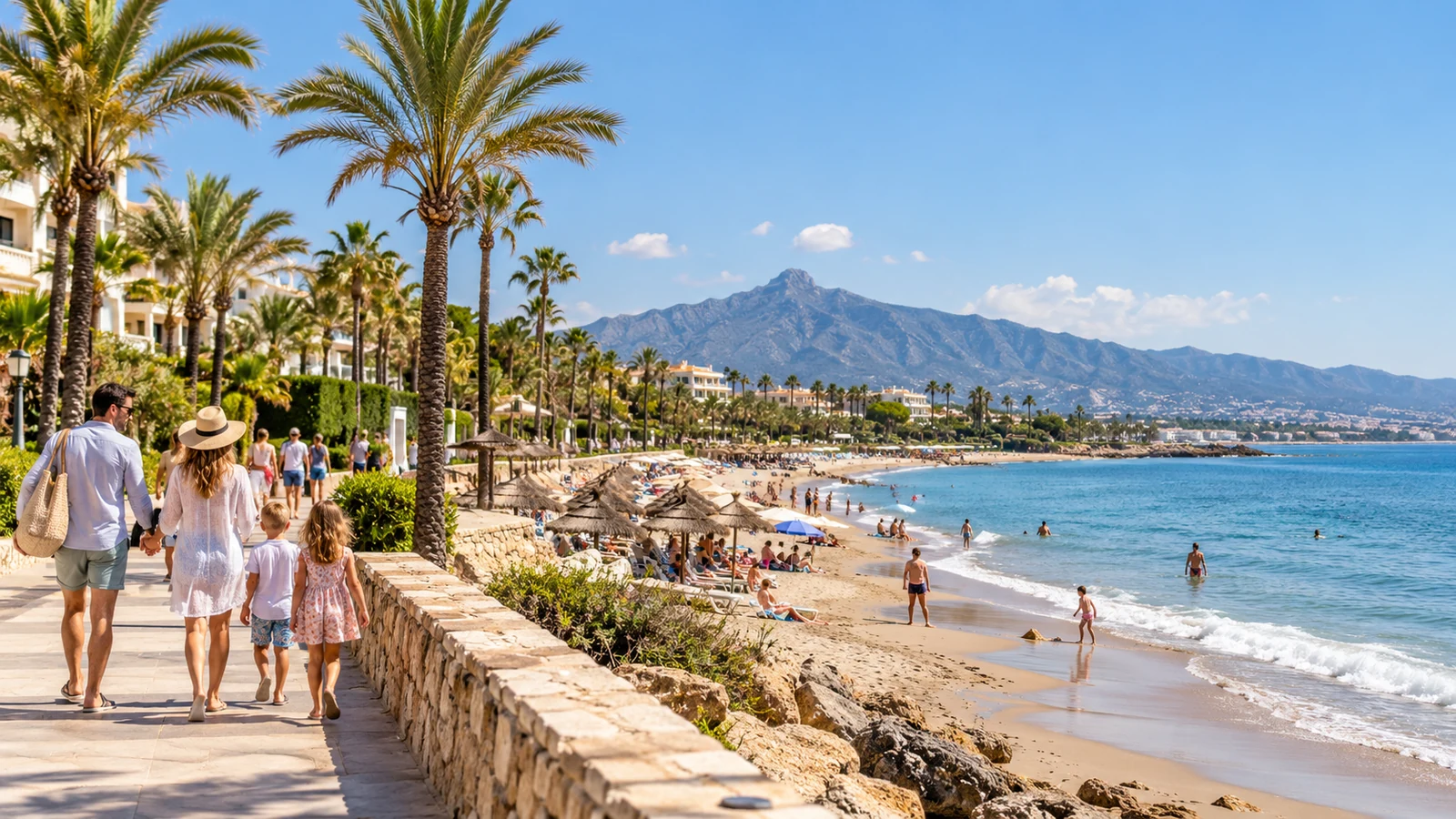
Marbella first-time guide: how the city, coast and different areas fit together
A practical guide to Marbella beyond the stereotypes: Old Town, beaches, Puerto Banús, transport, San Pedro, family travel and choosing the right base.
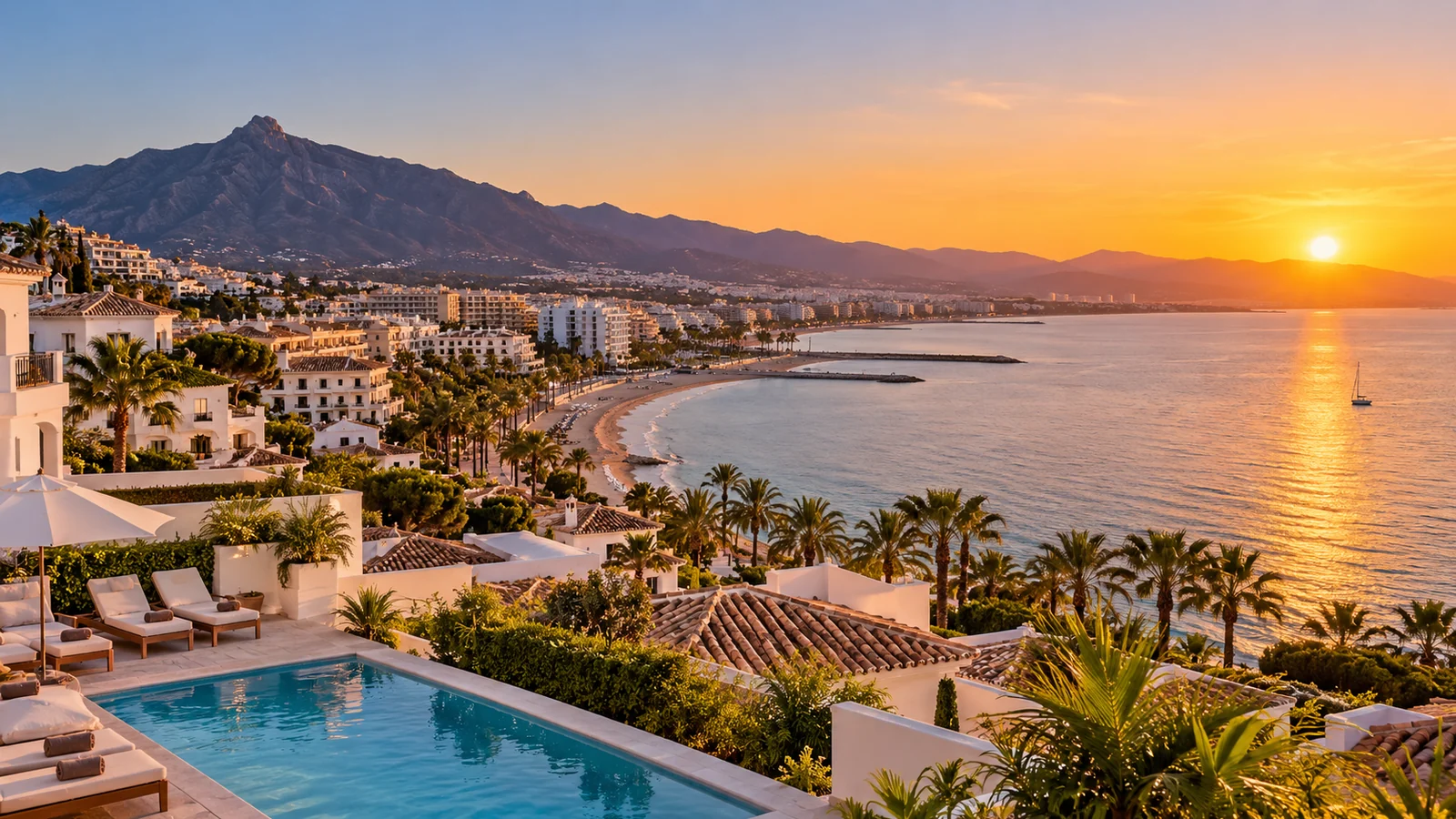
Marbella is easier to enjoy once you stop imagining it as one compact resort. The municipality stretches along a long piece of coast, and the places most visitors talk about — the Old Town, central Marbella, the Golden Mile, Puerto Banús, San Pedro Alcántara and the eastern beaches — are not interchangeable neighbourhoods around a single centre. They produce different trips and require different amounts of transport.
That is the key to a good first stay. Choose the part of Marbella that matches the holiday you actually want, use central Marbella as the natural base for history and walkability, treat Puerto Banús as a separate outing or base when it genuinely suits you, and do not spend half the day crossing the municipality simply because every place carries the same Marbella name.
Marbella in one sentence
Marbella combines a compact historic centre, a large urban coastline, resort and residential corridors, several marinas, golf and a separate western leisure hub at Puerto Banús. It can feel like an old Andalusian town in the morning and a polished coastal resort an hour later. Both impressions are real; the mistake is assuming they happen in exactly the same place.
For most first-time visitors, central Marbella is the best introduction because the Old Town, Alameda, Avenida del Mar and the central seafront can be combined on foot. From there, decide whether Puerto Banús, San Pedro, a beach farther east or a specific cultural stop deserves its own transfer.
Start with the Old Town, not with the luxury image
Marbella’s international reputation is strongly tied to luxury hotels, yachts, golf and Puerto Banús, but the historical core gives the city its most useful sense of place. The municipal tourism service identifies Roman, Arab and Christian traces in the Old Town, together with the Arab wall, Plaza de los Naranjos, the Church of Nuestra Señora de la Encarnación, the castle remains and the Museo del Grabado.
This is a walking area. Begin around Plaza de los Naranjos and let the narrow streets lead towards the church, wall and small squares rather than trying to navigate by car. The point is not to inspect every heritage building. It is to spend enough time here that Marbella stops feeling like a generic collection of hotels and beach clubs.
The Old Town also connects naturally with Parque de la Alameda and Avenida del Mar. That makes the central route unusually efficient: history, public space, outdoor art and the sea can all fit into one coherent walk without a vehicle.
If you only have a few hours in Marbella, this central sequence is a much better introduction than immediately heading to Puerto Banús.
Understand the coastline before choosing a beach
Marbella’s tourism service lists 24 beaches across roughly 27 kilometres of coastline. That number tells you something important: there is no single “Marbella beach”. A beach that makes sense when staying in the centre may be a poor choice if you are based in San Pedro, Nueva Andalucía or the eastern side of the municipality.
For a central sightseeing day, beaches such as La Venus, El Faro or La Fontanilla are the simplest additions because they sit close to the urban core. They allow you to finish a walk through town by the sea without creating another transport problem.
Farther east, beaches around Los Monteros, El Alicate, Las Chapas and Cabopino belong to a different rhythm, often better suited to visitors already staying in that corridor or travelling by car or taxi. West of central Marbella, the coast continues past the Golden Mile towards Río Verde, Puerto Banús and San Pedro.
Choose the beach by geography first and reputation second. Driving across Marbella for a beach that looked marginally better in a ranking rarely improves a short holiday.
Puerto Banús is worth seeing, but it is not central Marbella
Puerto Banús is several kilometres west of the Old Town and works as its own marina, shopping and leisure destination. The official tourism information describes a large marina with extensive retail and service infrastructure. It is a useful place for people-watching, luxury shopping, a marina walk and nightlife, but it should not be treated as a square at the edge of the historic centre.
This matters when planning a day. Old Town in the morning and Puerto Banús later can work, but there is a real transfer between them. The same applies when booking accommodation. Staying near Puerto Banús is excellent if your priorities are the marina, Nueva Andalucía, nightlife or nearby beaches. It is less convenient if your ideal morning is to step straight into Plaza de los Naranjos.
Do not let marketing language blur that distinction. A trip based in Puerto Banús and a trip based in the Old Town can both be called “a Marbella holiday” while feeling completely different.
The Golden Mile is a corridor, not a walkable town centre
The Golden Mile connects central Marbella towards Puerto Banús. It contains hotels, villas, restaurants, beach clubs and access points to the coast, but it is not one compact pedestrian neighbourhood with a single centre. The exact location of your hotel matters enormously.
A property advertised on the Golden Mile may be well positioned for beach time and taxis while still being inconvenient for spontaneous walks into either the Old Town or Puerto Banús. Check the actual address, nearby bus stops and what is comfortably walkable rather than relying on the label.
For a resort-focused stay, this corridor can be ideal. For a short first trip built around sightseeing, central Marbella is normally simpler.
San Pedro Alcántara deserves to be treated as a place of its own
San Pedro sits west of Puerto Banús and has its own town centre, boulevard, seafront and everyday life. Visitors sometimes treat it as merely “the far end of Marbella”, which misses the point. It works particularly well for people who prefer a more local base, need access to western Marbella or Estepona, or want a less concentrated resort atmosphere.
If most of your plans are in central Marbella, staying in San Pedro means regular bus, taxi or car journeys. If your plans are around San Pedro, Guadalmina, golf or the western side, the opposite is true: it can save you repeated travel.
The municipal bus network links the main urban centres of Marbella, Puerto Banús and San Pedro. That makes a car unnecessary for many visitors, but it does not make the distances disappear.
You can visit Marbella without a car
Marbella has no coastal railway station, so its transport logic is different from Málaga, Torremolinos, Benalmádena and Fuengirola. The municipality lists urban buses linking central Marbella, Puerto Banús and San Pedro, while regional services connect with Málaga, the airport and other towns.
Aena confirms a direct coach connection between Málaga-Costa del Sol Airport and Marbella bus station. For a visitor staying centrally, that can remove the need to rent a car on arrival.
Once in the Old Town and centre, much of the sightseeing is naturally walkable. Use buses or taxis for Puerto Banús, San Pedro and more distant beaches. A car becomes more attractive if your accommodation is outside the central urban areas, you are visiting golf courses, you want to explore inland villages, or you plan repeated trips along the western Costa del Sol.
If you do drive, remember that the value of the car is getting between zones, not circulating through the narrow historic core.
Culture is stronger than Marbella’s stereotype suggests
The Old Town itself carries most of the obvious heritage, but Marbella also has cultural options beyond historic streets. The Museo del Grabado Español Contemporáneo occupies the former Hospital Bazán in the centre, while Museo Ralli sits on the corridor between Marbella and Puerto Banús and focuses on Latin American and European contemporary art.
Museo Ralli is a good example of why geography matters: it can fit naturally into a day already moving west, but it is not the obvious next stop during an Old Town walk. The official tourism listing currently gives free admission and published opening times, but current hours should always be checked before a dedicated visit.
Use museums as anchors when they match your interests. Do not add them merely to prove Marbella has culture; the city works best when each stop belongs to the route around it.
Food: choose context before chasing names
Marbella contains everything from traditional bars and neighbourhood restaurants to high-end tasting menus and beach clubs. The useful question is not “where is the best restaurant in Marbella?” but what sort of meal fits the part of Marbella you are already in.
In the Old Town, a long lunch or evening meal fits naturally after sightseeing. Around the central seafront, eating can become part of a beach day. Puerto Banús and the resort corridors provide a different mix, often more polished and more expensive. San Pedro has its own restaurant scene and should not be treated as an emergency alternative when central reservations are full.
Recent menus matter more than old reputation, especially at seasonal businesses. Check opening days and current pricing before making a special journey.
Marbella with children works best when you reduce transfers
Families often make Marbella harder than it needs to be by combining an Old Town walk, a distant attraction, Puerto Banús and a far-away beach in one day. The municipality is too spread out for that to feel effortless with younger children.
A better family day stays central or chooses one separate zone. In central Marbella, Parque Arroyo de la Represa, Alameda, Avenida del Mar and a central beach can form a flexible sequence. If the family wants a different attraction or beach, make that the main outing rather than an extra layer on top.
This is also where a saved itinerary or a carefully chosen base has more value than another list of family attractions. Less transport usually means a better day.
When Marbella is the right base for the Costa del Sol
Choose Marbella when you want a strong mix of beach, restaurants, a historic centre and access to the western side of the coast. It is particularly convenient for trips that include Estepona, Benahavís, inland golf areas or western beach clubs.
Choose Málaga, Torremolinos, Benalmádena or Fuengirola instead when rail access to the airport and easy car-free movement along the C1 corridor are central to your holiday. Marbella is very workable without a car, but it is bus-led rather than rail-led.
Choose Nerja or the eastern coast if your trip is more about the Axarquía, coves and eastern day trips. Marbella may be famous, but fame does not make it the best logistical base for every Costa del Sol itinerary.
A realistic first-time plan
With one day, keep central Marbella as the core: Old Town, Alameda, Avenida del Mar, lunch and the seafront. Add Puerto Banús only if it genuinely matters to you and you are happy to make the transfer.
With two days, use the second day for one direction: Puerto Banús and San Pedro to the west, or a beach/cultural outing to the east. With three or more days, Marbella becomes a much stronger base because you can give different zones room rather than compressing them.
If you are staying for a week, the most important choice happens before arrival: pick the right area. Central Marbella, the Golden Mile, Puerto Banús, Nueva Andalucía, San Pedro and the eastern resort corridor solve different problems. There is no single location that is best for everyone.
The mistakes that change the trip
The first mistake is assuming “Marbella” on a hotel listing means walking distance to the Old Town. The second is treating Puerto Banús as part of a casual central stroll. The third is choosing beaches without considering where you are staying. The fourth is renting a car automatically, then discovering you hardly use it except to move between a few zones that buses or taxis could have covered.
The final mistake is reducing Marbella to either luxury or history. The real destination is the combination: a historic town, a long inhabited coast, resort infrastructure, ordinary residential areas and several distinct centres sharing one municipality.
Plan around that geography and Marbella becomes much easier. Start compact, choose your transfers deliberately and let each part of the municipality do what it does best.
Continue your Costa del Sol planning
Other published guides for the same destination or a closely related topic.