Cycling on the Costa del Sol: road, leisure and family riding without bad route choices
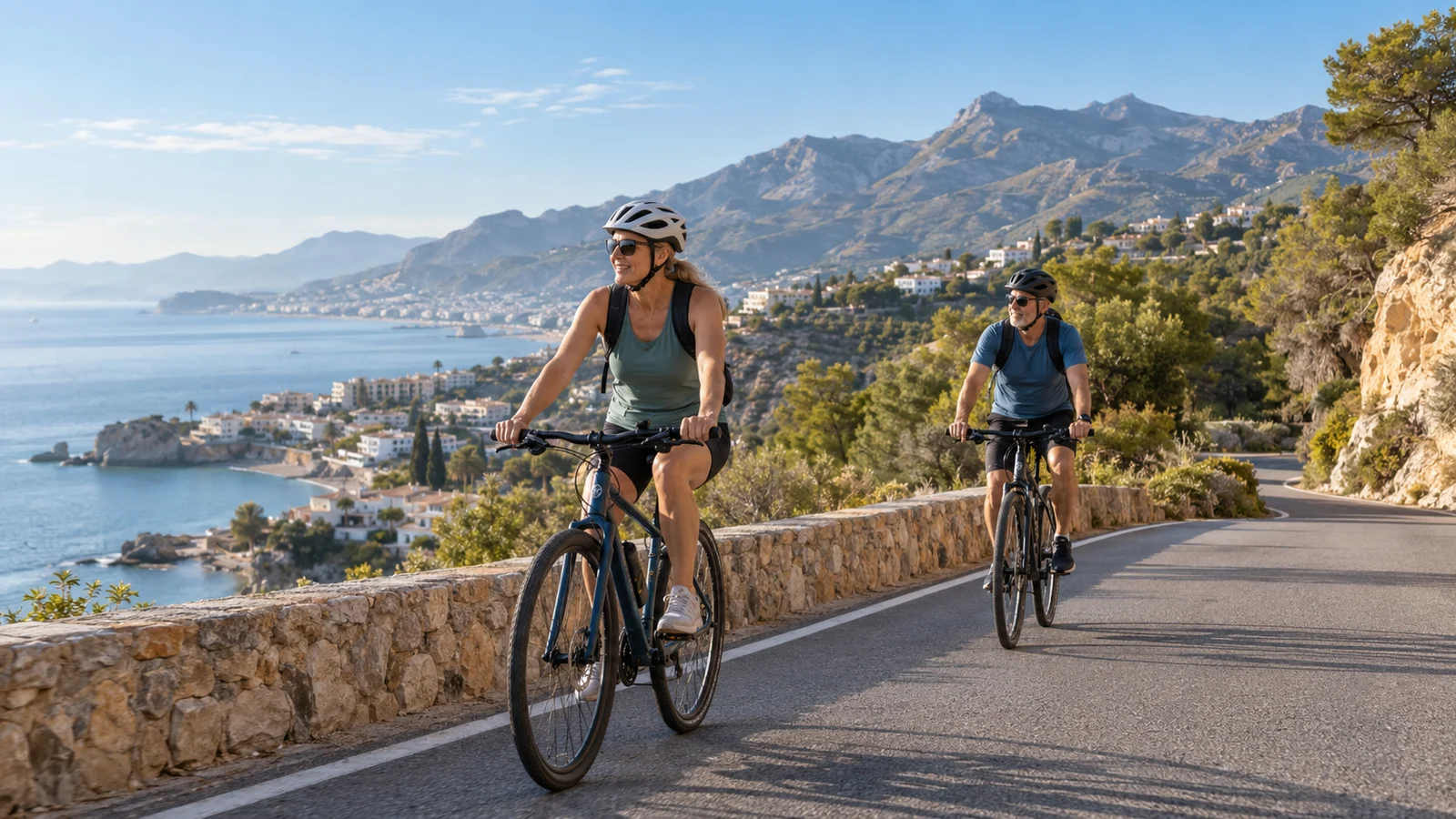
Cycling on the Costa del Sol ranges from flat leisure rides near the coast to demanding road and mountain routes inland. The right plan depends on your bike, fitness, traffic confidence and route surface, so “cycling the Costa del Sol” should not be treated as one activity.
Turismo Costa del Sol currently promotes a Provincial Network of Cycling Routes with a map and filters by route type, difficulty and environment. Use that current route network as the starting point, then check the individual itinerary before riding.
Quick answer
For a relaxed ride, choose a route with a clearly understood surface, distance and return plan. For road or mountain cycling, verify gradient, traffic exposure, technical difficulty and weather before leaving. Do not turn a beach promenade into an assumed continuous cycle route without checking local rules and interruptions.
Start with route type
Decide whether you want leisure cycling, road cycling or mountain biking before choosing the base.
A coastal ride can be about scenery and short distances. A road ride may involve traffic and long climbs. Mountain biking can introduce rough surfaces, technical sections and remote terrain.
Those are different trips and require different equipment and planning.
Use the official route network
The Provincial Network of Cycling Routes is designed to help users find routes across Málaga province and filter them by difficulty, type and environment.
That makes it a better planning source than copying a static “five best rides” list. Route information can evolve, so open the current map close to your travel date.
Coastal riding
Coastal areas can work well for easier leisure rides, especially when you want to combine cycling with cafés, beaches and a shorter outing.
However, seafront paths are not automatically dedicated cycle lanes. Pedestrian areas, local restrictions, road crossings and busy sections can interrupt the route.
Ride according to local signs and rules rather than assuming continuous priority along the promenade.
Inland and climbing routes
The interior of Málaga province creates a very different cycling experience, with more elevation and longer distances between services.
This can suit experienced road cyclists and mountain bikers, but route choice should reflect fitness, heat and technical level.
Do not choose an inland route purely from total kilometres; elevation and surface can matter much more.
Gran Senda and longer routes
Official Costa del Sol material also identifies cycling opportunities connected with the Gran Senda de Málaga, but long-distance stages vary in terrain and technical complexity.
Some official route descriptions explicitly warn about irregular surfaces, steep gradients or the need to plan the return. Check the exact stage rather than treating the entire long-distance network as equally rideable.
Beginners
If you are unsure about traffic, gears, braking on descents or route navigation, start with a shorter low-complexity route or book a guided ride.
A shorter first day gives you time to understand the bike, local conditions and heat before committing to a longer route.
Bike hire
Rental quality and inventory vary. Confirm bike type, frame size, helmet, pedals, repair kit, lock and what happens after a mechanical problem.
For e-bikes, confirm battery range, charger arrangements and what assistance is available if the battery or bike develops a problem.
Do not assume a generic “bike rental” is suitable for a mountain or performance road route.
Bringing your own bike
Check airline sports-equipment rules and airport transfer capacity before travelling.
A bike box changes the logistics of taxis, transfers and rental cars. Confirm space rather than assuming a standard vehicle can carry it.
Traffic and road choice
Road cycling requires a realistic assessment of traffic exposure. A route that is attractive on a map may include busy roads or junctions that are uncomfortable for inexperienced riders.
Use the official route information and current mapping, and adapt or stop if conditions differ from what you expected.
Heat and weather
Cycling effort rises quickly in heat, especially on climbs. Check the forecast, route exposure and water opportunities before leaving.
Choose timing suitable for your group and do not rely on generic “early is always best” advice if the weather or route conditions suggest otherwise.
Families
For families, prioritise separation from traffic, manageable distance, predictable surface and an easy way to shorten the ride.
A route that works for an experienced adult road cyclist may be unsuitable for a child or nervous rider even if the distance is short.
Getting to the start
Some rides begin close to resort centres; others need a car, taxi or transfer.
Plan the return before starting, especially for linear routes. For wider regional transport, see getting around the Costa del Sol and Costa del Sol by train.
If you do not want a rental car
A rail-connected base can help with daily life, but it does not guarantee that every cycling route starts near a station.
Choose accommodation around the routes you actually plan to ride. If a car is being considered only for the activity days, compare whether you need a rental car on the Costa del Sol.
Budget
Compare bike hire, guide or lesson, transport to the route, equipment and any insurance or deposit conditions together.
For specialist bikes, low headline prices are less important than correct size, maintenance and support.
Practical decision rule
Use the official cycling network to select a route that matches your level, confirm surface and access, then build bike hire and transport around that route. Do not choose the bike first and improvise the itinerary afterward.
Continue your Costa del Sol planning
Other published guides for the same destination or a closely related topic.