Why the Costa del Sol has strong local climate contrasts
The Costa del Sol is often marketed as if every town possesses its own special "microclimate".
Why the Costa del Sol has strong local climate contrasts
The Costa del Sol is often marketed as if every town possesses its own special "microclimate".
There is some truth behind the idea that conditions vary sharply over short distances, but the more accurate explanation is geography.
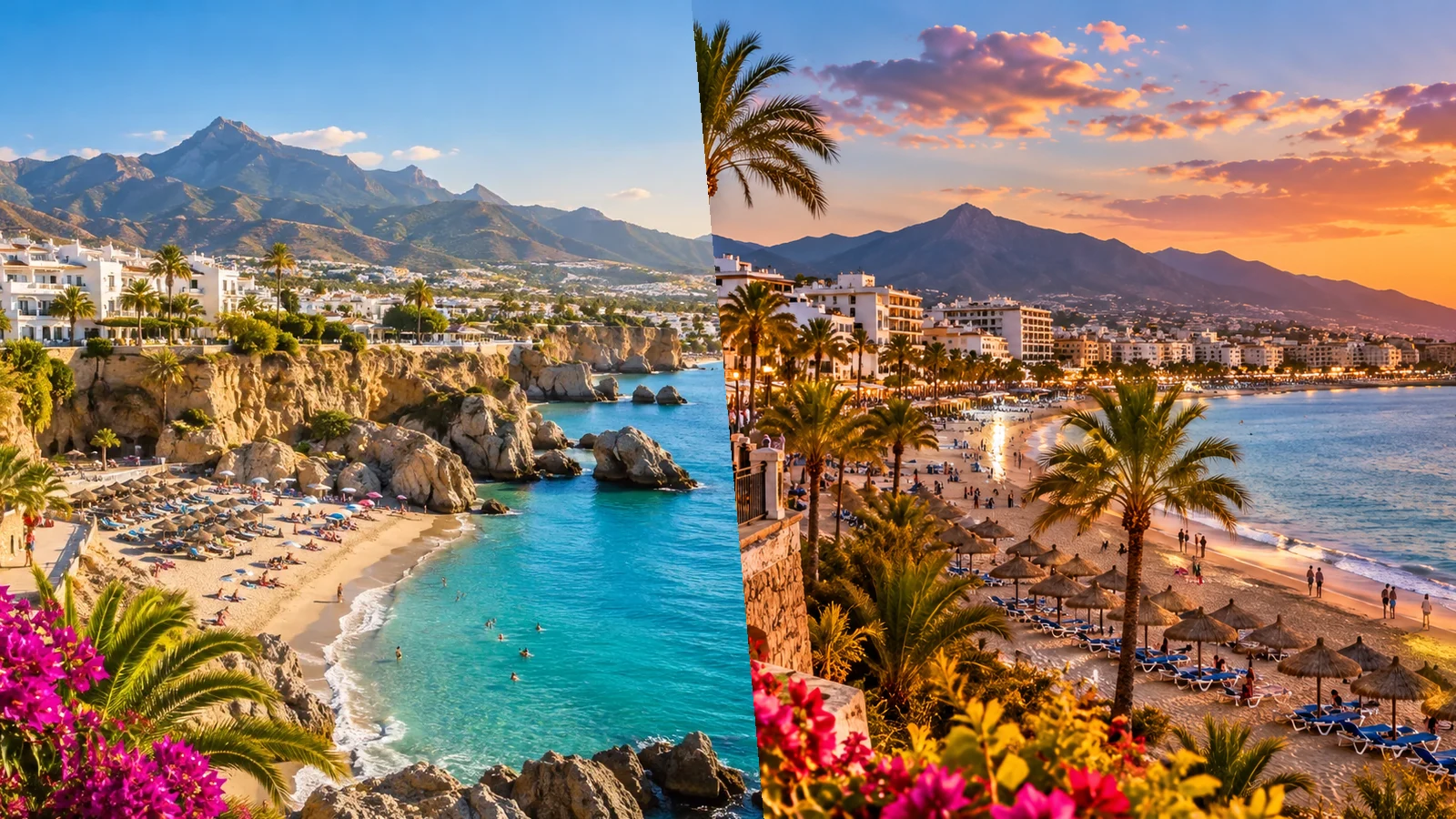
Sea, mountains, altitude, slope orientation and valleys combine to create strong local climate contrasts across Málaga province.
The Mediterranean sets the base pattern
The coast has a Mediterranean climatic foundation.
Winters are generally milder near the sea than at higher inland elevations, while summers are shaped by strong sunshine and relatively dry conditions.
But this broad pattern is only the starting point.
Mountains sit surprisingly close to the sea
One of Málaga's defining features is abrupt relief.
Mountain ranges rise close behind sections of coast, creating barriers that influence wind, rainfall and temperature.
A place sheltered by hills can experience different conditions from an exposed location only a short distance away.
This is one reason weather can feel inconsistent across the province.
Altitude changes temperature quickly
Moving inland often means gaining height fast.
Higher villages and mountain areas are generally cooler than nearby coastal zones.
The contrast can be especially noticeable outside summer and at night.
It is therefore misleading to treat "Costa del Sol weather" as one uniform climate extending far into the interior.
Orientation matters
South-facing and north-facing slopes receive different amounts of sunlight.
Valleys can channel wind or trap cool air.
Mountain barriers can increase rainfall on one side while creating drier conditions elsewhere.
These local effects help explain why vegetation and agriculture can change over relatively short distances.
Some coastal pockets are especially mild
Sheltered coastal areas can show very mild conditions and support plants associated with warmer climates.
That is sometimes described in tourism language as a "subtropical microclimate".
The safer interpretation is that parts of the coast benefit from local shelter, maritime influence and favourable orientation.
Those factors are real, but they do not guarantee identical weather every day.
The eastern and western province differ too
The Axarquía, Málaga basin, western Costa del Sol and inland sierras do not share the same rainfall or temperature patterns.
Topography creates strong contrasts across the province.
This helps explain why agricultural landscapes vary so much: vineyards, subtropical crops, olives, forests and mountain vegetation can all occur within a relatively compact area.
Climate is not a health promise
Mild weather is an important part of the Costa del Sol's appeal.
But climate should not be presented as a medical benefit.
It is also important not to convert long-term climatic tendencies into promises about specific days.
Current forecasts belong in live weather data.
A better way to understand the phrase "microclimate"
When someone says a Costa del Sol town has a microclimate, ask what physical factors are actually involved.
Is it sheltered by mountains? Close to the sea? At low altitude? Facing a particular direction?
Those questions produce a more useful explanation than repeating a tourism slogan.
The Costa del Sol really does have strong local climate contrasts — but geography explains them better than marketing.
The sea moderates more than temperature
The Mediterranean influences not only average temperature but also daily temperature range, humidity and the way coastal air responds to changing weather.
Places close to the water often experience a different thermal rhythm from inland valleys or elevated towns.
That is one reason a short drive away from the coast can feel noticeably different even on the same day.
Mountains create shelter and exposure
Relief changes how wind and air masses move.
A slope protected from prevailing winds can experience different conditions from another slope facing directly into them.
Mountain barriers can also reduce or redirect maritime influence, creating local contrasts over surprisingly short distances.
Altitude changes the picture quickly
Temperature generally decreases with elevation, so higher inland settlements can be cooler than nearby coastal areas.
At the same time, strong summer sun and reduced maritime moderation can make inland daytime heat feel intense.
This combination explains why "the weather in Málaga" is often too broad a phrase for planning the whole province.
Orientation matters
South-facing and north-facing slopes receive sunlight differently.
Valleys, ridges and enclosed basins also change how heat is retained or lost.
These effects do not create a separate climate for every street, but they do help explain meaningful local differences across the Costa del Sol and its hinterland.
Climate pattern is not a forecast
Local climatic contrasts are useful for understanding long-term tendencies.
They do not predict the exact conditions of a particular afternoon.
Costa Guest should therefore use this article as evergreen context and pair it with current forecasts, warnings and live conditions for actual trip decisions.
Sources used for this draft
- Junta de Andalucía · planning material for Sierras de Málaga
- Junta de Andalucía · landscape sheets for Málaga
- Junta de Andalucía · environmental information on Sierras Bermeja y Real