Casares day trip: viewpoints, white streets and a realistic route from the coast
Casares is a day trip for travellers who enjoy steep historic streets, wide views and a slower pace. It is especially well placed for visitors staying around Estepona, Marbella or the western Costa del Sol, but the terrain means it should not be treated as an effortless photo stop.
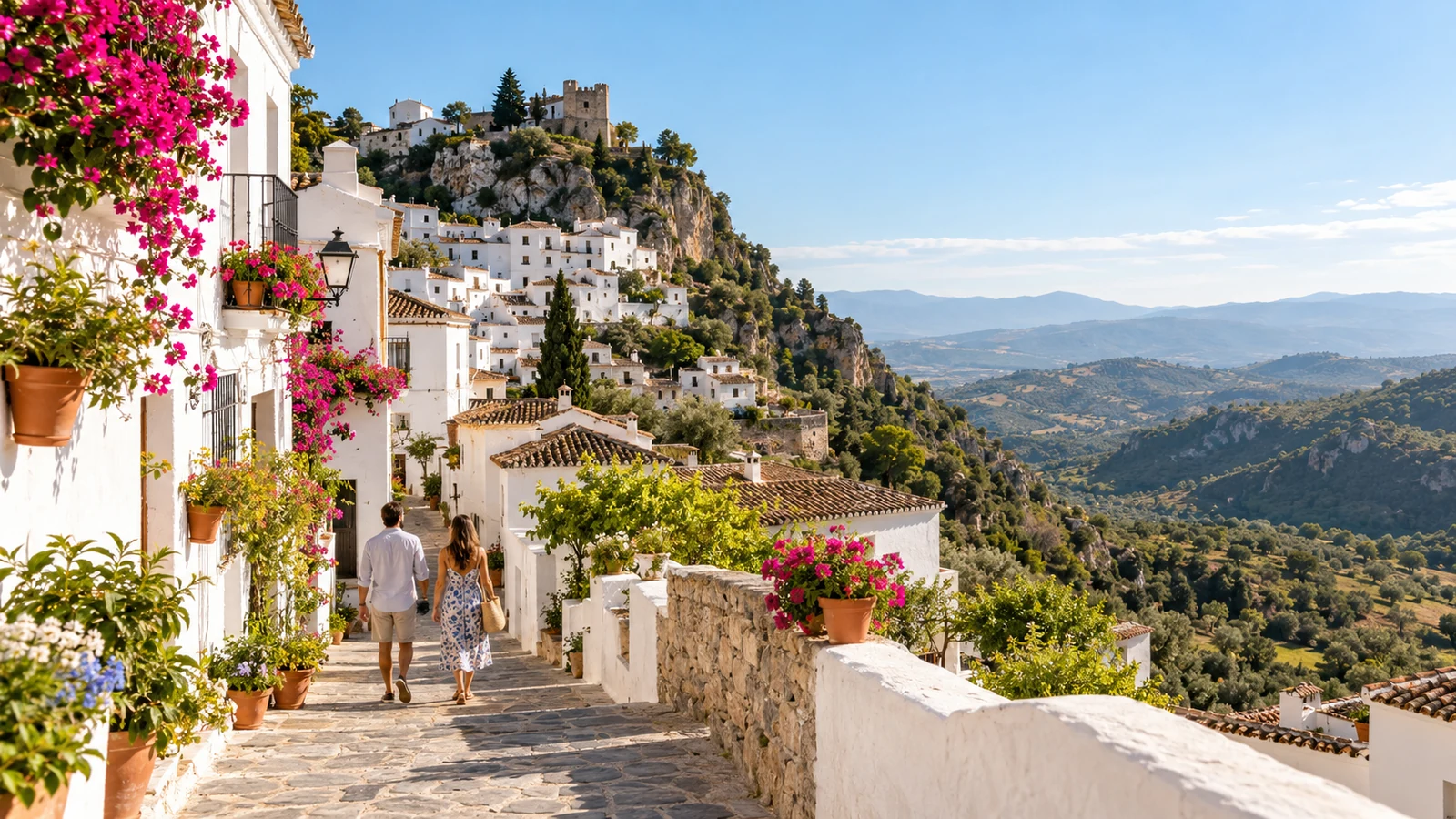
Official Casares tourism describes the historic centre as a protected cultural site adapted to pronounced ravines and level changes. That topography is central to the experience.
Quick answer
Allow enough time to walk slowly through the historic centre, climb toward the castle area if your mobility allows, stop for views and have lunch. Do not plan Casares as one of four villages in the same afternoon.
Why visit Casares?
The appeal is the combination of a tightly built white village, mountain setting and long views.
The municipality highlights the castle, Church of the Encarnación, Blas Infante heritage and other historic sites. The historic centre itself is part of the visit rather than just the route between attractions.
The historic centre
Official tourism material explains that Casares' streets follow the contours of steep terrain, with secondary lanes using stepped zigzags to manage height differences.
That means walking is slower than the map suggests.
Wear shoes suitable for slopes and uneven streets and build in pauses rather than treating the route as a flat urban walk.
Castle area and viewpoints
The upper part of the village is one of the natural goals of a visit because of the historic remains and views.
Do not promise a fixed opening schedule for individual spaces without checking current municipal information.
Even when an indoor site is closed, the village and viewpoints can still make the trip worthwhile.
Blas Infante
Casares is closely associated with Blas Infante, and the municipality lists his birthplace among the main cultural visits.
If that history interests you, check the current opening information before travelling rather than assuming access every day.
Getting there by car
Driving is often the most flexible option from the western Costa del Sol.
The important point is where you leave the vehicle and how much uphill walking remains. Do not aim to drive deep into narrow historic streets.
Use current municipal parking guidance on the day.
Without a car
A car-free visit may be possible depending on your base and current public-transport timetable, but it needs more planning than Mijas Pueblo or Frigiliana.
Check both the outbound and final return connection before leaving.
If the schedule is poor, an organised excursion or taxi may be more realistic.
How long?
A relaxed half day can work if Casares is your only main destination.
Add more time for lunch, cultural visits or a slower climb through the village.
If you combine it with the coast, keep the second stop simple.
Families
Casares can work with children who are comfortable walking uphill, but do not underestimate the stairs and slopes.
A simple route with one viewpoint and lunch is usually better than trying to cover every listed monument.
Seniors and reduced mobility
This is one of the white villages where topography matters most.
Check where transport drops you, the gradient to the centre and whether the intended route has manageable resting points.
If steep walking is difficult, another village may be a better fit.
Summer
The combination of steep streets and sun can make a midday visit tiring.
Start earlier, pause in shade and avoid planning the hardest climb at the hottest part of the day.
Cooler months
Autumn, winter and spring can be excellent for walking when conditions are dry.
Keep an eye on rain because steep paved surfaces can become less comfortable.
Food and pace
Lunch is part of the value of Casares.
Instead of rushing to another village immediately, allow the day to slow down. The setting rewards time more than checklist tourism.
What not to combine
Do not combine Casares with a long Ronda visit unless the entire day is built as a road trip and you accept substantial driving.
A western-coast stop such as Estepona can be more logical if you want a second destination.
See the western Costa del Sol road trip.
Wider white-village choice
If you are still deciding, compare the white villages guide.
Mijas Pueblo is easier from the central coast; Frigiliana is more logical from the east; Casares is strongest from western bases.
Practical decision rule
Choose Casares when you want atmosphere, views and history and are comfortable with steep walking. Give it time, park outside the historic core and treat the slopes as part of the day rather than an inconvenience.
Continue your Costa del Sol planning
Other published guides for the same destination or a closely related topic.